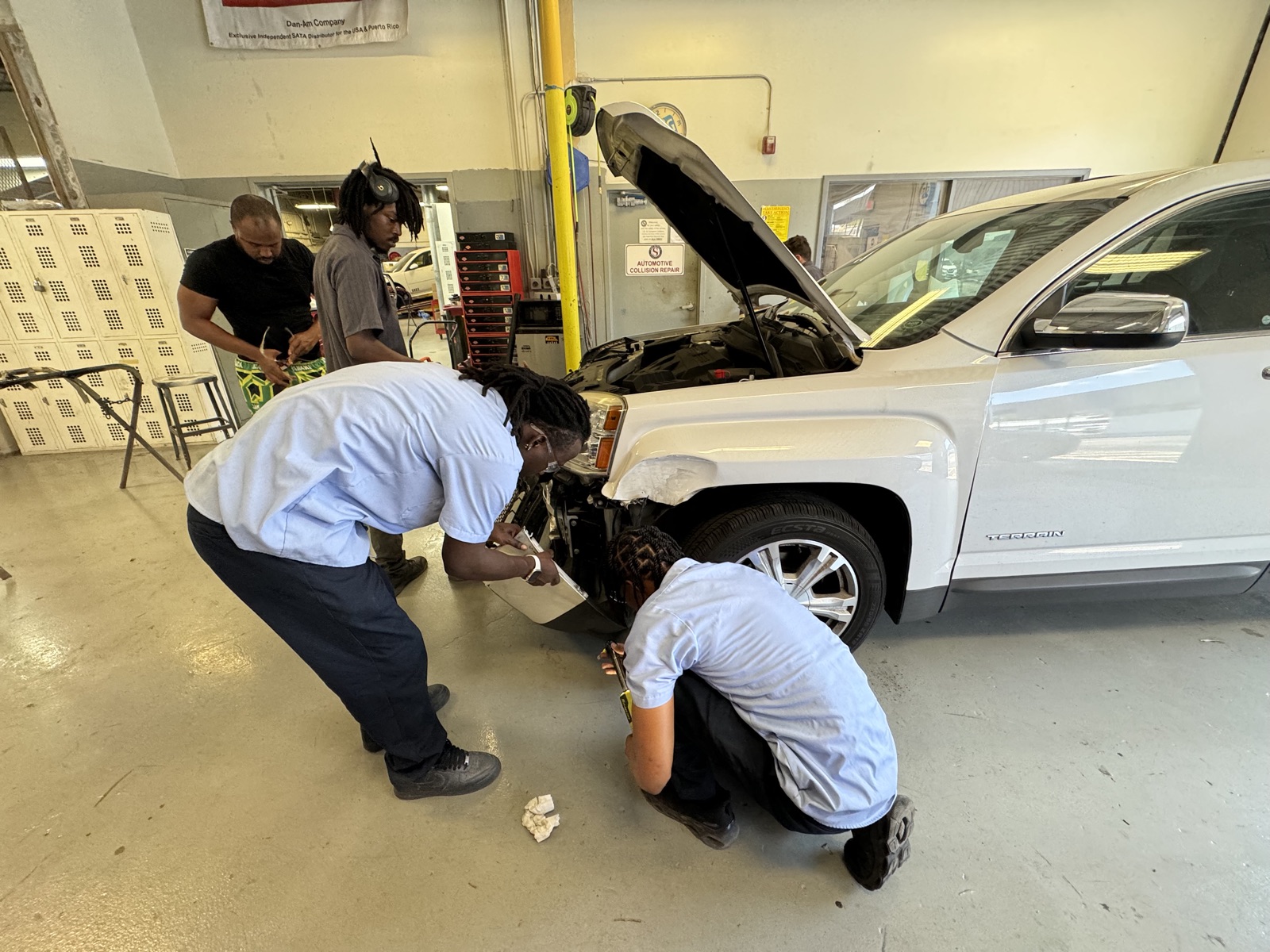
A real estimate is written with the car in front of you and estimating software that stores the labor times and does the arithmetic; the ASE B6 test takes both away and asks whether you know the rules underneath. So an estimator who writes good sheets every day can still miss questions on it, and the fix is to study the rules the software applies for you, not to write more estimates.
The ASE B6 Damage Analysis and Estimating test is 60 questions, 50 of them scored, in 75 minutes. Estimating (13 questions), Damage Analysis (11) and Vehicle Systems Knowledge (11) carry most of it; Vehicle Construction (6), Parts Identification and Source Determination (4), Legal and Environmental Practices (3) and Customer Relations and Sales Skills (2) make up the rest. Our ASE B6 study guide walks each area. This article is about something narrower: the six places where the test and the job part ways.
1. No car in front of you
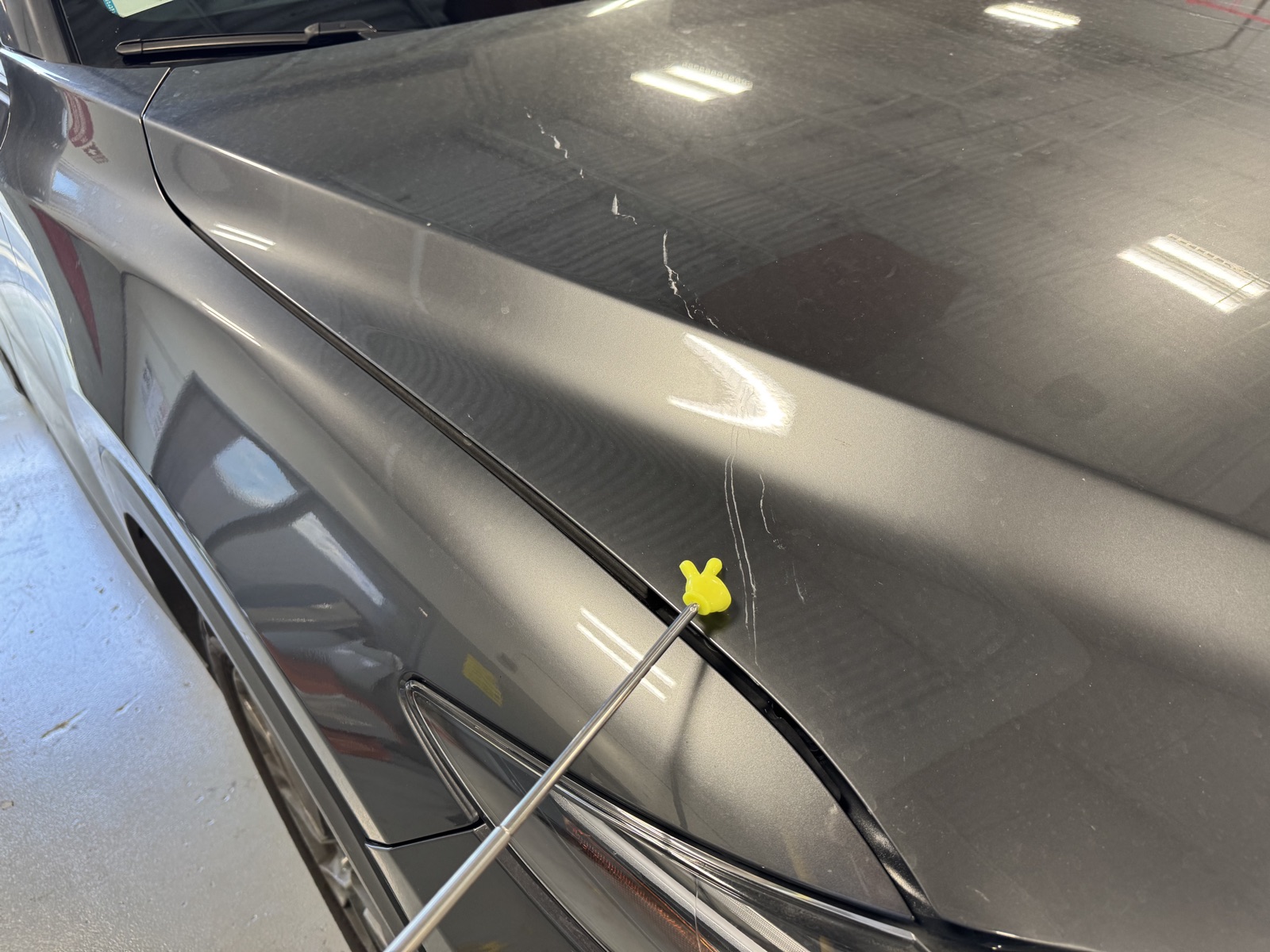
On the job, damage analysis is physical. You walk the car, sight down the body lines, pull the bumper cover, put a light behind it and follow the energy until it stops. On the test, the car is a paragraph: a vehicle, a point of impact, a symptom, and a question about what comes next.
The skill does not change, but the way it is scored does. The test is checking that you know the sequence the task list describes: position and prepare the vehicle, disassemble for access to hidden damage, gather the facts of the incident, record pre-existing damage and prior repairs, measure the structure, then decide repair or replace. It also expects you to name the checks a heavy hit triggers: suspension, electrical and mechanical damage, safety systems, Advanced Driver Assistance Systems (ADAS), one-time-use parts, a diagnostic scan, and whether the vehicle must be put in service mode.
So when a question asks for the first step, look first at the answer that gathers information before anything is written. An experienced estimator who reads the paragraph and jumps to the obvious repair line skips the step the question is about.
2. No software doing the lookup or the math
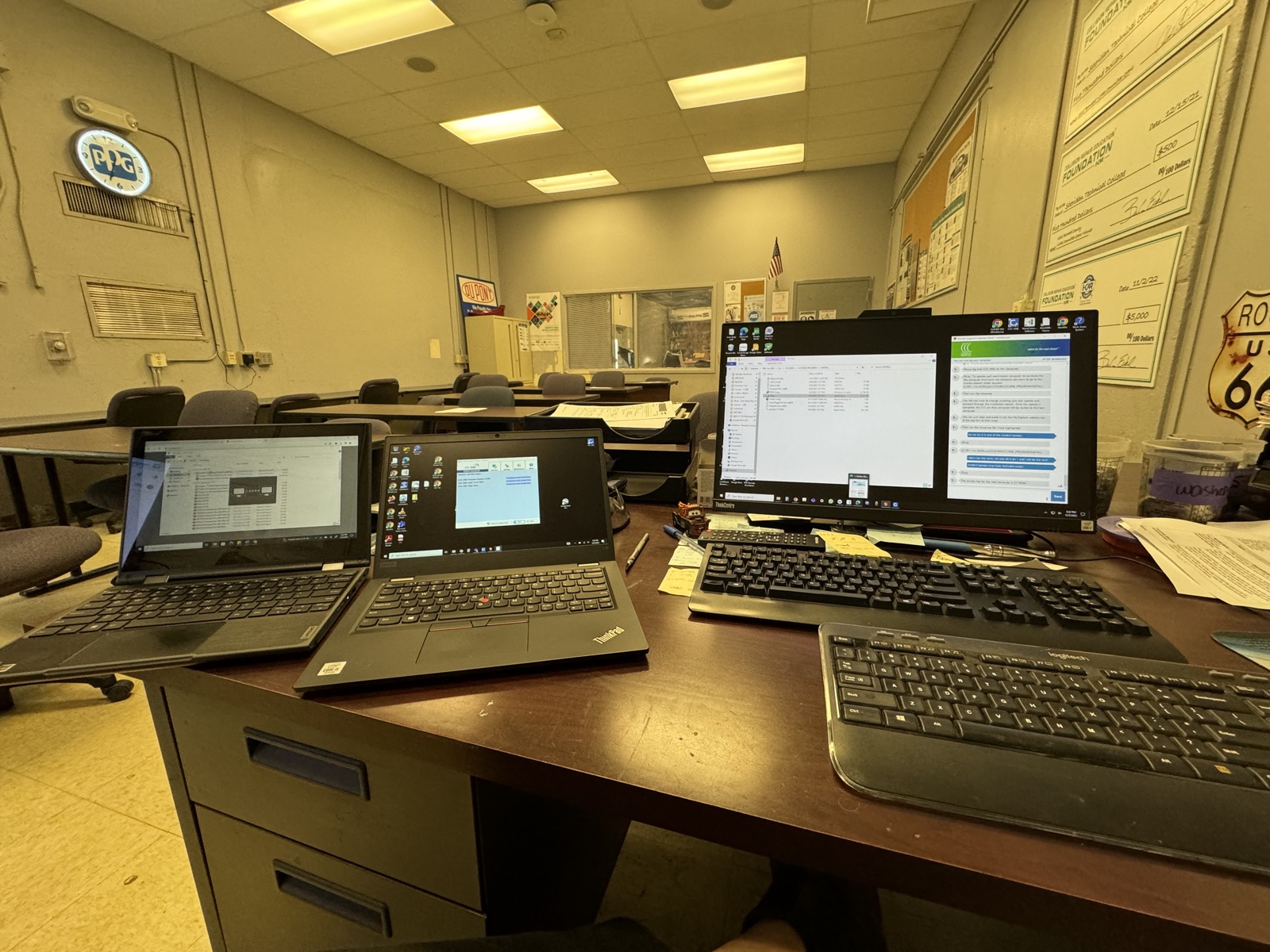
In CCC ONE, Mitchell or Audatex, you pick an operation and the system brings the labor time from its database and does the arithmetic. That is exactly what it should do. It also means a working estimator can go years without thinking about why a time is what it is.
The test asks for that reasoning directly. The ASE B6 task list includes using the estimating guide's procedure pages, applying its footnotes and headnotes, estimating labor for operations that require judgment, determining charges for operations that are not included, and applying math skills to establish charges and totals. The sample B6 questions in ASE's own study guide are plain multiple-choice text: an operation is named, and you decide whether it is included in a labor time or must be added.
The areas where this costs points:
- Included versus not included. What comes with the replacement time for a panel, and what has to be written as its own line.
- Overlap. When two adjacent operations share labor, the deduction is a rule, not a negotiation.
- Refinish arithmetic. Additions and deductions for the second and following panels, and how materials are calculated.
- Judgment time. A labor value you set yourself, and the documentation that has to support it.
None of this is new to a working estimator. What is new is answering without the screen that normally applies it.
3. The general rule, not one program's way of doing it
Every shop writes in one system, and every system handles a few things its own way. The test is not about any one of them. ASE's task list asks you to interpret both software-generated and manually written estimates, to know the procedural differences between them, and to recognize how estimating procedures differ between information provider systems.
In practice that means the test wants the rule that holds across the industry, and the reason for it. If your only knowledge of a rule is "the system adds it automatically", that is the rule to look up before test day.
4. One answer instead of a supplement
A real estimate is a document that changes. The first sheet is written from what can be seen, the car comes apart, hidden damage turns up, and a supplement is written with photographs and the procedure that supports it. Being wrong on the first sheet is normal, as long as the supplement catches it.
A test question has one right answer and no supplement. The task list still rewards the habits behind a good supplement, though: verifying the estimate against the repair actually performed, and documenting repair and replace decisions with line notes, correct coding, photographs, video and technical documents. When a question asks what an estimator should do with something found during the repair, the answer is the one that documents it and follows the vehicle maker's procedure.
5. The people and the paperwork are few questions, and strict ones
On the job, much of an estimator's day is people: the customer, the insurer, the parts supplier, the technician. On the test, Customer Relations and Sales Skills is two scored questions, and Legal and Environmental Practices is three.
Those five questions are not about persuasion. They are about obligations: federal, state and local regulations, contractual and warranty obligations, the obligation to restore the vehicle to the maker's specifications and accepted procedures, and the protection of a customer's personally identifiable information. The professional answer is the one that informs the customer and documents the decision. An answer in which a customer's preference overrides one of those obligations is the wrong one, however reasonable it sounds at the counter.
6. Eleven questions of knowing the car itself
Vehicle Systems Knowledge is 11 questions, as many as Damage Analysis. It asks you to identify components across the vehicle's systems, including electric, hybrid and alternate-fuel vehicles, along with what each component does and what service it needs, plus fastener types and the body repair and refinish materials an estimator has to name.
On the job, an estimator who meets an unfamiliar part looks it up in the parts catalog or the repair information. On the test there is nothing to look up. That is where estimators who came up from the front office rather than the shop floor tend to lose points, and where the ASE B6 glossary and the key terms in the study guide earn their time.
What carries over from the job
Daily estimating is still the best preparation there is, as long as it is pointed at the test. These habits transfer directly:
- Reading the procedure page before writing the line. The estimator who already checks the footnotes is halfway through the Estimating content area.
- Following the vehicle maker's repair procedure for one-time-use parts, sectioning locations and calibration triggers. The test follows the maker's procedure, not a shop's habit.
- Scanning before and after the repair, and writing it down.
- Writing a note on every judgment line. It is the same discipline the documentation tasks describe.
How a working estimator should study
- Take a timed practice test cold. Our free ASE B6 practice test is 20 questions with the answer and the reason for each. Note which areas cost you points.
- Write out the rules the software applies for you. For each common operation, what is included and what is not, from the procedure pages in the system you use. A one-page list is worth more than ten more estimates.
- Work the arithmetic by hand. Overlap deductions, refinish additions and material charges, with a calculator and no software.
- Study the vehicle systems you never handle. Spend an evening on high voltage, hybrid and alternate-fuel components and their service requirements.
- Read every explanation, including on the questions you got right.
For the content-area walk and a full 30-day plan, see our guide to understanding the ASE B6 and how to read an ASE damage estimate.
Certification needs both halves
Passing the ASE B6 is half of the certification. ASE also requires two years of work experience related to damage analysis and estimating. You may take the test before the experience is complete; the certificate is issued once it is documented. ASE B6 does not count toward Master Collision Repair and Refinish Technician status, which takes ASE B2, ASE B3, ASE B4 and ASE B5, but it is the one certification written for the person who writes the sheet.
Test length, task list and experience rule are from ASE's 2026 Collision Repair and Refinish study guide and its ASE B6 test page; confirm the current versions on ase.com before you register. ASE is a registered trademark of the National Institute for Automotive Service Excellence; CCC ONE, Mitchell and Audatex are trademarks of their owners. This site is not affiliated with any of them.


Discussion
Join the discussion — sign in to comment.
Comments are reserved for registered students and technicians. Your name will be pulled from your profile automatically.
Log In Register