Study Guide
ASE B6 Study Guide: Damage Analysis and Estimating
50 scored questions, 75 minutes, 7 content areas. Here is what to study and in what order.
ASE B6 at a Glance
The ASE B6 Damage Analysis and Estimating test is one of five ASE collision repair and refinish certification tests. It has 50 scored questions plus 10 unscored research questions (60 in all), a 75-minute time limit, and is taken on a computer at a Prometric test center. Every question is multiple choice with four answers and one correct answer.
The scored questions are split across 7 content areas:
- Damage Analysis: 11 questions
- Estimating: 13 questions
- Legal and Environmental Practices: 3 questions
- Vehicle Construction: 6 questions
- Vehicle Systems Knowledge: 11 questions
- Parts Identification and Source Determination: 4 questions
- Customer Relations and Sales Skills: 2 questions
ASE B6 is the estimator certification. It is not one of the four tests required for ASE Master Collision Repair and Refinish Technician status (ASE B2, B3, B4 and B5).
Certification is renewed every five years with a shorter recertification test. Check ase.com for current registration and fees. ASECollisionTestPrep.com is an independent study resource and is not affiliated with ASE.
Start Here
The ASE B6 Damage Analysis and Estimating test is 50 scored questions in 75 minutes and it is the estimator's certification: Damage Analysis and Estimating together are 24 questions, Vehicle Systems Knowledge 11, and the rest is construction, parts sourcing, legal obligations and customer handling.
It is not one of the four tests required for ASE Master Collision Repair and Refinish Technician status. This guide walks the seven content areas by weight and ends with a 30-day plan.
Where the 50 scored questions come from
- A. Damage Analysis1122%
- B. Estimating1326%
- C. Legal and Environmental Practices36%
- D. Vehicle Construction612%
- E. Vehicle Systems Knowledge (includes Electric/hybrid/alternate Fuel Vehicles)1122%
- F. Parts Identification and Source Determination48%
- G. Customer Relations and Sales Skills24%
Why technicians fail this test
- Included versus not-included operations: the procedure pages, footnotes and headnotes decide, and overlap deductions and additions are arithmetic the test checks.
- Hidden damage: the questions describe a heavy hit and ask what the estimator must check (mechanical, suspension, restraint and ADAS damage, one-time-use parts, scan results).
- Parts sourcing: OEM, alternative OEM, aftermarket, recycled and remanufactured each have an availability, compatibility and condition question, and betterment applies to some of them.

Written by Mr. Hernandez Collision Repair Instructor at Sheridan Technical College, five years teaching the ASE B-Series. About the instructor
A. Damage Analysis
What to focus on
- Position and prepare the vehicle, disassemble for access, gather the facts of the incident, and record pre-existing damage and prior repairs.
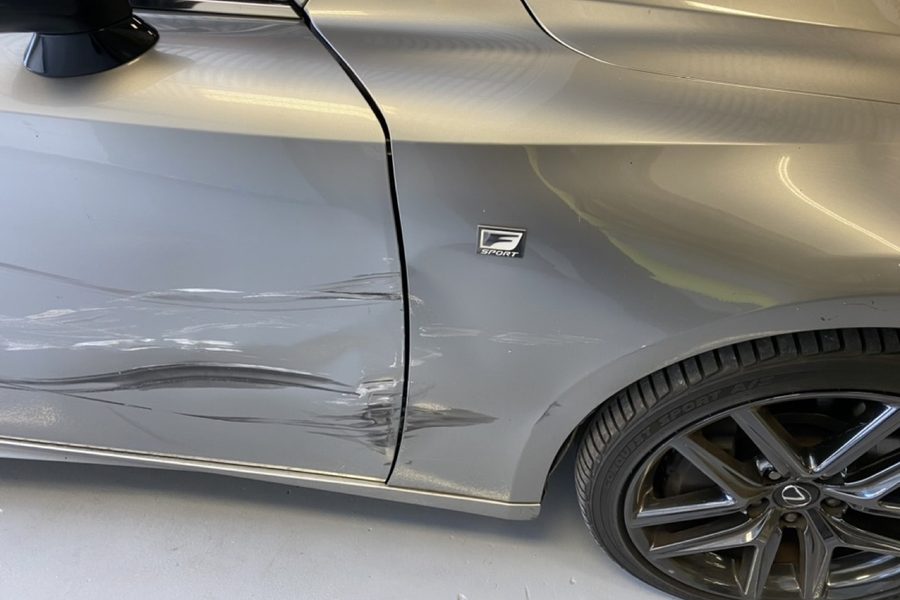
- Direction and point of impact; direct, indirect and inertia damage; structural inspection by measuring; repair or replace decisions by component.
- Safety systems, advanced driver assistance, suspension, electrical and mechanical damage; single-use components; the diagnostic scan and service mode.
Trap: The right first step is almost always the one that gathers information (scan, measure, disassemble) before writing a line.
All 20 official tasks in this area
- Position the vehicle for inspection.
- Prepare vehicle for inspection; disassemble as needed to provide access to hidden damage.
- Analyze damage to determine appropriate methods for overall repairs.
- Determine the direction, point(s) of impact, and extent of direct, indirect, and inertia damage.
- Gather details of the incident/accident necessary to determine the full extent of vehicle damage.
- Identify and record pre-existing damage.
- Identify and record evidence of prior repairs.
- Perform visual inspection of structural components and members; determine if repair or replacement is required.
- Identify structural damage using measuring tools and equipment.
- Perform visual inspection of non-structural components and members; determine if repair or replacement is required.
- Determine parts, components, material type(s), and procedures necessary for a proper repair.
- Identify type and condition of finish; determine if refinishing is required.
- Identify suspension, electrical, and mechanical component damage.
- Identify safety systems damage and related service requirements.
- Identify interior component damage.
- Identify damage to add-on coatings, coverings, accessories, and modifications.
- Identify single (one-time) use components.
- Identify Advanced Driver Assistance Systems (ADAS) damage and related service requirements.
- Use a diagnostic tool to scan the vehicle; record and review diagnostic report.
- Identify if the vehicle needs to be placed in service mode.
B. Estimating
What to focus on
- Owner, VIN and option recording; estimating sequence and nomenclature; procedure pages, footnotes and headnotes.
- Labor values by operation type, judgment time, included and not-included operations, overlap, refinish materials and additional charges.
- Parts pricing by source, sublet, sectioning and structural setup values, betterment and depreciation, total-loss arithmetic, and reading software versus manual estimates.
Trap: Overlap and included-operation questions are arithmetic; work them from the procedure page rule, not from what a shop usually charges.
All 34 official tasks in this area
- Determine and record customer/vehicle owner information.
- Identify and record vehicle identification number (VIN) information, including nation of origin, make, model, restraint system, body type, production date, and engine type.
- Identify and record vehicle options, including trim level, paint code, transmission, accessories, and modifications.
- Document and record existing or pre-existing damage.
- Identify safety systems; determine needed repairs.
- Apply appropriate estimating and parts nomenclature (terminology).
- Determine and apply appropriate estimating sequence.
- Utilize estimating guide procedure pages.
- Apply estimating guide footnotes and headnotes as needed.
- Estimate labor value for operations requiring judgment.
- Select appropriate labor value for each operation (structural, non-structural, mechanical, and refinish).
- Select and price OEM parts; verify availability, compatibility and condition.
- Select and price alternative/optional OEM parts; verify availability, compatibility and condition.
- Select and price aftermarket parts; verify availability, compatibility and condition.
- Select and price recyclable/used parts; verify availability, compatibility and condition.
- Select and price remanufactured, rebuilt and reconditioned parts; verify availability, compatibility and condition.
- Determine price and source of necessary sublet operations.
- Determine labor value, prices, charges, allowances, or fees for non-included operations and miscellaneous items.
- Recognize and apply overlap deductions, included operations and additions.
- Determine additional material and charges.
- Determine refinishing material and charges.
- Determine recommended sectioning procedures and establish labor values.
- Determine structural measurement requirements; diagnose, and establish labor values.
- Determine necessary structural repair/replace requirements and setup procedures, and establish labor values.
- Apply math skills to establish charges and totals.
- Interpret collision estimating software-generated and manually written estimates; verify the information is current.
- Identify procedural differences between collision estimating software-generated and manually written estimates.
- Identify procedures to restore corrosion protection; establish labor values and material charges.
- Determine appropriate application of betterment/depreciation to parts and allowances as necessary.
- Determine the cost effectiveness of the repair and determine the approximate vehicle retail, recyclable and repair value.
- Recognize the differences in estimation procedures when using different information provider systems.
- Verify accuracy of estimate compared to the actual repair and replacement operations.
- Identify Advanced Driver Assistance Systems (ADAS); determine needed repairs and service requirements.
- Document and record repair/replace procedures utilizing line notes, poper estimate coding, photographs, videos, technical documents, and additional supporting documentation.
C. Legal and Environmental Practices
What to focus on
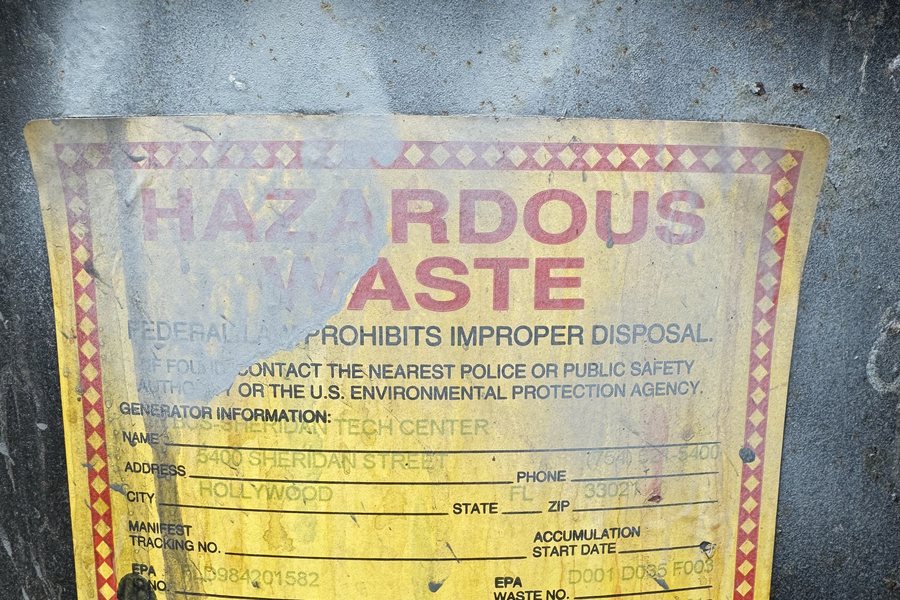
- Federal, state and local regulatory obligations; contractual and warranty obligations.
- The obligation to restore the vehicle to the manufacturer's specifications, and to protect personally identifiable information.
Trap: Three questions, all about obligations the estimator cannot waive; the customer's preference does not override them.
All 4 official tasks in this area
- Recognize federal, state and local regulatory obligations.
- Recognize contractual and warranty obligations.
- Recognize the obligation to restore the vehicle based on vehicle manufacturer’s specifications and indus- try-accepted procedures/guidelines.
- Recognize the obligation to protech personally identifiable information (PII).
D. Vehicle Construction
What to focus on
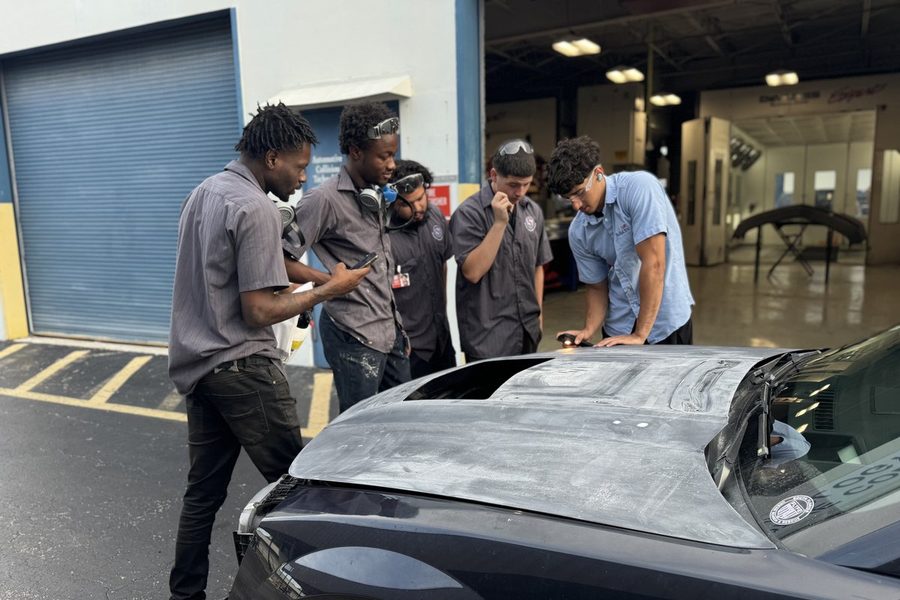
- Space frame, unibody and body-over-frame construction and how each one takes and shows damage.
- Energy-absorbing locations; steel types; aluminum and magnesium; plastics, composites and carbon fiber; glass; add-on accessories and their repair or replacement procedures.
Trap: Steel type decides repair versus replace; an answer that straightens ultra-high-strength steel is wrong.
All 8 official tasks in this area
- Identify type of vehicle construction (space frame, unibody, body-over-frame).
- Recognize the different damage characteristics of space frame, unibody, and body-over-frame vehicles.
- Identify impact energy absorbing location(s), components and repair/replacement procedures.
- Identify steel types; identify repair/replacement procedures for steel components.
- Identify aluminum/magnesium components and repair/replacement procedures.
- Identify plastic/composite/carbon fiber components and repair/replacement procedures.
- Identify vehicle glass components; repair, remove and reinstall (R&I), and replacement procedures.
- Identify add-on accessories, modifications and repair/replacement procedures.
E. Vehicle Systems Knowledge (includes Electric/hybrid/alternate Fuel Vehicles)
What to focus on
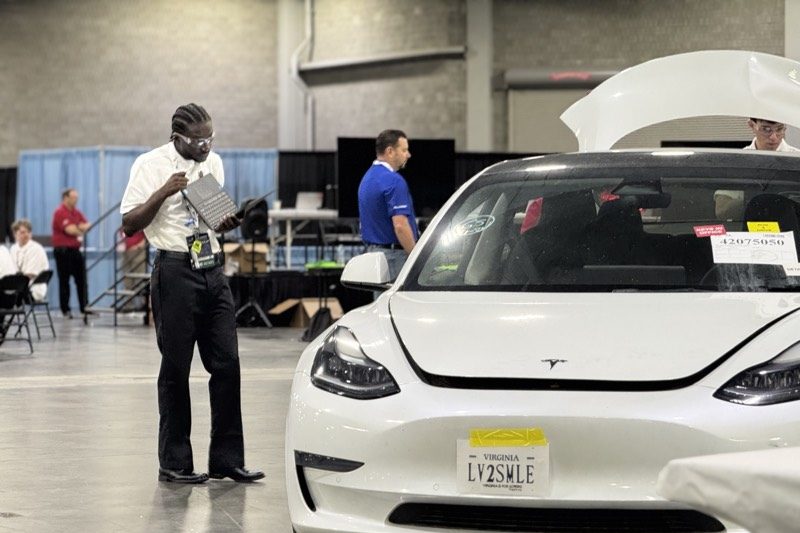
- Components, their function and their service requirements across every major vehicle system, including electric, hybrid and alternate-fuel vehicles.
- Fastener types and service requirements; body repair procedures and refinishing materials as the estimator needs to name them.
Trap: Eleven questions of identification; the terms matter, and the glossary below covers the ones the test uses.
All 23 official tasks in this area
- Identify components.
- Identify component function.
- Identify component service requirements.
- Identify components.
- Identify component function.
- Identify component service requirements.
- Identify components.
- Identify component function.
- Identify component service requirements.
- Identify components.
- Identify component function.
- Identify component service requirements.
- Identify components.
- Identify component function.
- Identify component service requirements.
- Identify components.
- Identify component function.
- Identify component service requirements.
- Identify fastener type and service requirements.
- Identify body repair procedures, refinishing materials and supplies.
- Identify components.
- Identify component function.
- Identify component service requirements.
F. Parts Identification and Source Determination
What to focus on
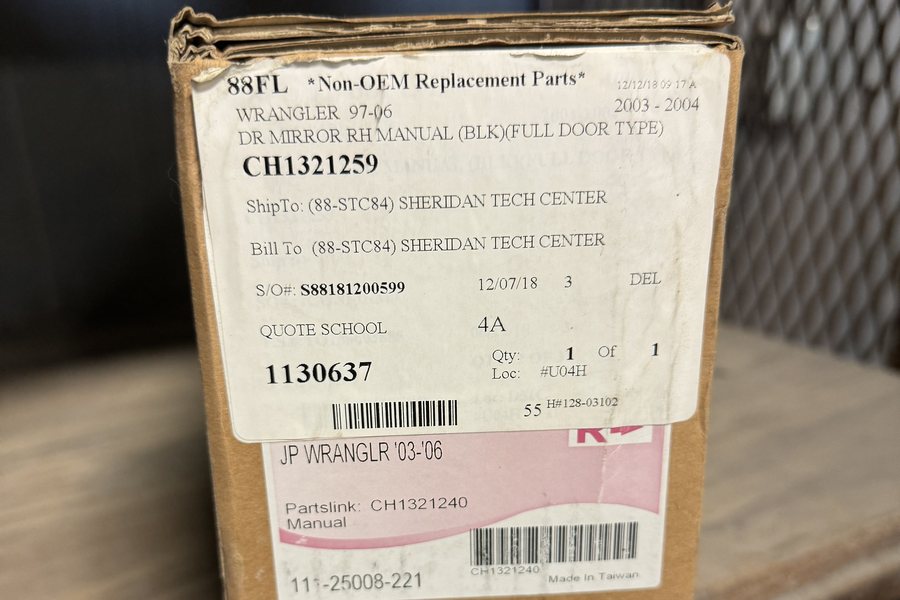
- OEM, alternative OEM, aftermarket, recycled and remanufactured components: identify, explain the repair-or-replace decision with each, and determine availability, compatibility and condition.
Trap: Recycled parts carry a condition and compatibility check the question expects you to name.
All 20 official tasks in this area
- Identify OEM components.
- Identify OEM component function.
- Justify repair or replace decision using OEM component.
- Determine OEM component availability.
- Identify alternative/optional OEM component availability.
- Identify alternative/optional OEM component function.
- Explain repair or replace decision using alternative/optional OEM components.
- Determine alternative/optional OEM component availability.
- Identify aftermarket components.
- Identify aftermarket component function.
- Explain repair or replace decision using aftermarket components.
- Determine aftermarket component availability.
- Identify recycled (used) components.
- Identify recycled (used) component function.
- Explain repair or replace decision using recycled (used) components.
- Determine recycled (used) component availability, compatibility and condition.
- Identify remanufactured/rebuilt/reconditioned components.
- Identify remanufactured/rebuilt/reconditioned component function.
- Explain repair or replace decision using remanufactured/rebuilt/reconditioned components.
- Determine remanufactured/rebuilt/reconditioned component availability.
G. Customer Relations and Sales Skills
What to focus on
- Greeting, listening, collecting the facts of loss, communication method and follow-up; explaining claims handling, warranty, consumer protection and out-of-service time.
- Handling a dissatisfied customer, negotiating to agreement, and walking the customer through the estimate line by line.
Trap: Two questions; the professional answer is the one that informs and documents rather than argues.
All 13 official tasks in this area
- Acknowledge and/or greet customer/client.
- Listen to customer/client; ask how accident/incident occurred; review facts of loss; collect information and identify customer’s/client’s concerns, needs and expectations.
- Establish cooperative attitude with customer/client.
- Identify yourself to customer/client; offer assistance.
- Effectively communicate with and address concerns of a dissatisfied customer/client.
- Identify customer/client preferred communication method; follow up to keep customer/client informed about parts and the repair process.
- Recognize basic claims handling procedures; explain to customer/client.
- Project positive attitude and professional appearance.
- Provide and review warranty information.
- Provide and review technical and consumer protection information.
- Estimate and explain duration of out-of-service time.
- Apply negotiation skills to obtain a mutual agreement.
- Interpret and explain manual or collision estimating software-generated estimate to customer/client.
A 30-Day ASE B6 Study Plan
Diagnostic and Estimating
Take a full timed practice test. Then Estimating (26 percent): sequence, procedure pages, footnotes, labor values, included and not-included operations, overlap, parts pricing, refinish materials, betterment, total loss.
Damage Analysis and Vehicle Systems Knowledge
44 percent together: inspection sequence, damage types, hidden damage, safety and ADAS damage, single-use parts, the scan; then component identification across every system.
Construction, Parts Sourcing, Legal, Customer Relations
The four smaller areas (30 percent together): construction types and materials, the five parts sources, obligations, customer handling.
Review and timed tests
Two full timed practice tests on different days, every miss reviewed against the task list. Stop new material 48 hours before the test.
Key Terms to Know
215 more in the ASE B6 glossary, each with a plain-words definition.
ASE B6 Study Guide FAQ
- How long should I study for the ASE B6?
- Four weeks at an hour a day for a working estimator. Estimating and Damage Analysis are 24 of the 50 scored questions, so the first two weeks live there.
- Is the ASE B6 required for Master Collision Repair status?
- No. Master Collision Repair and Refinish Technician status takes ASE B2, B3, B4 and B5. ASE B6 is the separate estimator certification.
- What should I study first for the ASE B6?
- Estimating: the procedure pages, included and not-included operations, overlap and labor values. They are 13 questions and the arithmetic repeats.
- Where can I practice ASE B6 questions free?
- The free ASE B6 practice test on this site has 20 questions written in the ASE style with the answer and the reason, no sign-up.
More on the ASE B6 Test
- Understanding the ASE B6 - Damage Analysis and Estimating Exam
- What Is ASE Collision Repair Certification? The Five Tests, Which One to Take First, and What Master Status Means
- CCC Is Being Sold: What the $6.1 Billion GTCR and Elliott Deal Means for CCC ONE Shops
- How to Read an ASE Damage Estimate Like a Pro (ASE B6 Prep)
Next Steps
ASE®, the ASE logo, and "ASE Certified" are registered trademarks of the National Institute for Automotive Service Excellence. This site is an independent study resource and is not affiliated with, endorsed by, or sponsored by ASE. Content areas, question counts and pass requirements follow ASE's published test specifications.