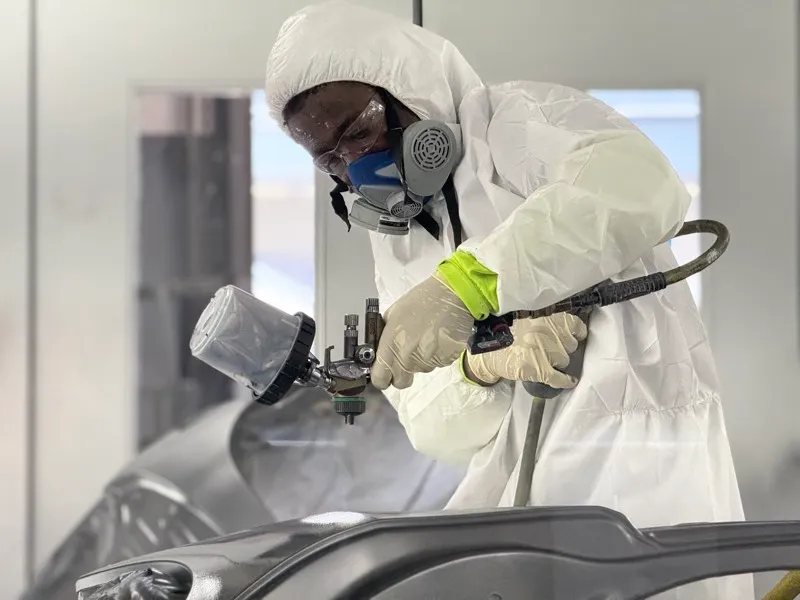

ASE B2

Free Practice Test

20 Painting and Refinishing questions written in the ASE style, with the answer and the reason. No sign-up.

Free ASE B2 Practice Test · 20 questions

Written in the ASE style: one correct answer, four choices, no trick wording. Pick an answer, then Check Answer to see the reason. No sign-up.

Loading question…
Question 1 of 20

What You Are Practicing

This is a free ASE B2 practice test for the Painting and Refinishing certification. Every question is written the way ASE writes them: one correct answer, four choices, no trick wording. The 20 questions are spread across the test's task areas, so you see every part of the test, not one topic.

20 questions Answers and explanations No sign-up needed Updated 2026-10-18
Mr. Hernandez, Collision Repair Instructor

Written by Mr. Hernandez Collision Repair Instructor at Sheridan Technical College, five years teaching the ASE B-Series. About the instructor

Watch the Video Test

ASE B2 Practice Test: 20 Questions, Answered Out Loud14 minutes on YouTube, every answer read out loud. Opens on YouTube, nothing tracks you here.

All 20 Questions, Written Out

The same 20 questions as the test above, with the answer under each one, for reading or printing.

Question 1 · B2-A

If masking tape on a freshly painted vehicle gets damp overnight, when should it be removed?

  1. AAs soon as possible
  2. BWhen trim-out is complete
  3. CAfter the tape has dried out
  4. DWhen detailing begins
Show answer

Correct answer: A. Damp masking tape on a fresh finish should be removed as soon as possible. Leaving wet tape in place lets it bond more strongly to the surface, which can damage the delicate paint edge when it is finally pulled and can leave adhesive residue behind. Prompt removal avoids all three problems. Answer B is incorrect because waiting until trim-out is complete is an even longer delay, increasing the risk of edge damage and residue. Answer C is incorrect because waiting for the tape to dry out is what allows the stronger bond and edge damage to develop. Answer D is incorrect because delaying removal until detailing begins leaves the tape on too long.

Question 2 · B2-B

The purpose of a spray gun atomizing the refinish material is to:

  1. AEliminate the need for reducer in the mix
  2. BDisperse and distribute the material onto a surface
  3. CIncrease the viscosity of the refinish material
  4. DBond the material chemically to the substrate before application
Show answer

Correct answer: B. A spray gun atomizes refinish material in order to disperse and distribute it onto a surface, breaking the liquid into a fine, even spray so it lays down as a uniform film rather than in drops or runs. Answer A is incorrect because atomization does not eliminate the need for reducer, which is a separate component added during mixing to bring the material to the right spraying consistency. Answer C is incorrect because atomization does not increase the material's viscosity; viscosity is a property set by how the material is mixed and reduced, not by spraying it. Answer D is incorrect because atomization does not chemically bond the material to the substrate; bonding and adhesion happen after the material is applied and begins to cure, not while it is being atomized.

Question 3 · B2-C

What is the likely effect of adding a small amount of the dominant toner to a color formula?

  1. AA muddier color
  2. BA dramatic hue change
  3. CLittle hue change
  4. DA cleaner color
Show answer

Correct answer: C. Adding a small amount of the dominant toner produces little hue change, because it amplifies the color component that is already strongest and reinforces the existing color direction rather than introducing a new color vector. Answer A is incorrect because muddiness is not the described effect of amplifying the dominant toner. Answer B is incorrect because a dramatic hue change would require large amounts of toner or off-formula toners, not a small amount of the dominant one. Answer D is incorrect because a cleaner color is not the described effect of reinforcing the dominant toner.

Question 4 · B2-D

Which of these is true about cleaning clearcoated wheels?

  1. AA wire wheel cleaner is the safest choice.
  2. BAn all-purpose cleaner may be effective and safe for routine cleaning.
  3. CThe wheels should be compounded and polished as part of routine cleaning.
  4. DThe wheels should be hot before cleaning begins.
Show answer

Correct answer: B. An all-purpose cleaner is effective on clearcoated wheels for removing brake dust, road grime, and general soils, and it is pH-safe for clearcoat when used as directed, which makes it appropriate for routine cleaning. Answer A is incorrect because wire wheel cleaners are harsh acid or alkaline products that can damage clearcoat. Answer C is incorrect because compounding and polishing are used for paint defect correction, not routine wheel cleaning. Answer D is incorrect because wheels should be cool before cleaning, since hot wheels accelerate product drying, cause water spots, and can warp brake components if suddenly cooled.

Question 5 · B2-E

Which of these is NOT another name for paint cracking?

  1. AMicro-checking
  2. BLine-checking
  3. CChalking
  4. DCrows feet
Show answer

Correct answer: C. Chalking is a separate surface condition in which an aging paint film turns white and powdery as its binder breaks down, so it is not a term for cracking. Micro-checking, line-checking, and crows feet all describe the same cracked-paint defect, which makes chalking the one term that does not belong. Answer A is incorrect because micro-checking is also a name for cracked paint. Answer B is incorrect because line-checking is one of the accepted names for cracked paint. Answer D is incorrect because crows feet is another recognized name for cracked paint.

Question 6 · B2-F

A technician presses trapped air out from under a wood grain decal during installation. What tool is used to smooth out these air bubbles?

  1. AChisel
  2. BFile
  3. CSqueegee
  4. DSanding block
Show answer

Correct answer: C. Air bubbles trapped under a wood grain decal are removed with a squeegee. Drawing a squeegee across the decal presses the trapped air out toward the edges and smooths the film flat against the surface, leaving an even, fully adhered application without damaging the decal. Answer B, a file, is incorrect because a file is a metal-cutting tool that would tear or gouge the thin decal rather than smooth it. Answer A, a chisel, is incorrect because a chisel is a sharp cutting tool that would cut through the decal, not press out air. Answer D, a sanding block, is incorrect because a sanding block would abrade and ruin the decal surface instead of smoothing the trapped air out from underneath.

Question 7 · B2-A

What is the best storage device for an air-purifying respirator cartridge between uses?

  1. ACloth bag
  2. BCardboard box with a lid
  3. CMetal drawer
  4. DSealable plastic bag
Show answer

Correct answer: D. Air-purifying respirator cartridges continue to adsorb contaminants from the surrounding air even when they are not being worn, which steadily reduces their remaining service life. A sealable plastic bag is the best storage device because it creates an airtight barrier that keeps ambient air and its contaminants away from the cartridge between uses. Answer A is incorrect because a cloth bag is porous and provides no barrier against air. Answer B is incorrect because a cardboard box with a lid is not airtight and allows air to continue degrading the cartridge. Answer C is incorrect because a metal drawer is not airtight and lets air keep reaching the cartridge.

Question 8 · B2-B

Where does the fluid needle of a spray gun seat?

  1. AThe fluid tip
  2. BThe cup
  3. CThe needle packing
  4. DThe air cap
Show answer

Correct answer: A. The fluid needle is tapered and fits precisely into a seat in the fluid tip. As the trigger draws the needle back, more material flows into the air stream where it is atomized by compressed air, so the needle seats in the fluid tip. Answer B is incorrect because the cup holds the material supply and has nothing to do with seating the needle. Answer C is incorrect because the needle packing seals the needle shaft but is not the tapered seat the needle closes against. Answer D is incorrect because the air cap directs shaping air and is not where the needle seats.

Question 9 · B2-C

You are mixing an urethane primer that calls for a 25% reduction with reducer. You want to end up with exactly 100 ounces of sprayable material. How much paint do you start with and how much reducer do you add?

  1. A80 oz paint, 20 oz reducer
  2. B90 oz paint, 10 oz reducer
  3. C60 oz paint, 20 oz reducer
  4. D80 oz paint, 25 oz reducer
Show answer

Correct answer: A. At a 25% reduction, the reducer equals one-fourth of the paint volume, so the paint plus 0.25 times the paint is 1.25 times the paint. Setting 1.25 times the paint equal to the 100 ounce target gives 80 ounces of paint, and the reducer is 100 minus 80, or 20 ounces, so Answer A is correct. Working backward from the final sprayable volume this way keeps the mix on spec instead of guessing. Answer B is incorrect because 90 ounces of paint with 10 ounces of reducer is only an 11% reduction, well under the specified 25%. Answer C is incorrect because 60 ounces of paint plus 20 ounces of reducer totals only 80 ounces, short of the 100 ounce target. Answer D is incorrect because 80 ounces of paint with 25 ounces of reducer totals 105 ounces and reflects a 31% reduction, not 25%.

Question 10 · B2-D

After washing a vehicle with car wash soap ahead of a paint evaluation, what should be used to rinse it?

  1. AThe bucket that contained the rinse water used during washing
  2. BA pressure washer
  3. CA hose without the nozzle attached
  4. DA hose with the nozzle set to full force
Show answer

Correct answer: C. After washing, the vehicle should be rinsed with a garden hose that has the nozzle removed, delivering free-flowing water at low pressure; this creates a sheeting action that carries water off the surface in a thin film and minimizes spotting and water droplet formation. Answer A is incorrect because the bucket of rinse water used during washing contains the dirt and contaminants removed from the vehicle and must not be used for the final rinse. Answer B is incorrect because a pressure washer can force water under trim and seals. Answer D is incorrect because a hose with the nozzle set to full force can force water under trim and seals in the same way a pressure washer can.

Question 11 · B2-E

What defect can an air compressor be the source of?

  1. ADiscoloration
  2. BRuns in the paint
  3. CFish-eyes
  4. DDry spray
Show answer

Correct answer: C. Most air compressors are lubricated with oil, and trace amounts of oil can blow by the pistons and mix into the air supply. Without an efficient oil aerosol separator, these trace amounts of oil will cause fish-eyes in refinishing materials. Answer A is incorrect because discoloration is not caused by compressor oil contamination. Answer B is incorrect because runs in the paint result from applying too much material or improper technique, not compressor oil. Answer D is incorrect because dry spray relates to spraying conditions and technique, not oil in the air supply.

Question 12 · B2-F

Which of these is NOT classified as a hazardous waste?

  1. ANew gun cleaning solvent
  2. BLeftover catalyzed primer
  3. CContaminated spray booth filters
  4. DWaste paint
Show answer

Correct answer: A. New gun cleaning solvent is still a usable product, so it is a hazardous material and not a hazardous waste. A hazardous material becomes a hazardous waste only once it is no longer usable and has to be disposed of, which is why Answer A is correct. Answer B is incorrect because leftover catalyzed primer can no longer be used and is a hazardous waste. Answer C is incorrect because contaminated spray booth filters are solid hazardous waste. Answer D is incorrect because waste paint is a liquid hazardous waste.

Question 13 · B2-A

Which primer coat improves adhesion of the topcoat and prevents bleed-through of old painted surfaces that have been sanded?

  1. APrimer-surfacer
  2. BPrimer-sealer
  3. CPrimer-filler
  4. DPrimer
Show answer

Correct answer: B. Primer-sealer improves adhesion of the topcoat and acts as a barrier coat that prevents bleed-through from old painted surfaces that have been sanded. That sealing function keeps solvents and color from the old finish from migrating up into the new topcoat. Answer A is incorrect because primer-surfacer is designed to fill scratches and be sanded smooth, not to seal old finishes. Skipping this sealing step can result in solvent-popping or discoloration showing through the topcoat. Answer C is incorrect because primer-filler is intended to build film and fill imperfections rather than seal against bleed-through. Answer D is incorrect because a plain primer does not provide the same barrier or sealing properties.

Question 14 · B2-B

Which of the following is part of a matched set in a spray gun?

  1. AFan control
  2. BNeedle
  3. CAir valve
  4. DTrigger
Show answer

Correct answer: B. The fluid tip, fluid needle, and air cap are most often manufactured and sold as a matched set in a spray gun because they are machined to work together to atomize the paint correctly. The fluid tip meters the paint, the needle seats into the tip to start and stop flow, and the air cap directs the shaping air, so these three parts must be sized and fitted to one another for proper spray pattern and atomization. Because the needle is one of these three parts, Answer B is correct. Answer A is incorrect because the fan control adjusts pattern width but is not part of the matched set. Answer C is incorrect because the air valve controls air flow through the gun and is not part of the matched set with the tip, needle, and cap. Answer D is incorrect because the trigger operates the gun but is not part of the atomizing matched set.

Question 15 · B2-C

A 3-step topcoat system starts with 32 oz of paint. Activator is added at a 8:1 ratio to the paint. Accelerator is then added at a 6:1 ratio to that mixture. Fisheye eliminator is then added at a 6:1 ratio to the resulting mixture. How much activator, accelerator, and fisheye eliminator are needed?

  1. A4 oz activator, 5.33 oz accelerator, 5.33 oz fisheye eliminator
  2. B4 oz activator, 6 oz accelerator, 14 oz fisheye eliminator
  3. C4 oz activator, 6 oz accelerator, 7 oz fisheye eliminator
  4. D8 oz activator, 6 oz accelerator, 7 oz fisheye eliminator
Show answer

Correct answer: C. Activator at 8:1 equals 32 oz divided by 8, or 4 oz, giving mixture one of 36 oz. Accelerator at 6:1 equals 36 oz divided by 6, or 6 oz, giving mixture two of 42 oz. Fisheye eliminator at 6:1 equals 42 oz divided by 6, which is 7 oz, so Answer C, 4 oz activator, 6 oz accelerator, and 7 oz fisheye eliminator, is correct. Answer A divides the original 32 oz paint by 6 for the later additives instead of the running combined mixture, skipping the recombination at each step. Answer B doubles the fisheye eliminator to 14 oz beyond the correct 7 oz. Answer D doubles the activator to 8 oz beyond the correct 4 oz.

Question 16 · B2-D

Under what lighting should a color test panel be evaluated?

  1. AUnder a single colored lamp
  2. BIt makes no difference
  3. CUnder the darkest available conditions
  4. DUnder natural daylight
Show answer

Correct answer: D. Natural daylight contains the full spectrum, so it reveals differences that a narrower artificial source can hide. A panel that matches under booth lighting and not in the sun is a comeback, because the customer sees it outdoors. Answer A is incorrect because a single colored source distorts the comparison entirely. Answer B is incorrect because lighting is central to whether a mismatch is visible at all. Answer C is incorrect because poor light hides differences rather than exposing them.

Question 17 · B2-E

Which of the following can cause loss of adhesion?

  1. ACorrect mixing ratios
  2. BImproper sanding of the subcoat
  3. CImproper spray gun adjustments
  4. DCompatible paint and subcoat systems
Show answer

Correct answer: B. Loss of adhesion can be caused by improper sanding of the subcoat, by incompatible paint and subcoat, or by improperly mixed paint, so improper sanding of the subcoat is a genuine cause. Answer A is incorrect because correct mixing ratios help adhesion rather than cause failure. Answer C is incorrect because improper spray gun adjustments do not cause loss of adhesion. Answer D is incorrect because compatible paint and subcoat systems support adhesion rather than cause loss of it.

Question 18 · B2-F

What is the recommended respiratory protection when applying urethane paints containing isocyanates?

  1. AA supplied air respirator
  2. BA basic dust mask
  3. CNo respirator is needed
  4. DA charcoal cartridge respirator
Show answer

Correct answer: A. A supplied air respirator provides the level of protection recommended when applying urethane materials containing isocyanates, following the product manufacturer's safety recommendations. Isocyanates are dangerous and can be absorbed through the skin, eyes, or other mucous membranes, not just inhaled, so protective clothing must also be worn along with the respirator. Answer B is incorrect because a basic dust mask filters only particulates and offers no protection against isocyanate vapors. Answer C is incorrect because isocyanate exposure is hazardous and respiratory protection is required. Answer D is incorrect because a charcoal cartridge respirator is not the level of protection recommended for isocyanate-containing urethanes.

Question 19 · B2-A

What information does the Reactivity Data section of a Safety Data Sheet (SDS) provide?

  1. AOnly how the material reacts with other materials
  2. BOnly how stable the material is on its own
  3. CBoth its stability and what not to mix it with
  4. DOnly the recommended storage temperature
Show answer

Correct answer: C. The Reactivity Data section of an SDS serves two purposes at once. It documents how stable the material is on its own, meaning whether it can decompose, polymerize, or otherwise change under normal conditions, and it lists the other materials the product is incompatible with. Combining incompatible substances can trigger hazardous reactions such as heat, fire, or the release of toxic gas, so knowing both pieces of information is essential before storing or mixing products. Answer C captures both halves and is correct. Answer A is incorrect because it names only the reaction with other materials and leaves out the stability information the section also provides. Answer B is incorrect because it names only the stability information and leaves out the incompatibility warnings. Answer D is incorrect because recommended storage temperature is handling guidance found elsewhere, such as a Storage and Handling section, not in Reactivity Data.

Question 20 · B2-B

Which safety control maintains air supply within set pressure limits on compressors when it isn't practical to start and stop the motor?

  1. APressure switch
  2. BOverload protection
  3. CAutomatic unloader
  4. DCentrifugal pressure release
Show answer

Correct answer: C. An automatic unloader maintains a supply of air within given pressure limits when it is not practical to start and stop the compressor's electric motor during operation. Instead of shutting the motor off each time pressure reaches the upper limit, the unloader relieves or redirects the pump's output so pressure stays within range while the motor keeps running, which avoids the wear and electrical stress of frequently cycling a motor on and off. Answer A is incorrect because a pressure switch works by starting and stopping the motor, which is exactly the action the unloader is used to avoid when frequent cycling is impractical. Answer B is incorrect because overload protection guards the motor against excessive current and heat, not the job of holding air pressure within set limits. Answer D is incorrect because a centrifugal pressure release is not the control described as maintaining air supply within set limits in place of motor cycling.

Ready for the Real Thing?

These 20 questions are a sample. The ASE B2 Test Simulator gives you thousands of Painting and Refinishing questions in a timed, Prometric-style test, with instructor narration, flashcards and a pass-probability score that tells you when you are ready.

See the ASE B2 Simulator

More Free Practice Tests

Also useful: what the test center is like and the collision repair glossary.

📬 Monthly ASE Tips in Your Inbox

Short, actionable tips each month to help you pass your ASE B-Series test. Free forever, no spam, unsubscribe anytime.