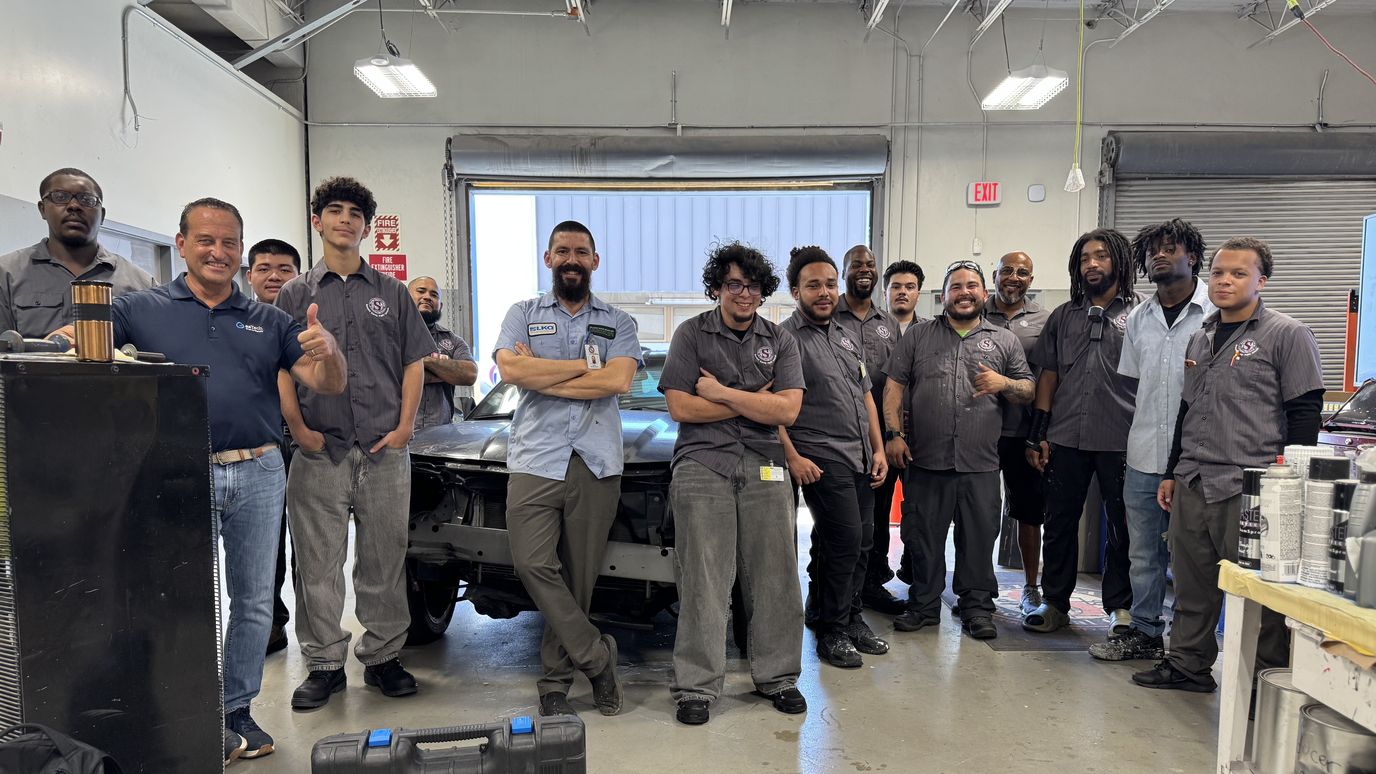
Ask ten people in a body shop what ASE collision certification is and you get ten partial answers: it is the blue patch, it is the test the insurer wants to see, it is the thing the painter has and the body man does not. All of them are pieces of one thing. Here is the whole of it in one place: what the certification is, what the five tests cover, how the experience rule works, which test to take first depending on your job, and what the words "Master Collision Repair and Refinish Technician" actually require.
What ASE collision certification is
The National Institute for Automotive Service Excellence (ASE) is an independent non-profit that has certified automotive technicians since 1972. Its collision program is a series of five tests, the B-Series, each covering one area of collision repair and refinishing. Pass a test, document two years of hands-on experience, and you are ASE certified in that area for five years. Renew it with a shorter recertification test before the five years are up and the certification continues.
Certification is by area, not all or nothing. A painter who passes ASE B2 is ASE certified in Painting and Refinishing. A body technician who passes ASE B3 is certified in Non-Structural Analysis and Damage Repair. Nobody is required to take all five, and most technicians never will, because the tests follow the jobs: two of them are for body technicians, one for painters, one for the mechanical and electrical side of a collision repair, and one for estimators.
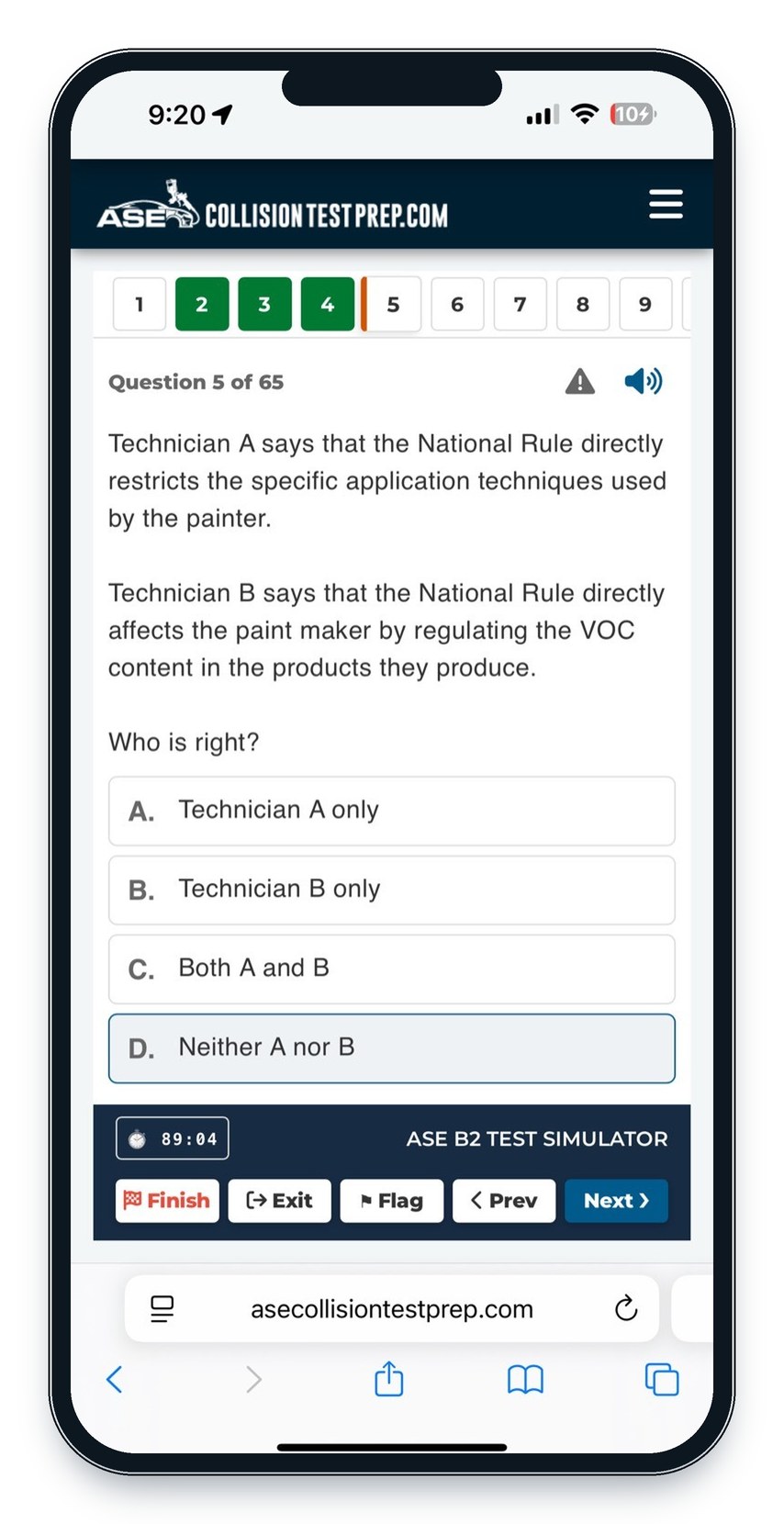
The tests are multiple choice, taken on a computer at a Prometric test center. Every question has four answers and one correct one, and the tests use two question formats: direct questions and Technician A and Technician B questions, where two statements are given and you decide who is right. The questions are written against ASE's published task lists, which is why the task list is the first thing to read before studying for any of them.
The five tests
| Test | Name | Scored questions | Time | Who takes it |
|---|---|---|---|---|
| ASE B2 | Painting and Refinishing | 55 (plus 10 unscored) | 90 minutes | Refinish technicians and painters |
| ASE B3 | Non-Structural Analysis and Damage Repair | 55 (plus 10 unscored) | 90 minutes | Body technicians |
| ASE B4 | Structural Analysis and Damage Repair | 50 (plus 10 unscored) | 75 minutes | Body technicians doing frame and unibody work |
| ASE B5 | Mechanical and Electrical Components | 50 (plus 10 unscored) | 75 minutes | Technicians handling the mechanical and electrical side of a collision repair |
| ASE B6 | Damage Analysis and Estimating | 50 (plus 10 unscored) | 75 minutes | Estimators, appraisers and shop managers |
The unscored questions are new items ASE is trialing; they look exactly like the rest and do not count toward the score.
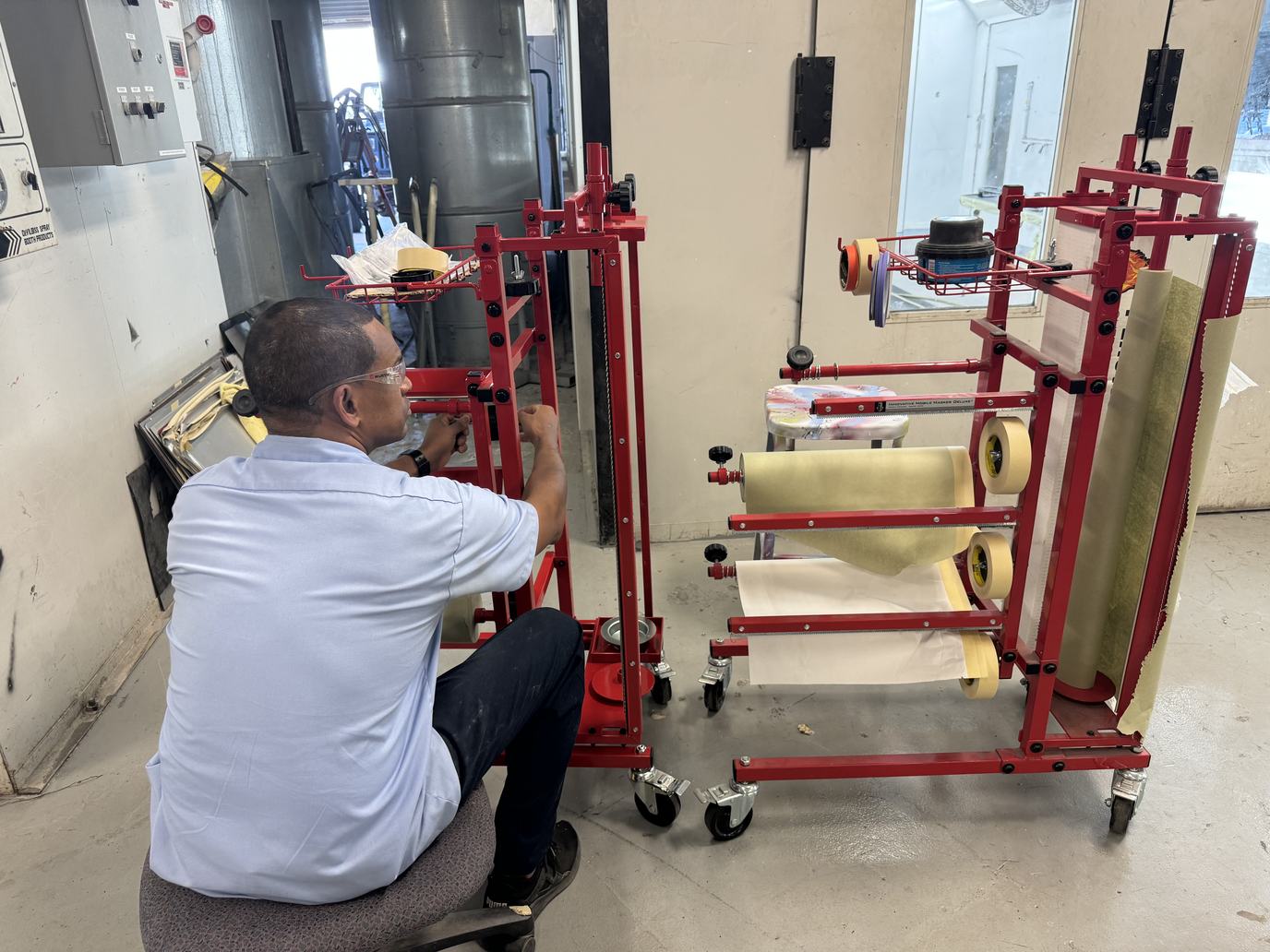
ASE B2 Painting and Refinishing covers the whole refinish process: surface preparation, spray gun operation and equipment, paint mixing, matching and applying, solving application problems at the gun, finish defects in the cured film, and safety. Surface preparation and paint mixing and matching carry 30 of the 55 scored questions.
ASE B3 Non-Structural Analysis and Damage Repair is the body technician's test: preparation and research, outer body panel repair, replacement and alignment (17 of the 55 questions), metal finishing and body filler, glass and hardware, welding, cutting and removal, and plastic repair.
ASE B4 Structural Analysis and Damage Repair covers full-frame and unibody structure: measuring, the damage types (mash, sag, sidesway, twist, diamond), repair and replacement of structural components, stationary glass, and welding, cutting and joining for steel and aluminum. Frame and unibody together are 34 of the 50 questions.
ASE B5 Mechanical and Electrical Components is the widest of the five: suspension and steering, electrical, brakes, heating and air conditioning, engine cooling, drive train, fuel, intake and exhaust, and restraint systems, all as they appear in a collision repair. Suspension and steering, electrical and restraints are 29 of the 50 questions.
ASE B6 Damage Analysis and Estimating is the estimator's test: damage analysis, estimating (procedure pages, included and not-included operations, labor values, parts sourcing, total loss), legal and environmental obligations, vehicle construction, vehicle systems knowledge, parts identification and sourcing, and customer relations.
The question count, time and content-area weighting for each test are on its page here: ASE B2, ASE B3, ASE B4, ASE B5, ASE B6, and every task ASE lists for each test is on the ASE task lists.
The experience rule
Passing the test is half of certification. The other half is two years of hands-on work experience in collision repair or refinishing. ASE's rule has three parts worth knowing:
- The experience does not have to be in the exact area of the test. Two years as a body technician counts toward ASE B2 as well as ASE B3.
- Formal training substitutes for part of it. Two full years of post-high-school training in a public or private trade school, technical institute, community or four-year college, or an apprenticeship program may be counted as one year of work experience, so a graduate of a two-year program needs one more year on the job.
- ASE B6, the estimating test, has its own two-year requirement specific to estimating work.
You may take the tests before the experience is complete. The certificate and the right to use the title wait until the experience is documented, and ASE's customer service answers questions about what counts.
Which test to take first
The right first test is the one that matches the work you do every day, because that is the one you can pass with the least new study and the one your shop will value first.
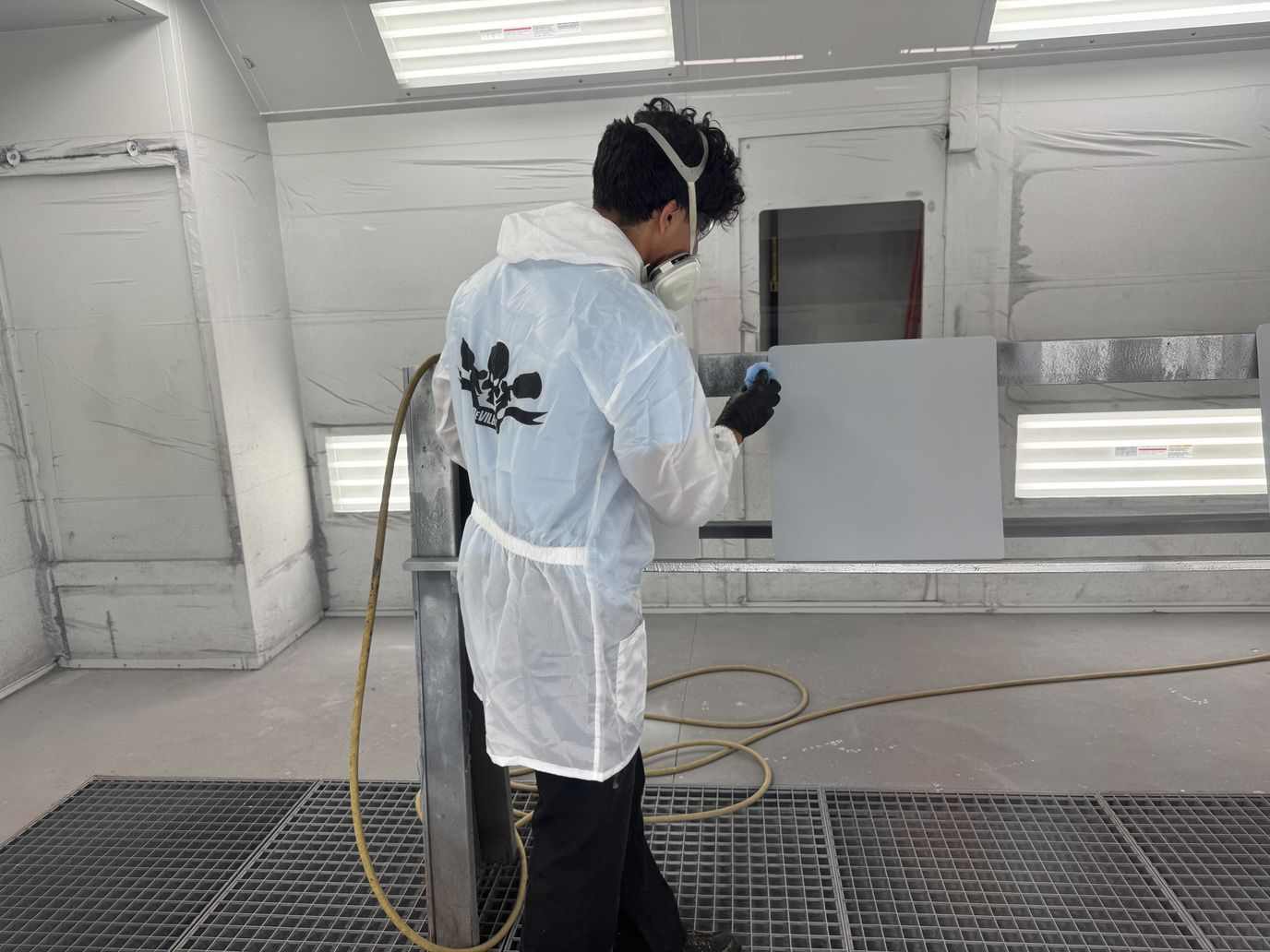
- Painters and refinish technicians: ASE B2 first. If you also do body work, ASE B3 second.
- Body technicians: ASE B3 first. It covers the daily work: panel replacement and alignment, filler, welding, plastics. Then ASE B4 for structural work, then ASE B5, and ASE B2 last if you refinish.
- Estimators and appraisers: ASE B6. It stands alone and does not count toward Master status, and many estimators also take ASE B3 to understand the repairs they write.
- Students and recent graduates: the test that matches your program's strength, with the two-year experience rule in mind; the Entry-Level series below is designed for you while you are still in school.
Whatever the order, the study method is the same: read the task list for the test, take a full-length timed practice test to find the weak content areas, and spend the study hours where the questions are. The free practice tests on this site carry 20 questions per test written in the ASE style with the reason behind every answer.
What Master Collision Repair and Refinish Technician means
The title has a precise definition. A technician who passes all four of ASE B2, ASE B3, ASE B4 and ASE B5 and has the two years of hands-on experience is recognized as an ASE Master Collision Repair and Refinish Technician. ASE B6 is not part of it; the estimating certification stands alone.
Master status is kept by keeping all four certifications current. Let one of the four lapse and the Master title lapses with it until that area is recertified. That is why technicians who hold Master status tend to schedule their recertification tests together: four areas on one clock is easier than four clocks.
For a shop, the title is the shorthand for a technician who can take a collision repair from structure to refinish, and it is the credential insurers and manufacturer programs most often ask about by name. For the technician, it is the end of a four-test sequence that most people complete over two to four years alongside the job.
Recertification: every five years
Each ASE certification is valid for five years. Before it expires, the technician takes the recertification test for that area, which is shorter than the original test and covers the same content areas. Since 2022 ASE has offered recertification tests remotely through Prometric's ProProctor application as well as at Prometric test centers; the remote option is for recertification tests only, so the first certification in any area is still taken at a center. The details of how the remote option works, what room and computer it needs and which tests are excluded are in our article on taking the ASE test from home.
The Entry-Level series for students
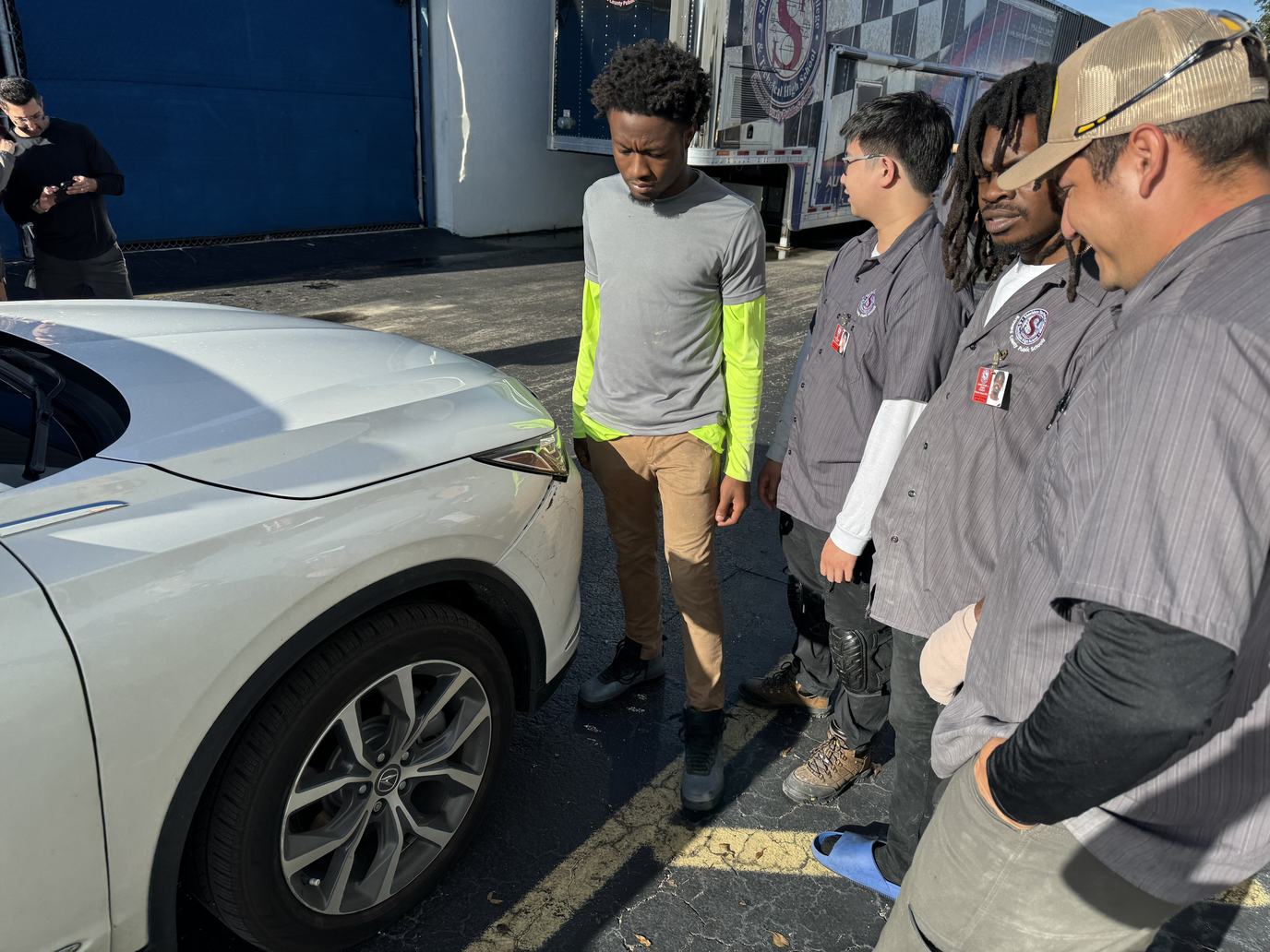
ASE also runs an Entry-Level certification program for students in collision repair school programs, administered through the ASE Education Foundation. The collision series has four tests on the same subjects as ASE B2 through B5, plus a Collision Repair and Refinish Fundamentals test; they are knowledge-based rather than diagnostic, written for students with little or no work experience, taken at the school with a proctor, and the credential is valid for two years. A student who earns an Entry-Level certificate has a head start on the B-Series, and the two-year experience clock starts with the first job. Practice for all five Entry-Level tests, built to the official task lists, is on our ASE Entry-Level page.
What certification does not do
Two honest limits. ASE certification tests knowledge; it does not watch you work. A certified technician has proven that they know the procedure, the specification and the reason, which is why shops value it, but the hands-on judgment comes from the two years of experience the rule requires. And ASE certification is not a manufacturer certification. Shops that repair for a manufacturer's certified network meet that maker's training and equipment requirements separately; ASE certification is often one of them, and it is the one the technician carries from shop to shop.
Where to start
Read the task list for the test that matches your job, take the free 20-question practice test for it, and look at the results by content area. That first hour tells you how far you are from passing and where the study hours belong. The pages for each test are linked above, the ASE task lists show every task, and the glossary carries the 5,000 terms the questions are written with.
ASE and the ASE marks are trademarks of the National Institute for Automotive Service Excellence. This site offers practice tests and study material and is not affiliated with ASE. Test facts are from ASE's published test specifications; registration and fees are set by ASE and are on ase.com.

Discussion
Join the discussion — sign in to comment.
Comments are reserved for registered students and technicians. Your name will be pulled from your profile automatically.
Log In Register