Study Guide
ASE B5 Study Guide: Mechanical and Electrical Components
50 scored questions, 75 minutes, 8 content areas. Here is what to study and in what order.
ASE B5 at a Glance
The ASE B5 Mechanical and Electrical Components test is one of five ASE collision repair and refinish certification tests. It has 50 scored questions plus 10 unscored research questions (60 in all), a 75-minute time limit, and is taken on a computer at a Prometric test center. Every question is multiple choice with four answers and one correct answer.
The scored questions are split across 8 content areas:
- Suspension and Steering: 11 questions
- Electrical: 13 questions
- Brakes: 4 questions
- Heating and Air Conditioning: 5 questions
- Engine Cooling Systems: 4 questions
- Drive Train: 5 questions
- Fuel, Intake, and Exhaust Systems: 3 questions
- Safety and Restraint Systems: 5 questions
Passing ASE B2, B3, B4 and B5 earns ASE Master Collision Repair and Refinish Technician status.
Certification is renewed every five years with a shorter recertification test. Check ase.com for current registration and fees. ASECollisionTestPrep.com is an independent study resource and is not affiliated with ASE.
Start Here
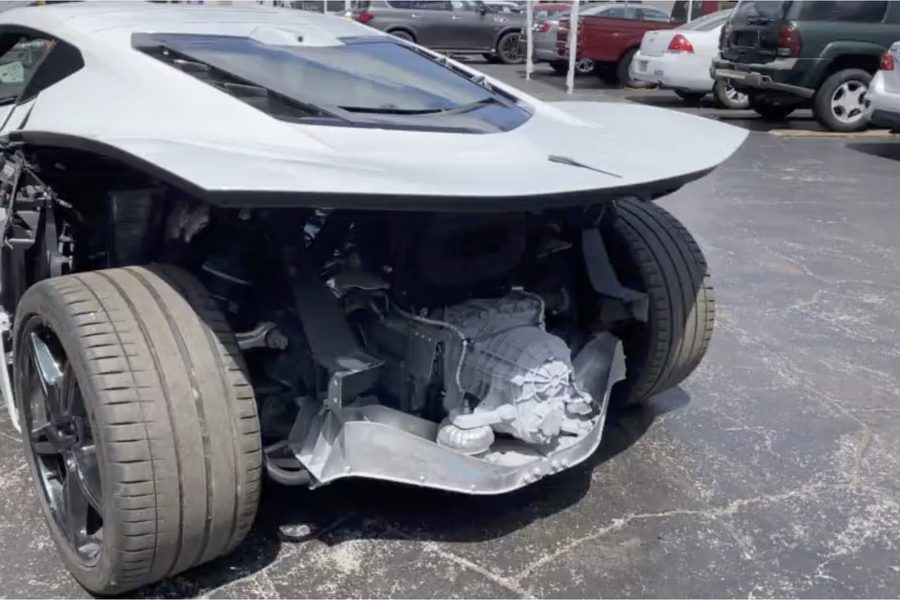
The ASE B5 Mechanical and Electrical Components test is 50 scored questions in 75 minutes across eight content areas, and it is the test where body technicians get humbled: Suspension and Steering, Electrical and Restraint Systems carry 29 of the 50 questions.
This guide walks the eight areas by weight, names the task behind each question type, lists the terms the questions use, and ends with a 30-day plan.
Where the 50 scored questions come from
- A. Suspension and Steering1122%
- B. Electrical1020%
- C. Brakes48%
- D. Heating and Air Conditioning510%
- E. Engine Cooling Systems48%
- F. Drive Train510%
- G. Fuel, Intake and Exhaust Systems36%
- H. Restraint Systems816%
Why technicians fail this test
- Electrical questions are digital multimeter questions: voltage, voltage drop, resistance, continuity and current, read the way the test words them.
- Restraint systems: the disable procedure, the wait time, one-time-use parts and the scan and initialization after come from the OEM, and the question asks for the OEM's order.
- Alignment angles (camber, caster, toe, thrust angle, steering axis inclination, included angle, setback) are asked by definition and by the symptom each one causes.

Written by Mr. Hernandez Collision Repair Instructor at Sheridan Technical College, five years teaching the ASE B-Series. About the instructor
A. Suspension and Steering
What to focus on
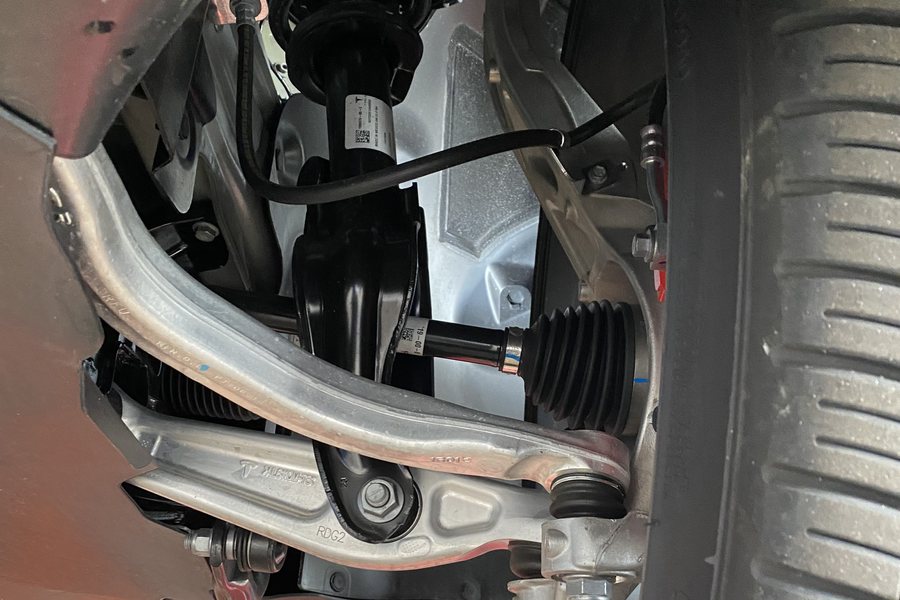
- Steering gear, linkage and suspension components: inspect, diagnose, replace, and the one-time-use fasteners that go with them.
- Alignment angles and the symptom each one produces; ride height, subframe alignment and pre-alignment inspection.
- Noise, vibration and harshness diagnosis; sensors, switches and actuators in electronic suspension and steering; initialization after repair.
Trap: A pull, wander or uneven wear question is asking which angle is out; learn the angle-to-symptom pairs.
All 41 official tasks in this area
- Identify and replace one-time use suspension fasteners.
- Inspect, diagnose, and replace rack and pinion steering gear, inner tie rod ends, and bellows boots.
- Inspect, diagnose, remove, and replace power steering pump, pulley, belts, hoses, fittings, and pump mounts. Identify fluid type specific to the vehicle; perform bleeding procedure if required.
- Inspect and diagnose steering gear (non-rack and pinion types) noises, binding, uneven turning effort, looseness, hard steering and lubricant leakage problems; determine needed actions.
- Inspect and diagnose rack and pinion steering gear mount bushings, brackets, noises, vibration, looseness, hard steering, and lubricant leakage problems; ensure proper mounting position; determine needed actions.
- Inspect and diagnose sector shaft; inspect and replace pitman arm.
- Inspect, diagnose, and replace relay rod (center link/intermediate rod/drag link).
- Inspect, diagnose, remove and/or replace idler arms, and inspect mounting locations; determine needed actions.
- Inspect, diagnose, remove, and replace tie rod sleeves, clamps, and tie rod ends.
- Inspect, diagnose, remove, and replace steering linkage damper.
- Inspect, diagnose, remove, and replace upper and lower control arms, strut rods, and bushings.
- Inspect, diagnose, remove, and replace upper and lower ball joints.
- Inspect, diagnose, remove, and replace steering knuckle/spindle/hub and bearing assemblies.
- Inspect, diagnose, remove, and replace coil springs and spring insulators (silencers).
- Inspect, diagnose, replace, and/or adjust front suspension torsion bars; inspect mounts.
- Inspect, diagnose, and replace strut cartridge or assembly, upper bearing, and mount.
- Inspect, diagnose, remove, and replace rear suspension transverse links, control arms, bushings, and mounts.
- Inspect, diagnose, remove, and replace rear suspension leaf spring(s), leaf spring insulators (silencers), shackles, brackets, bushings, and mounts.
- Inspect and diagnose front and/or rear axle assemblies for damage and misalignment; remove, repair, or replace as required.
- Inspect, diagnose, and replace shock absorbers, load-leveling devices, air springs, and associated lines, fittings, and components.
- Inspect and diagnose, adjust, or replace components (including sensors, switches, actuators, and control units) of electronically controlled suspension systems).
- Measure vehicle ride height; determine needed actions.
- Inspect, remove, replace, and align front and rear subframes (including engine cradles and axle carriers). Inspect mounting locations, bushings and isolators; determine needed actions.
- Inspect and diagnose steering column damage, looseness, and binding problems (including positioning mechanisms, collapsible columns, and steering wheels), inspect mounting locations; determine needed actions.
- Inspect, diagnose, and replace steering shaft U-joint(s) and flexible coupling(s).
- Diagnose vehicle noise, vibration, and harshness (NVH) problems (including suspension, tire, and driveline); determine needed actions.
- Diagnose vehicle wandering, pulling, hard steering, bump steering, memory steering, torque steering, and steering return problems; determine needed actions.
- Measure front and rear wheel camber; determine needed repairs or adjustments.
- Measure caster; determine needed repairs or adjustments.
- Measure front and rear wheel toe; determine needed repairs or adjustments.
- Identify toe-out-on-turns (turning radius) and related problems; determine needed actions.
- Identify SAI (steering axis inclination), included angle, and scrub radius related problems; determine needed actions.
- Identify thrust angle related problems; determine needed repairs or adjustments.
- Measure wheel setback and wheel base; determine needed actions.
- Perform pre-alignment inspection; identify tire condition, size, and application, and check air pressure; determine needed actions.
- Inspect wheels, tires and pressure monitor sensors (TPM) for damage; balance tires; determine needed actions.
- Inspect and diagnose wheel, hub, and axle bearing for damage; determine needed action.
- Inspect and diagnose front and rear stabilizer (anti-sway bar) systems; determine needed actions.
- Perform initialization, calibration, or reprogramming procedures as required.
- Verify effectiveness of suspension and steering repairs.
- Inspect and diagnose, adjust or replace components (including sensors, switches, actuators, and control units) of steering systems (including electronically controlled hydraulic and electronically assisted steering systems).
B. Electrical
What to focus on
- Digital multimeter measurements: voltage, voltage drop, resistance, continuity, current, and what each result means.
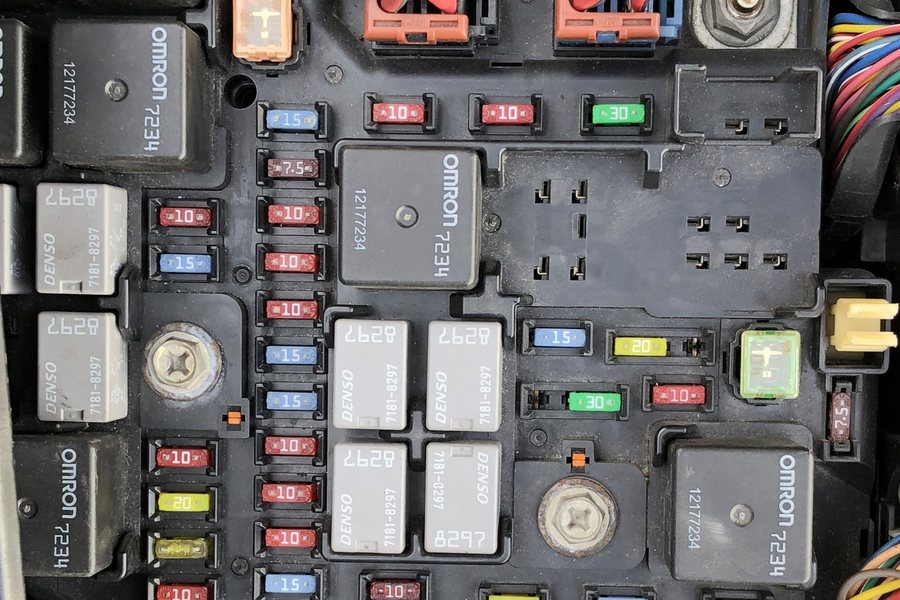
- Circuit protection, relays, switches, motors, battery handling and charging-system parts; headlamp aiming.
- Body electrical systems (lighting, wipers, power windows, seats, locks, liftgates, mirrors, antennas), diagnostic trouble codes, programmable modules, advanced driver assistance diagnosis and calibration.
Trap: Voltage drop is measured with the circuit loaded; a reading taken with the circuit off answers a different question.
All 33 official tasks in this area
- Measure voltage in electrical wiring circuits with a DMM (digital multimeter); determine needed actions.
- Measure continuity and resistance in electrical wiring circuits and components with a DMM (digital multimeter); determine needed actions.
- Check electrical circuits, wiring, connectors, terminals, terminal tension, sockets, and routing; determine needed action.
- Inspect, test, and replace fusible links, circuit breakers, and fuses.
- Inspect, test, and replace relays and solenoids.
- Inspect, test, repair and/or replace electrical circuit switches.
- Inspect, test, and replace electrical motors.
- Identify personal safety precautions, safe battery handling. Inspect, test, clean, charge, and replace battery, battery cables, connectors, and clamps.
- Identify programmable electrical/electronic components and modules; determine needed action.
- Inspect, test, remove, and replace alternator/generator, drive belts, pulleys, tensioners, and fans; inspect and adjust alignment.
- Align/aim headlamps and fog/driving lamps.
- Inspect, test, adjust, and repair or replace components of exterior lighting systems; verify system operation.
- Inspect, test, and repair or replace components of interior lighting systems; verify system operation.
- Inspect, test, repair or replace horn system components; verify system operation.
- Inspect, test, repair or replace components of wiper/washer systems; verify operation.
- Inspect, test, repair or replace components of power window systems; verify operation.
- Inspect, test, repair or replace components of power seats, heated/cooled seats; verify safety and comfort operation.
- Inspect, test, repair or replace components of electrical, mechanical door and hatch/trunk locks; verify operation.
- Inspect, test, repair or replace components of power sliding doors and power liftgates; verify system operation.
- Inspect, test, repair or replace components of keyless lock/unlock devices and security systems; verify system operation.
- Inspect, test, repair or replace electrical and mechanical components of sunroofs or convertible/ retractable tops; verify system operation.
- Inspect, test, repair or replace electrically heated mirrors and back glass; verify operation.
- Inspect, test, repair or replace electrical/electronic antennas; verify operation.
- Inspect, test, repair or replace electrical interior and exterior mirrors; verify operation.
- Retrieve diagnostic trouble codes (DTCs); verify malfunction indicator lamp (MIL) status; record freeze frame data information; determine needed action.
- Identify personal safety precautions, safe battery handling, and high voltage system diagnostic and repair considerations associated with hybrid/electric and alternative fuel vehicles.
- Inspect, test and diagnose operation of advanced driver assistance systems (ADAS) (such as: collision avoidance and mitigation, active cruise control, back-up camera/sensors, lane departure, lane keeping and park assist).
- Perform initialization, calibration or synchronization procedures.
- Measure voltage drop in electrical circuits with a digital multimeter (DMM); determine repair procedure.
- Determine vehicle connectivity; determine needed actions.
- Measure current flow (amperage) in electrical wiring circuits with a digital multi-meter (DMM); determine needed action.
- Research applicable vehicle and service information, such as vehicle service history, service precautions, technical service bulletins, and service campaigns/recalls.
- Inspect, test, calibrate and verify vehicle features and systems incorporated in fixed glass.
C. Brakes
What to focus on
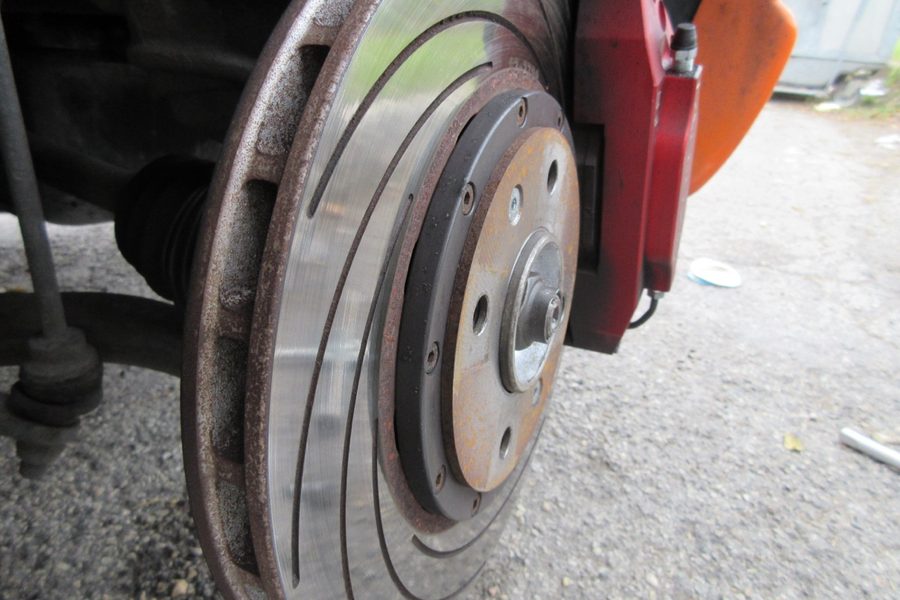
- Caliper, hose and fitting inspection; brake fluid type by application; bleeding and flushing methods.
- Pads, rotors, drums and shoes; wheel studs and torque; caliper slides and mounts; parking brake.
- Antilock brake wheel speed sensors, traction and stability control components and the verification after.
Trap: Fluid type and bleeding sequence come from the OEM; the question gives the vehicle and expects the manufacturer's answer.
All 9 official tasks in this area
- Inspect brake calipers, wheel cylinders, hoses, and fittings for leaks, dents, kinks, rust, cracks or wear; tighten fittings and supports; replace brake lines (double flare and ISO types), hoses, fittings, seals, and supports.
- Inspect/test brake fluid; determine proper fluid type for application.
- Bleed (manual, pressure, vacuum, or surge) and/or flush hydraulic brake system; verify system operation.
- Inspect, remove, and replace disc brake, pads, rotors and/or drums and shoes; adjust as necessary.
- Inspect and replace wheel studs and fasteners. Reinstall wheels and torque fasteners.
- Inspect brake caliper mounts and slides for wear and damage; determine needed actions.
- Inspect parking brake system operation; repair or adjust as necessary; verify proper operation.
- Identify, test, and replace ABS wheel speed sensor and components.
- Identify, repair or replace traction control and electronic stability control components; verify operation.
D. Heating and Air Conditioning
What to focus on
- Recover, recycle and recharge; refrigerant and oil identification and quantity; compressor, clutch and belt service.
- Lines, fittings, condensers, driers and evaporators; airflow and fan operation; ducts, doors and controls.
- Initialization and calibration after air-conditioning repairs, and the Section 609 certification rule for handling refrigerant.
Trap: Refrigerant and oil type and charge weight come from the under-hood label and the OEM, never from a guess by vehicle class.
All 13 official tasks in this area
- Recover, recycle and recharge A/C system; identify refrigerant and oil type, determine oil and refrigerant capacities; leak test and check high and low side gauge readings; verify system operation.
- Inspect, adjust, and replace A/C compressor drive belts; check pulley tensioner alignment and clutch operation.
- Inspect, remove, and replace A/C compressor and clutch.
- Inspect, repair or replace A/C system mufflers, hoses, lines, fittings, pressure switches, pressure sensors, valves, and seals.
- Verify A/C condenser air flow and cooling fan operation.
- Inspect, test, and replace A/C system condenser, mountings, seals, and deflectors.
- Remove and replace receiver/drier or accumulator/drier.
- Remove and replace evaporator; inspect evaporator housing and water drain.
- Inspect, test, repair or replace heating, ventilating, and A/C system, electrical/vacuum and mechanical controls, sensors and actuators.
- Inspect, test, clean, and repair or replace heating, ventilating, and A/C ducts, housing(s), doors, hoses, filters, and outlets.
- Inspect, repair or replace heating system hoses, lines, fittings, seals and components; verify operation.
- Perform initialization, calibration, or synchronization procedures following A/C system repairs if required.
- Inspect, test, remove or replace A/C compressors (fixed displacement, variable displacement, and electric).
E. Engine Cooling Systems
What to focus on
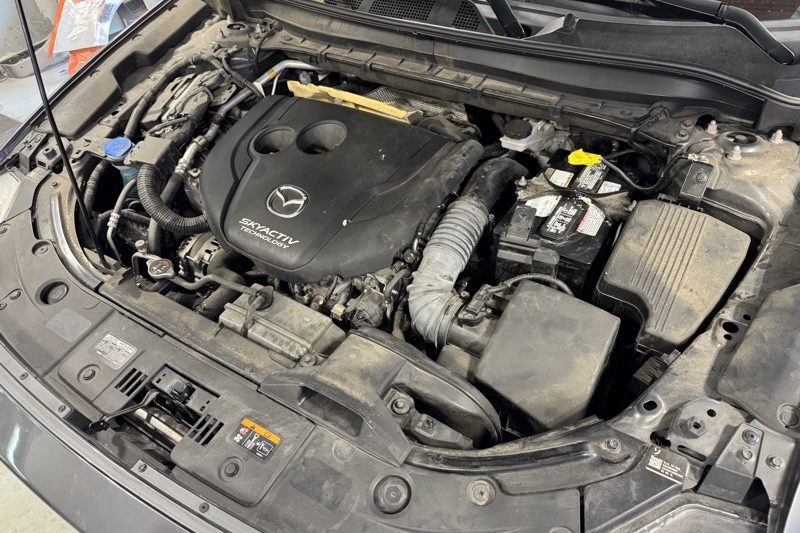
- Radiator, mounts, cap, recovery system and hoses; thermostat and housing; fan components.
- Flushing, bleeding and refilling with the proper coolant and protection level; auxiliary coolers.
Trap: Coolant type and mix ratio are OEM-specific; air pockets after a refill are a bleeding-procedure question.
All 5 official tasks in this area
- Inspect, test, remove, and replace radiator, mounts, pressure cap, coolant recovery system, hoses, seals, and water pump.
- Remove and replace thermostat, by-pass, and housing.
- Recover, flush, bleed, and refill system with proper coolant, verify protection level.
- Inspect, remove, and replace electrical/mechanical cooling fan components; verify operation.
- Inspect, remove, and replace auxiliary oil/fluid coolers and components.
F. Drive Train
What to focus on
- Powertrain assembly and mounts; electronic components and connectors; shift and clutch linkages.
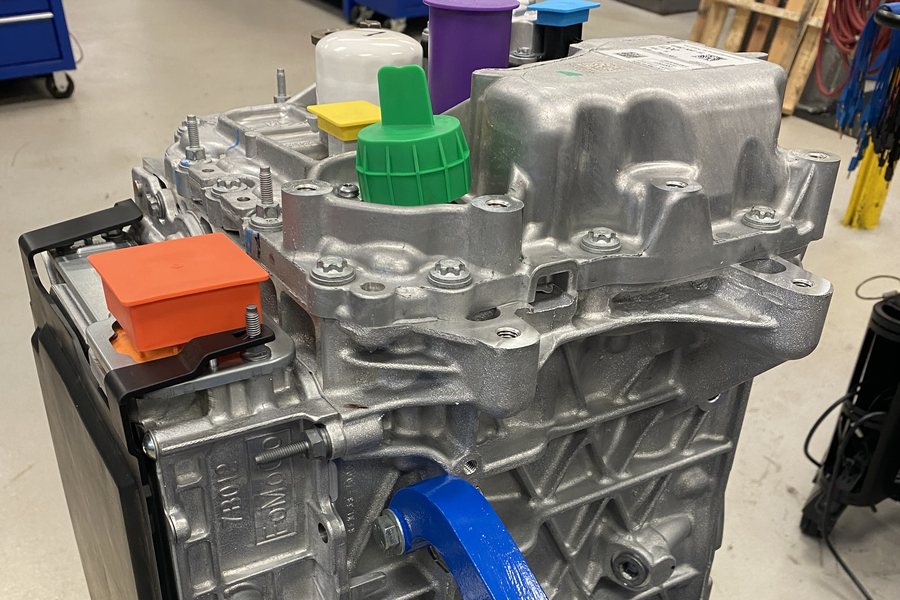
- Drive axles, half-shafts, constant-velocity joints, drive shafts, center bearings and universal joints; transaxles, transmissions and transfer cases.
Trap: Boot, joint and axle questions are about inspection findings (clicking, vibration, grease) and the matching part.
All 7 official tasks in this area
- Inspect, remove, and replace powertrain assembly and components; inspect, replace, and align powertrain mounts, subframes, and engine cradles.
- Inspect, remove, and replace electronic components, wires, terminals, terminal tension, and connectors.
- Inspect, remove, replace, and adjust electrical, mechanical or hydraulic shift/throttle and clutch components.
- Inspect, remove, and replace front and/or rear drive axle assembly.
- Inspect, remove, and replace half-shafts and constant velocity (CV) joints, tripod joints, and components.
- Inspect, remove, and replace drive shafts, center support bearings, and universal joints.
- Inspect, remove, and replace transaxles, transmissions, and transfer cases.
G. Fuel, Intake and Exhaust Systems
What to focus on
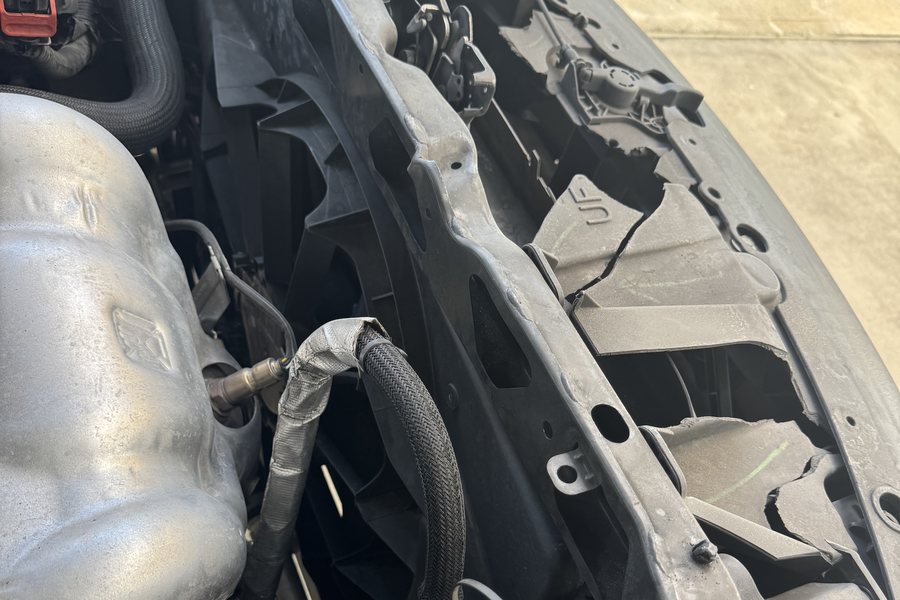
- Exhaust components and sensors; fuel tank, pump, lines and rollover valve; intake, turbocharger and intercooler parts.
- Evaporative emission components and the initialization after fuel-system work; after-treatment components and controls.
Trap: Fuel-system safety steps (relieving pressure, disconnecting the battery, ventilation) come before any removal answer.
All 6 official tasks in this area
- Inspect, remove, and replace exhaust manifold, exhaust pipes, mufflers, converters, sensors, resonators, tail pipes, heat shields, and components.
- Inspect, remove, and replace fuel tank, straps, fuel pump, fuel tank filter, rollover valve, fuel cap, fuel filler hose, fuel filler-to-body seal, and inertia switch; inspect and replace fuel lines and hoses; check fuel for contaminants.
- Inspect, remove, and replace intake manifold, air cleaner, turbocharger, waste gates, intercooler, hoses, and sensors.
- Inspect, remove, and replace canister, filter, sensors, vent, and purge lines of fuel vapor control systems; ensure proper routing.
- Perform initialization, calibration, or synchronization procedures.
- Inspect, test, replace exhaust after treatment system components and controls.
H. Restraint Systems
What to focus on
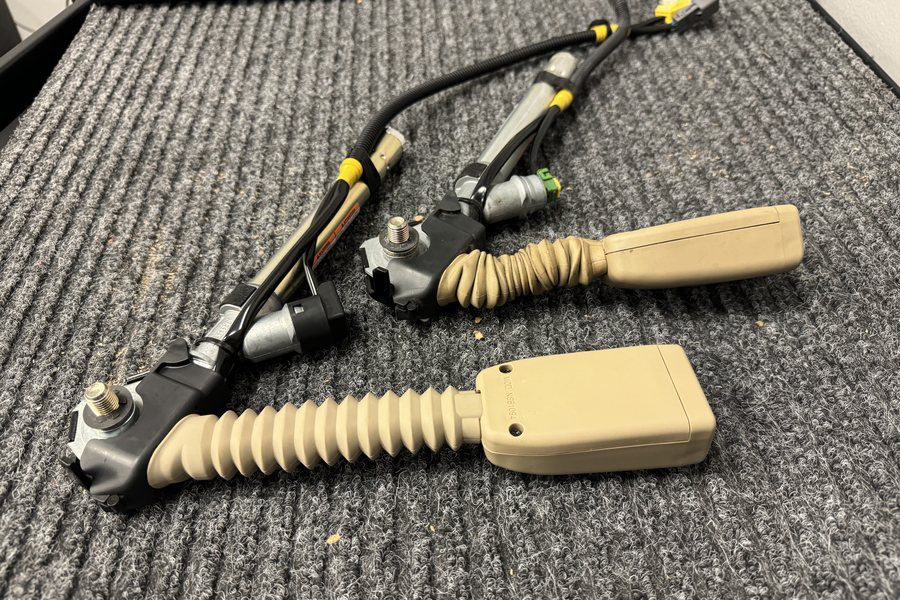
- Inspect mounting areas; deactivate, inspect, replace and reactivate the supplemental restraint system per the OEM, including the wait time.
- Deployed and non-deployed airbags and pretensioners: handling, storage and disposal; diagnostic trouble codes for the restraint system.
- Initialization and calibration after restraint work; roll-over protection and pedestrian protection systems.
Trap: Any answer that reuses a deployed part, skips the wait time, or skips the post-repair scan is wrong.
All 7 official tasks in this area
- Inspect restraint system mounting areas for damage; repair or replace as needed. Research applicable vehicle service information to determine if components are reusable (fasteners, trim, headrests, and airbags).
- Deactivate, inspect, replace, and reactivate supplemental restraint system (SRS) and components; verify system operation readiness.
- Inspect, remove, replace, and dispose of deployed and non-deployed airbag(s) and pretensioners; store airbag(s) during vehicle service.
- Use diagnostic trouble codes (DTCs) to diagnose and repair the Supplemental Restraint System (SRS), including occupant classification systems (OCS).
- Perform initialization, calibration, or synchronization procedures following restraint system repairs.
- Inspect, test, remove and replace roll-over protection; verify operation.
- Inspect, test, remove and replace pedestrian protection systems; verify operation.
A 30-Day ASE B5 Study Plan
Diagnostic, Suspension and Steering
Take a full timed practice test. Then Suspension and Steering (22 percent): components, alignment angles and symptoms, ride height, electronic suspension, initialization.
Electrical and Restraint Systems
36 percent together: multimeter measurements, circuit protection, body electrical systems, diagnostic trouble codes, advanced driver assistance calibration; restraint deactivation, parts handling, scan and initialization.
Heating and Air Conditioning, Brakes, Cooling, Drive Train, Fuel
The five smaller areas (42 percent together): refrigerant handling and Section 609, brake fluid and bleeding, coolant and bleeding, axles and joints, fuel-system safety.
Review and timed tests
Two full timed practice tests on different days, every miss reviewed against the task list. Stop new material 48 hours before the test.
Key Terms to Know
539 more in the ASE B5 glossary, each with a plain-words definition.
ASE B5 Study Guide FAQ
- How long should I study for the ASE B5?
- Four to five weeks at an hour a day; it is the widest of the collision tests. Suspension and Steering, Electrical and Restraint Systems are 29 of the 50 scored questions, so the first two weeks go there.
- What should I study first for the ASE B5?
- Suspension and Steering (11 questions) and the digital multimeter measurements behind the Electrical area (10 questions).
- Does the ASE B5 cover hybrid and electric vehicles?
- Yes. The Electrical area includes high-voltage safety precautions and diagnostics, and the Restraint area includes the related disable procedures.
- Where can I practice ASE B5 questions free?
- The free ASE B5 practice test on this site has 20 questions written in the ASE style with the answer and the reason, no sign-up.
More on the ASE B5 Test
- How to Pass the ASE B5 Mechanical & Electrical Components Test
- What Is ASE Collision Repair Certification? The Five Tests, Which One to Take First, and What Master Status Means
- ASE B5 Mechanical & Electrical: How to Read Wiring Diagrams Fast
- ADAS Calibration After Collision Repair: ASE B5 Essentials
Next Steps
ASE®, the ASE logo, and "ASE Certified" are registered trademarks of the National Institute for Automotive Service Excellence. This site is an independent study resource and is not affiliated with, endorsed by, or sponsored by ASE. Content areas, question counts and pass requirements follow ASE's published test specifications.