Every collision estimator has had the conversation. The adjuster asks why there is a pre-repair scan on the estimate, or why the quarter panel is being replaced instead of sectioned at the shop's usual spot, or why the airbag module is new and not from a recycler. The answer that ends the conversation is not "that is how we do it." It is a document with the manufacturer's name on it that says exactly that, and the name of that document is a position statement.
This article explains what an Original Equipment Manufacturer (OEM) position statement is, how it differs from a repair procedure and a technical service bulletin, what the big makers actually say in theirs, and where to find them without paying for anything. It matters on the job, and it matters on the ASE B6 Damage Analysis and Estimating test.
What a position statement is
A position statement is a short document, usually one to three pages, in which a vehicle manufacturer states its position on one repair question. The question is always one that comes up on real estimates and gets argued about: Is a diagnostic scan required before and after a repair? May a structural part be sectioned, and where? May two damaged vehicles be cut and joined to make one? May a salvaged airbag be installed? May a wheel be straightened or re-chromed? May the clearcoat be blended into the middle of a panel?
The statement gives the maker's answer and, usually, the reason. It does not tell you how to do the job. That is the difference between a position statement and a repair procedure, and the difference matters:
- A repair procedure is written for one model and one operation. It lists the steps, the tools, the one-time-use fasteners, the torque values, the adhesive, the weld type and count, and the corrosion protection. The technician follows it.
- A position statement applies across the maker's vehicles and settles one question. The estimator cites it, and the technician checks it before planning a repair the procedure does not cover directly.
- A technical service bulletin describes a known condition on specific models and the fix for it. It can carry the weight of a position statement when it says a repair method is not approved, and General Motors publishes some of its positions in bulletin form.
On the ASE B6 test, the first content area is Damage Analysis and the second is Estimating, but the obligations live in a smaller area called Legal and Environmental Practices. One of its tasks is to recognize the obligation to restore the vehicle based on the vehicle manufacturer's specifications. A position statement is how that obligation is documented on an estimate.
What the manufacturers actually say
The statements below are in the OEM Data library we use to ground the ASE Academy lessons. The wording is ours; the rules are theirs, and every one can be read in full on the maker's own site.
Honda and Acura: scan before, scan after, calibrate what the repair touched
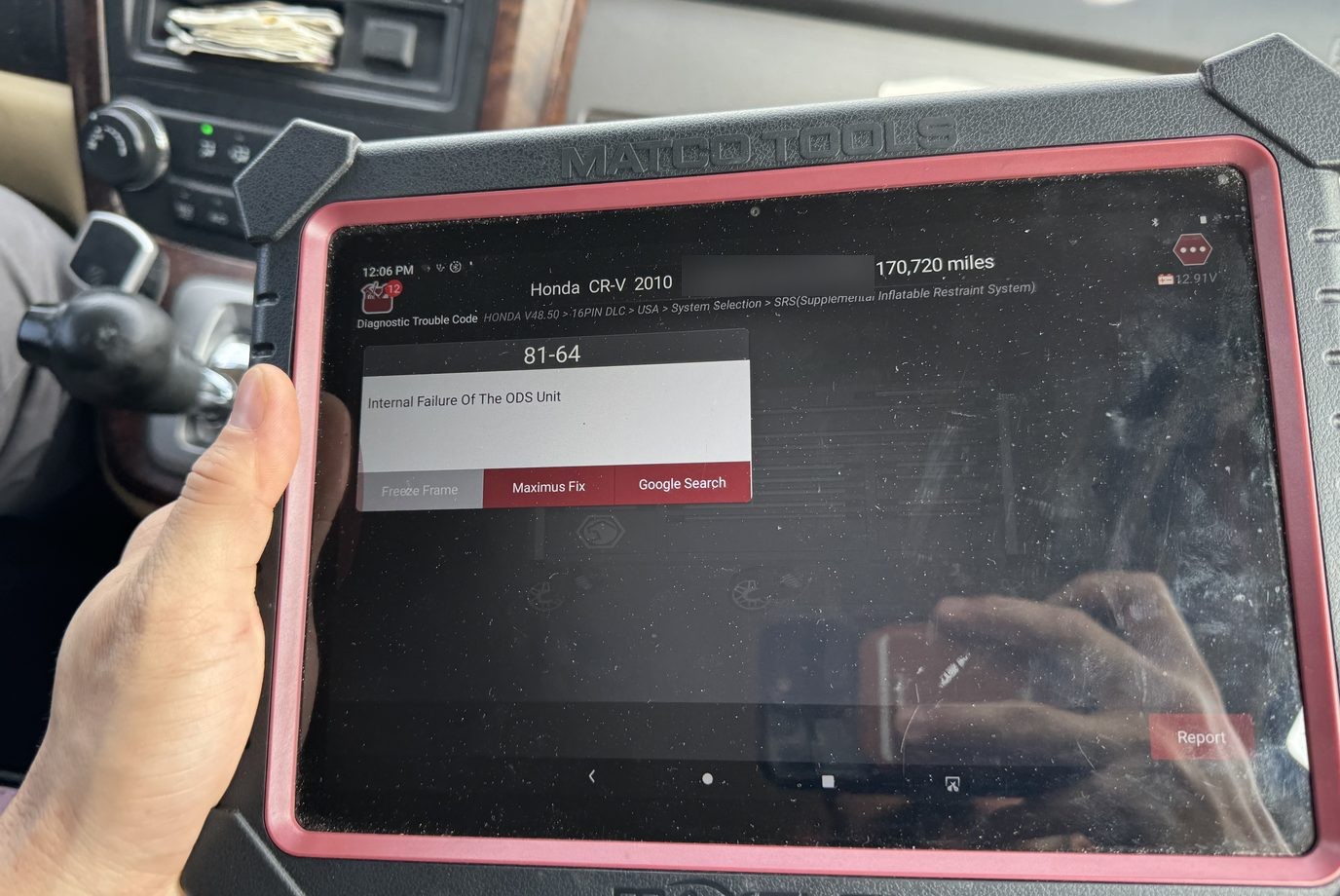
American Honda's position statement on post-collision diagnostic scans and calibrations, revised in July 2025, sets a minimum for every Honda and Acura vehicle involved in a collision. A preliminary diagnostic scan is done during the estimating phase, so that any Diagnostic Trouble Code (DTC) that is present is found and the repair to clear it is written into the estimate. A post-repair scan is done after the work to confirm that no codes remain. Honda adds two rules that estimators miss: any repair that requires disconnecting an electrical component requires a post-repair scan to prove the component was reconnected and works, and any damage that requires replacing a body part always requires a post-repair scan. The statement then points to the inspections, calibrations and aiming that specific safety and driver assistance systems require after body work.
Honda's other statements cover the ground you would expect from a maker with a strong position on parts: Genuine Parts; Driver Assist Safety System May Fail Unless OE Parts Used; Replacement of Structural Parts; Supplemental Restraint System (SRS) Replacement Parts; Salvaged and Used Air Bag System Components; Steel Usage and Repairability; Steel and Aluminum Wheel Repair; Seat Covers and Side Airbag Components.
General Motors: scan every collision vehicle, and never clip
GM's position statement on pre- and post-scan of collision vehicles, dated October 2016, takes the position that every vehicle being assessed for collision repairs must be tested for DTCs during the estimate, to identify the repairs required, and must be retested after all repairs are complete, to verify that the faults were repaired and that no new ones were introduced. GM states plainly that even minor body damage or a glass replacement may damage a safety-related system, that any loss of battery voltage or disconnection of circuits requires the vehicle to be tested afterward, and that many safety and security components need calibration or a learn procedure when replaced, per GM's own service information.
GM's rule on clipping is published as a bulletin, 07-08-98-001B, revised August 3, 2016, and it applies to 2000 through 2017 GM passenger cars and trucks. Clipping means cutting two damaged vehicles through the windshield pillars, the rocker panels and the floor pan and joining the undamaged halves. GM does not approve it, because it cuts across the vehicle's major load paths and can reduce structural integrity, and the bulletin states that clipping voids GM's new-vehicle, service-part and corrosion warranties for every part in the clip.
GM's other statements in the set: Air Bags; Reuse of Salvage Structural Parts; Salvage and Recycled Parts Use; Safety System Repairs and Inspections Required After a Collision; Seat Belt Repairs and Inspections Required After a Collision; Refinishing Aluminum Wheels and Chrome Wheels; Wheel Alignment Specifications, Requirements and Recommendations; Bumper and Fascia Replacement with Advanced Driver Assistance Systems (ADAS); and a reference list of vehicles supported by GM scan tools.
Ford: ten statements, and the one painters argue about
Ford publishes its collision positions as numbered statements, and the set that applies to a 2014 Edge or a 2016 F-150 is the same ten documents: Clearcoat Blending Procedure Not Approved; Clip Repair Procedure Not Approved; Remanufacturing or Refinishing Steel and Aluminum Wheels; Structural Repairs; Use of Non-OEM and Salvage Parts; Use of Salvaged Supplemental Restraint Systems and Components; Pre- and Post-Diagnostic Scanning During a Collision Repair; Use of Non-OEM Glass; Use of Non-OEM Structural Rivets; and Bumper Fascia Repair with ADAS.
Two of those change estimates every week. The clearcoat statement is the reason a Ford refinish line reads "clear the complete panel": Ford does not approve blending clearcoat part way across a panel, so the clear goes edge to edge even when the color is blended. The ADAS fascia statement is the reason a repaired bumper cover with a radar or a parking sensor behind it is a replacement on a Ford estimate: Ford's position is that repairing a fascia in front of those sensors can create system operation concerns, and the sensors cannot tell you that from the driver's seat.
Toyota: the approved-methods documents
Toyota's collision library reads differently. Alongside statements on SRS repair precautions and on SRS and high-voltage wiring repairs, Toyota publishes documents titled Approved Collision Repair Methods and Body and Frame Sectioning, and a family of paint guides going back to the 1990s that are still the maker's word on refinish. Toyota's answer to "may I section this rail" is therefore not a one-page yes or no; it is the sectioning document and the model's repair manual read together, which is why the ASE Academy B4 lessons send students to the Toyota procedure rather than to a general rule.
Tesla: the rules live inside the procedures
Tesla does not publish a separate set of position statements. Its collision repair procedures, its structural pack procedures and its service manuals are published on its own service site and can be read without a subscription, and the "do not" rules sit inside them: which rivets and adhesives are approved, where the cast underbody may not be repaired, which zones around the radar may not be touched. For a Tesla, the procedure is the position statement, and an estimator who wants to cite Tesla cites the procedure by name and date.
What the statements have in common
Read a stack of them and the same five subjects come back from every maker:
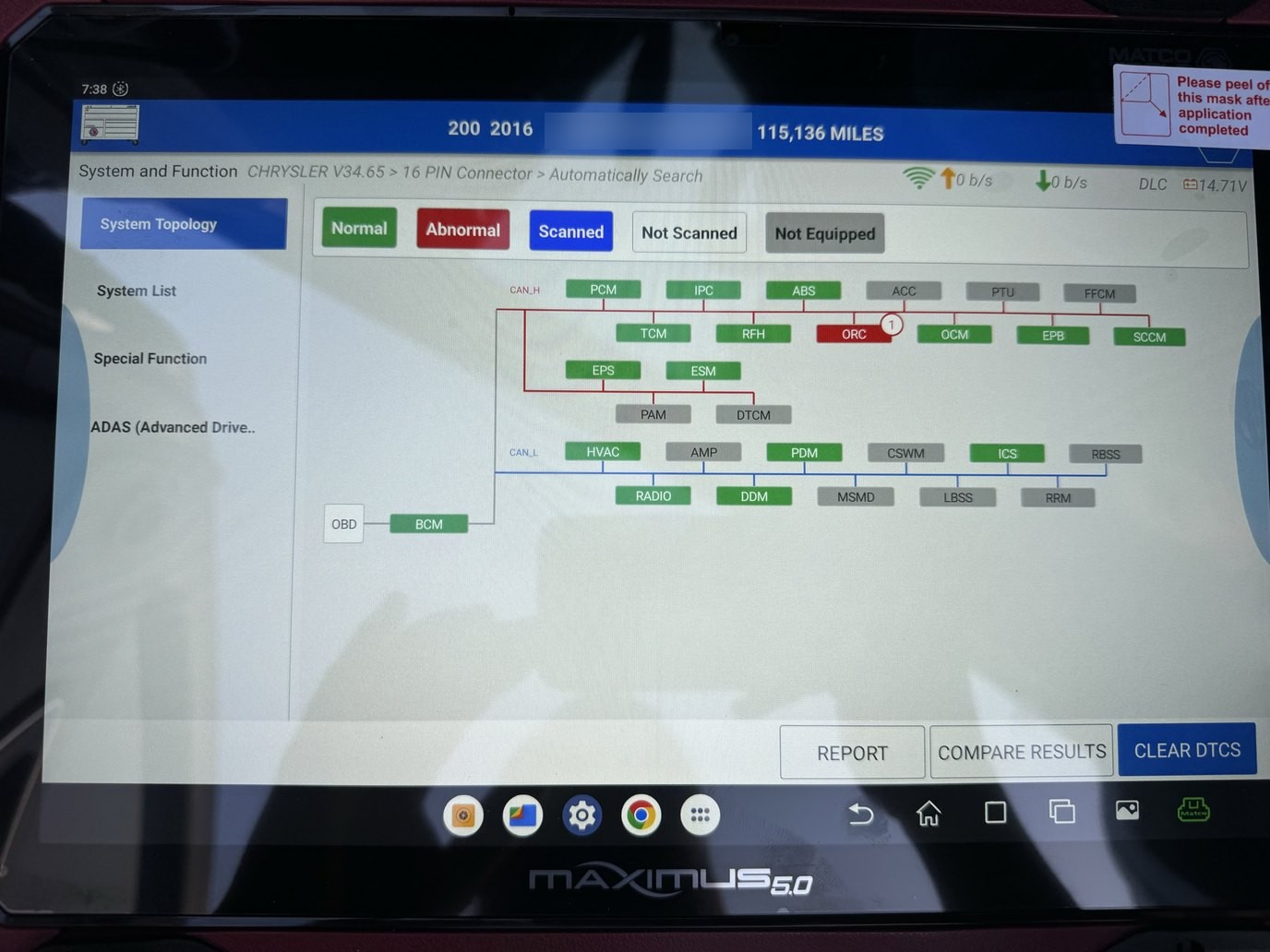
- Scanning. Pre-repair and post-repair diagnostic scans, and the calibrations the repair triggers. Honda and GM are explicit that even minor damage or a glass replacement qualifies.
- Structural repair. Which parts may be sectioned and where, which may not be repaired at all, and that clipping is not approved by any maker in the set.
- Restraints. Salvaged, used or recycled airbags, pretensioners and seat belts are not approved, and seat belt inspection after a collision is required.
- Parts. The maker's position on non-OEM, salvage, recycled and remanufactured parts, and on glass, rivets and wheels in particular.
- Refinish. Clearcoat blending, wheel refinishing, and paint repair guides.
Those five subjects map onto ASE B6 content areas: Damage Analysis (what to inspect and scan), Estimating (which operations to write and how to source parts), Parts Identification and Source Determination (OEM, alternative OEM, aftermarket, recycled, remanufactured), and Legal and Environmental Practices (why the repair plan follows the maker). They also map onto ASE B4 Structural Analysis and Damage Repair, where sectioning location and steel type decide the repair.
Where to find them, free
Start at OEM1Stop.com. It is run by the OEM Collision Repair Roundtable, launched in 2008, and it indexes the collision repair information sites of more than forty vehicle manufacturers; Lucid became the latest to join in September 2025. Since 2016 the site has also linked each maker's position statements directly, which is what makes it the first stop: pick the maker, and the statements are one click away without a login.
From there, each manufacturer's technical information site carries its own statements. Repair procedures on most of those sites are behind a short-term or annual subscription; the position statements are generally open, because the makers want them read. Toyota's technical information system, GM's service information, Ford's service information site, Honda's ServiceExpress and Tesla's service site each publish their statements or, for Tesla, the procedures that contain them.
Two habits make the search faster:
- Save the PDF with its date. Statements are revised. Honda's scan statement carries a July 2025 revision date, GM's clipping bulletin a 2016 revision, and the older version is still floating around on the internet. An estimate that cites a statement should cite the current one.
- Cite the title, not the idea. "Per Honda's Post-Collision Diagnostic Scan and Calibration Requirements, revised July 2025" settles an argument. "Honda wants a scan" does not.
How to use one on an estimate
A position statement earns its place on an estimate in a line note, not in a speech. The operation gets written the normal way, and the note names the document: the pre-repair scan line says why it is there, the replace-not-repair fascia line says why the repair was not written, the new airbag module line says why a recycled one was not sourced. The customer sees the maker's name, the adjuster sees a document that can be checked, and the file carries the reason if the repair is ever questioned.
That is also the habit the ASE B6 test rewards. The questions do not ask you to recite a statement. They describe a vehicle and a repair and ask what the estimator must do, and the answer is the one the manufacturer's rule supports: scan it, replace the part the maker does not approve repairing, decline the salvaged restraint, cite the specification. An estimator who reads position statements for a living has already seen every one of those questions.
Where this fits in your study
The free ASE B6 practice test carries questions written the way the test asks them, with the reason behind each answer. The ASE B6 task list shows every task the Legal and Environmental Practices area covers. And for the structural side of the same documents, the ASE B4 practice test asks the sectioning and steel-type questions that Toyota's and GM's statements decide.
This article describes the manufacturers' published positions in our own words. The documents themselves belong to the manufacturers and should be read in full on their sites before they are cited on an estimate. ASE Collision Test Prep is not affiliated with any vehicle manufacturer or with ASE.

Discussion
Join the discussion — sign in to comment.
Comments are reserved for registered students and technicians. Your name will be pulled from your profile automatically.
Log In Register