The question comes up on every structural estimate and most mechanical ones: what does the manufacturer say? Not what the shop has always done, not what the recommended-practice class taught, not what the estimating guide's procedure page allows, but what the company that built the car publishes for repairing it. The first article in this pair explained what a manufacturer's position statement is. This one answers the practical question that follows: where the repair procedure actually lives, maker by maker, what it costs, and what to pull before you write.
It matters for the job because the Original Equipment Manufacturer (OEM) procedure is the fact the repair is measured against. It matters on the ASE tests because the ASE B3 Non-Structural test's first content area opens with "research and determine repair plan, locate procedures," the ASE B4 Structural test writes "in accordance with vehicle manufacturer specific procedures" into most of its fifty tasks, and the ASE B6 Damage Analysis and Estimating test asks the estimator to restore the vehicle to the manufacturer's specifications. A technician who knows where the procedure is has already answered the first part of those questions.
What counts as the OEM procedure
Three documents get called "the procedure" in a shop, and only one of them is:
- The repair procedure is written by the manufacturer for one model and one operation: remove and replace a quarter panel, section a rear rail, replace a windshield, disable the high-voltage system. It lists the steps, the one-time-use fasteners, the adhesives and welds by type and count, the torque values, the cautions, and the calibration or initialization that follows. This is the document.
- The procedure page in CCC ONE, Mitchell or Audatex belongs to the estimating guide, not the manufacturer. It says what the labor time includes and does not include. It is essential for the estimate and useless as a repair instruction.
- The recommended practice from a training organization is a general method. It is a good way to learn a skill and the wrong thing to cite when the manufacturer has published something specific, because the manufacturer's document wins. That ranking is the subject of our earlier article on OEM procedures versus recommended practices.
Alongside the repair procedure, the manufacturer publishes the structural repair or sectioning document for the model, position statements on repair questions, technical service bulletins, and the wiring and component location information a mechanical repair needs. For a structural job, the sectioning document is read with the procedure, because the procedure says how to replace the part and the sectioning document says where you may and may not cut.
Route one: OEM1Stop, the free front door
Start at OEM1Stop.com. It is run by the OEM Collision Repair Roundtable, it has been online since 2008, and it indexes the collision repair information sites of more than forty vehicle manufacturers; Lucid joined in September 2025 as the forty-third. Since 2016 it has also linked each maker's position statements directly.
OEM1Stop does not host the procedures. It tells you which manufacturer site to go to, whether that site is free or subscription, and gives you the link. For a technician who repairs twelve makes a month that is the single most useful bookmark in the shop, because the alternative is remembering twelve different portal names.
Route two: the manufacturers' own technical information sites
Every maker publishes its procedures on a technical information site, and the access model varies:
| Maker | Where the procedures live | Access, as the sites describe it |
|---|---|---|
| General Motors | GM Service Information (GMSi), the system GM's own position statements tell repairers to follow | Subscription (short-term and longer terms offered) |
| Toyota, Lexus, Scion | Toyota's Technical Information System at techinfo.toyota.com | Subscription (short-term and longer terms offered) |
| Tesla | Tesla's service site: collision repair procedures, structural pack procedures and the service manual for each model | Free to read |
| Honda and Acura | Honda's technical information site, the source of its position statements and body repair manuals | Subscription for procedures; position statements open |
| Ford and Lincoln | Ford's service information site, the source of its numbered position statements | Subscription for procedures; position statements open |
| Everyone else | Linked from OEM1Stop, maker by maker | Mixed; OEM1Stop says which |
Two things about the table. First, prices and terms change, so this article does not quote them; the site itself does, and a daily or weekly pass is normally offered for the shop that needs one procedure for one car. Second, the pattern across makers is the same: procedures are the paid product, position statements are free, and the free ones are the documents an estimator cites most.
Tesla is the exception worth knowing. Its collision repair procedures, including the structural pack procedures and the rules on rivets, adhesives and the cast underbody, are published free, which is why a Tesla estimate with no procedure attached has no excuse.
Route three: through the estimating system
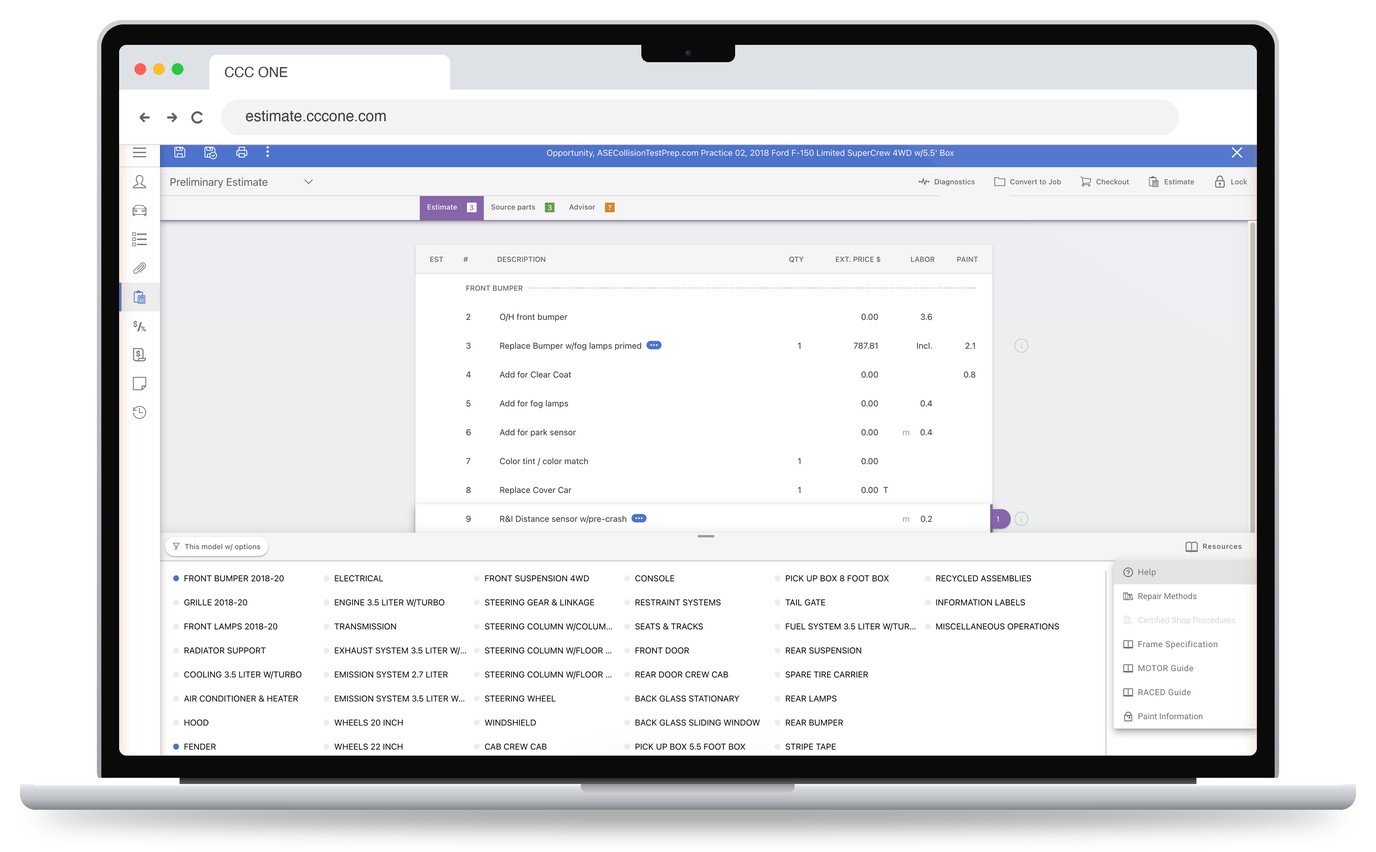
If the vehicle is already on an estimate, the shortest path to the procedure is the button in the estimating system.
In CCC ONE, the Repair Methods button on a workfile opens MOTOR's vehicle information for that vehicle, which is where the OEM repair procedures are reached from inside the estimate. In Mitchell, TechAdvisor plays the same role. Both are doors to the manufacturers' information, licensed into the estimating system, not a different source; the words on the screen are the maker's.
The ASE Academy's ASE B6 lessons teach the estimate in this order for that reason: build the vehicle, open the procedure for the damaged part from inside the workfile, then write the lines the procedure supports. The habit is worth building on every estimate, because the procedure read before the lines are written costs minutes, and the procedure read after the supplement is denied costs the job.
Route four: what to pull, and how to read it
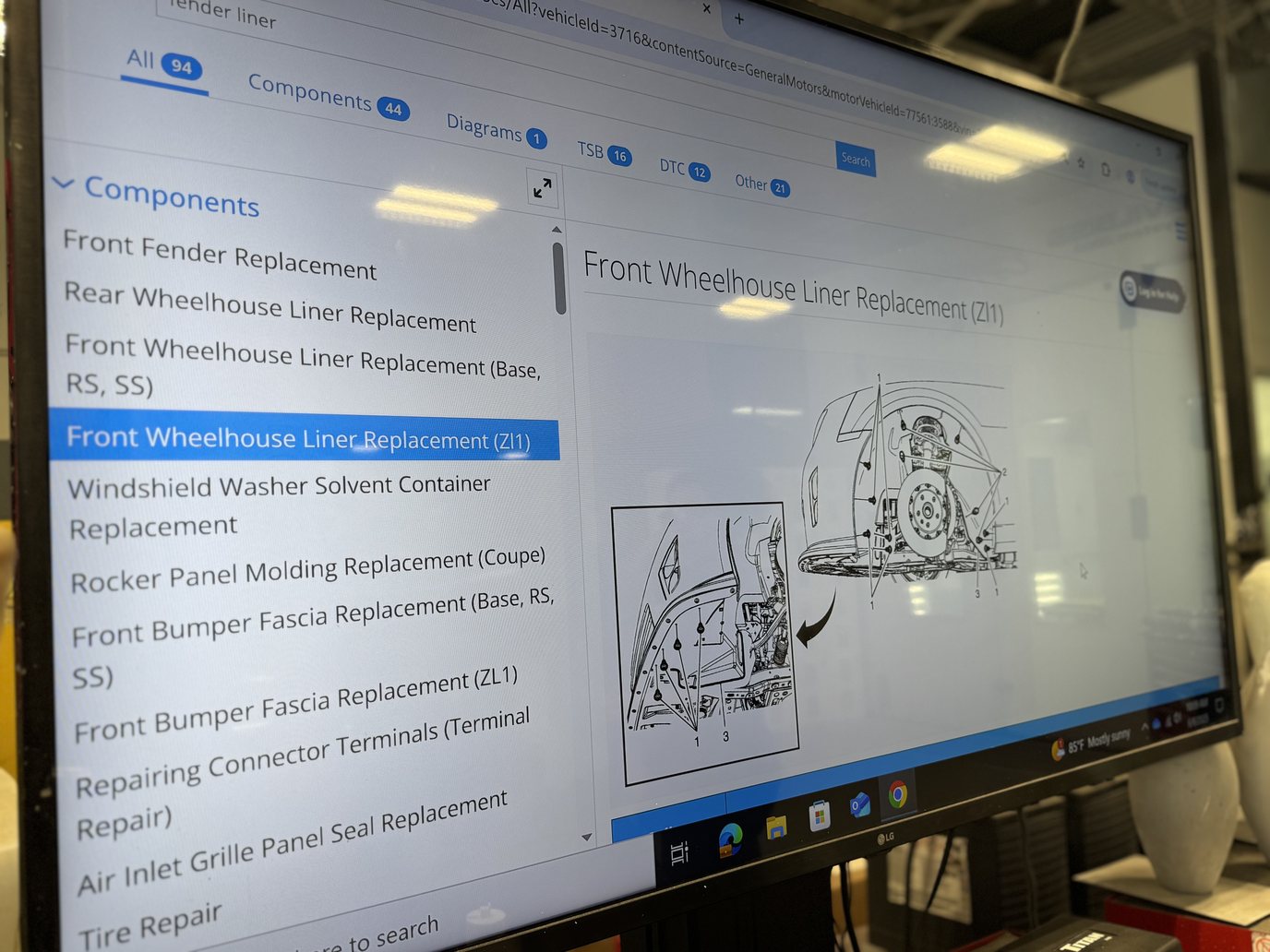
For a collision repair, pull four things and save each one with its date:
- The repair procedure for every replaced or repaired part that has one. Read it for the one-time-use fasteners, the adhesive and rivet or weld specification, the corrosion protection, and the "do not" lines. Those are the lines that become labor and parts on the estimate.
- The sectioning or structural repair document when a structural part is involved. It says where sectioning is permitted, which joints are used, and which parts are replace-only. An ultra-high-strength steel rail that the maker says may not be heated or sectioned decides the repair before anything is measured.
- The position statements that apply: pre- and post-repair scanning, parts, restraints, glass, wheels, clearcoat. They are the documents that settle the conversation with the adjuster, and they are free.
- The technical service bulletins for the model. A bulletin can carry a repair method, a parts change or, as with GM's non-approval of clipping, a position.
Reading a procedure is its own skill, and the ASE B3 and ASE B4 tests ask about it directly. The cautions at the top are not boilerplate: disable the supplemental restraint system and wait the stated time, disconnect and isolate high voltage, protect the electronics before welding. The parts list carries the one-time-use fasteners the estimate must include. The materials list names the adhesive by product, not by type. The steps that end with a scan, a calibration or an initialization are the steps most often left off a supplement, and they are the ones the maker's scan statement says are required.
Route five: calibration procedures, which are their own search
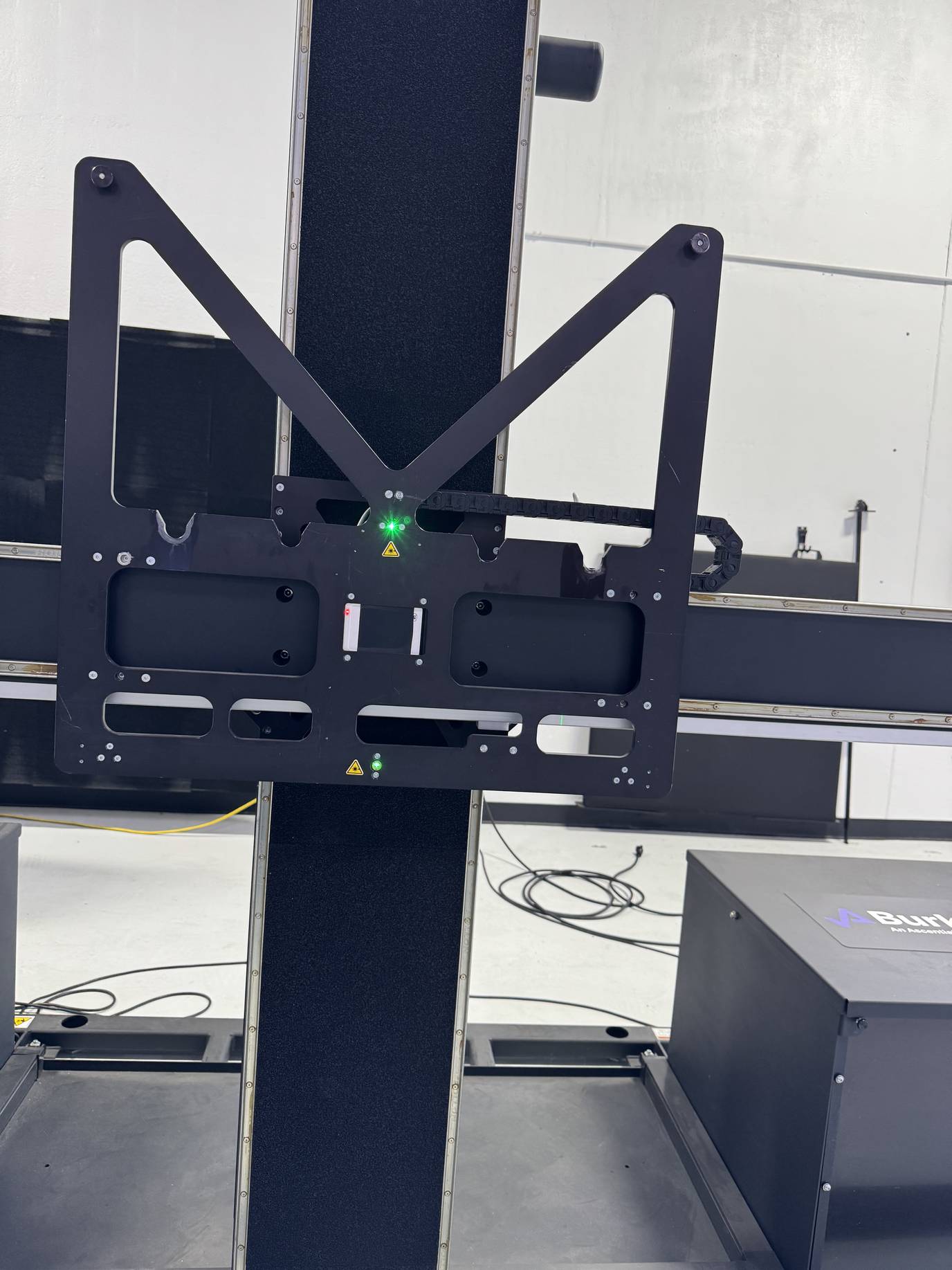
"OEM calibration procedure" is a search of its own, and the reason is that Advanced Driver Assistance Systems (ADAS) calibration lives in a different place than body repair. On most makers' sites the camera, radar and sensor calibrations sit in the driver assistance or electrical sections of the service manual, not in the body repair manual, and the body procedure that triggers them only says that calibration is required. The scan tool or the calibration equipment then carries the target placement and the sequence.
So the path for a repair that touches a windshield camera, a radar bracket or a parking sensor is two documents: the body procedure that says calibration is required, and the calibration procedure in the electrical section that says how. GM's and Honda's scan statements both say the calibration must follow the maker's own procedure, and the estimate should carry a line for it with the procedure named.
A short checklist for the estimate
Before the first line is written:
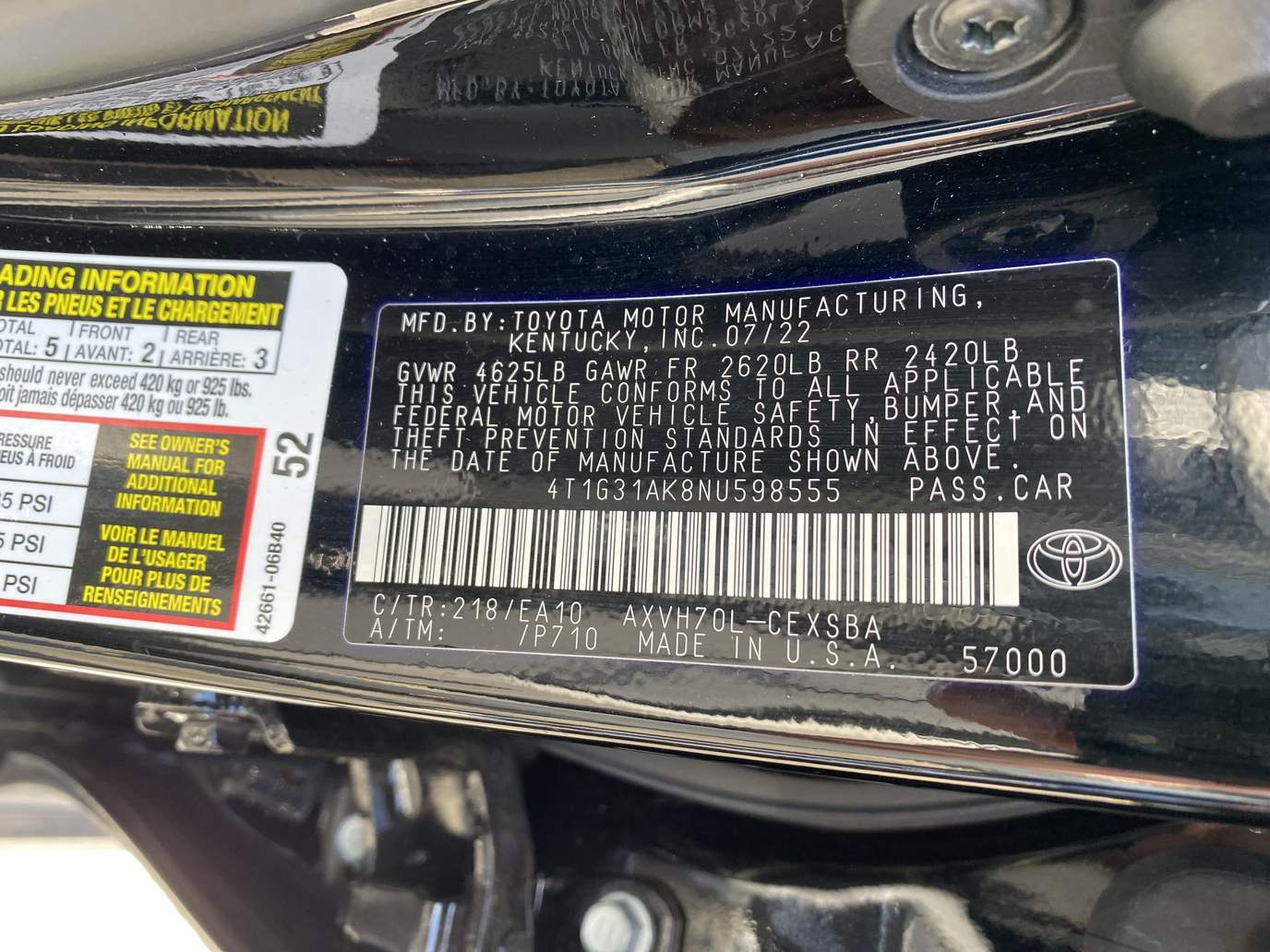
- The vehicle is identified by VIN, trim and options, because the procedure and the parts depend on them.
- The repair procedure for each damaged part is open or saved.
- The sectioning document is checked for any structural part.
- The scanning, parts and restraint position statements for the maker are saved with their dates.
- Calibration requirements are noted for every sensor the repair disturbs.
- Each document is attached to the file or cited by title in a line note.
That checklist is also most of the ASE B6 Damage Analysis area in one list, and the research task that opens ASE B3. The tests do not ask whether you have a subscription. They describe a vehicle and ask what the technician or estimator must do, and the answer is always the one the manufacturer's document supports.
Where this fits in your study
The ASE B6 practice test asks estimating questions the way the test does, with the reason behind each answer; the ASE B4 practice test covers the sectioning, steel type and joining questions that the manufacturer's procedure decides; and the ASE B3 task list shows where "locate procedures" sits in the first content area. For the manufacturers' rules on scanning, parts, restraints and clearcoat, read the companion article on OEM position statements.
Manufacturer site names and access models are described as the sites and OEM1Stop present them at the time of writing; terms change, so check the maker's site before you rely on one. ASE Collision Test Prep is not affiliated with any vehicle manufacturer, with CCC, Mitchell, MOTOR or with ASE.

Discussion
Join the discussion — sign in to comment.
Comments are reserved for registered students and technicians. Your name will be pulled from your profile automatically.
Log In Register