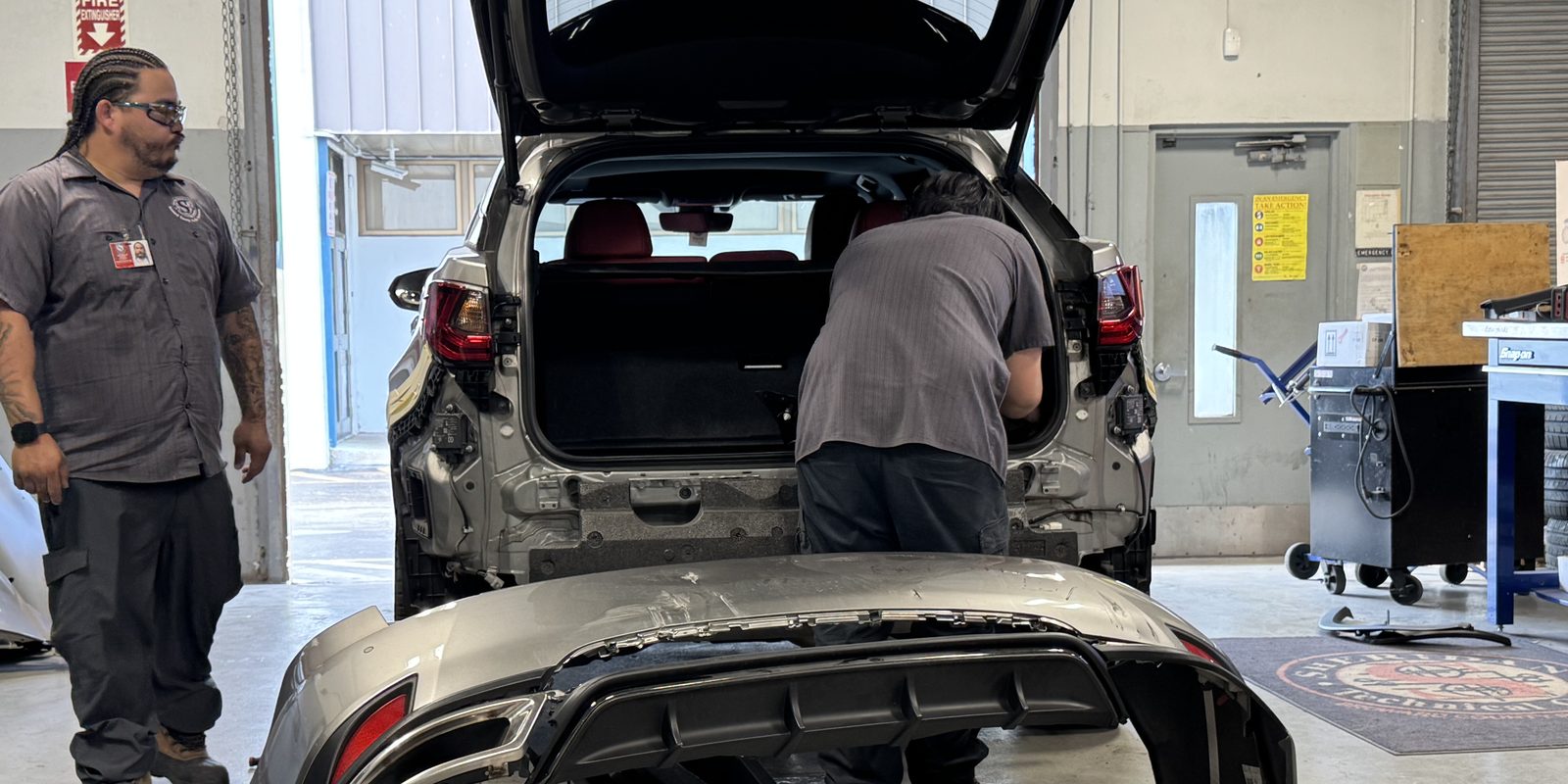
If you are a new technician choosing your first ASE collision test, take the one that matches the work you do every day: ASE B2 if you paint, ASE B3 if you do body work, ASE B6 if you write estimates. If you are still in a school program, start with the ASE Entry-Level tests, which you take at your school before you have any work experience.
That is the short answer. The rest of this article explains why that order works, what to do if your job does not fit neatly into one box, and how to check your choice in about an hour before you register.
Why the test that matches your job comes first
The National Institute for Automotive Service Excellence (ASE) collision series has five tests, and each one follows a job. ASE describes ASE B2 through ASE B5 as the tests for collision repair technicians and refinishers, and ASE B6 as the test for estimators. (If you want the full picture of what each test covers, our article on what ASE collision certification is walks through all five.)
Three reasons make your own job the right starting point:
- You already practice most of the tasks. Every question is written against ASE's task list for that test. When the task list reads like your work week, you are studying to fill gaps, not learning a trade from zero.
- Your shop values it first. A painter with ASE B2 or a body technician with ASE B3 holds the credential that matches the work they are paid to do.
- Your experience counts toward it. ASE certification needs a passed test plus hands-on work experience (two years for the collision tests). ASE lets you take the test before the experience is complete, but the certificate waits until ASE reviews and approves your experience. Testing in your own area means the work you are already doing is the experience that completes it.
Pick by the job you do
| Your work | Take first | Usually next |
|---|---|---|
| Painting, refinishing, prep | ASE B2 | ASE B3 if you also do body work |
| Panels, filler, welding, plastics | ASE B3 | ASE B4, then ASE B5 |
| Frame and unibody pulls and measuring | ASE B3, or ASE B4 if structural is your daily work | the other of the two |
| Mechanical and electrical work after a collision | ASE B5 | ASE B3 |
| Writing estimates, appraising | ASE B6 | ASE B3, to understand the repairs you write |
| Still in a school program | ASE Entry-Level | the B-Series once you are working |
Painters: ASE B2
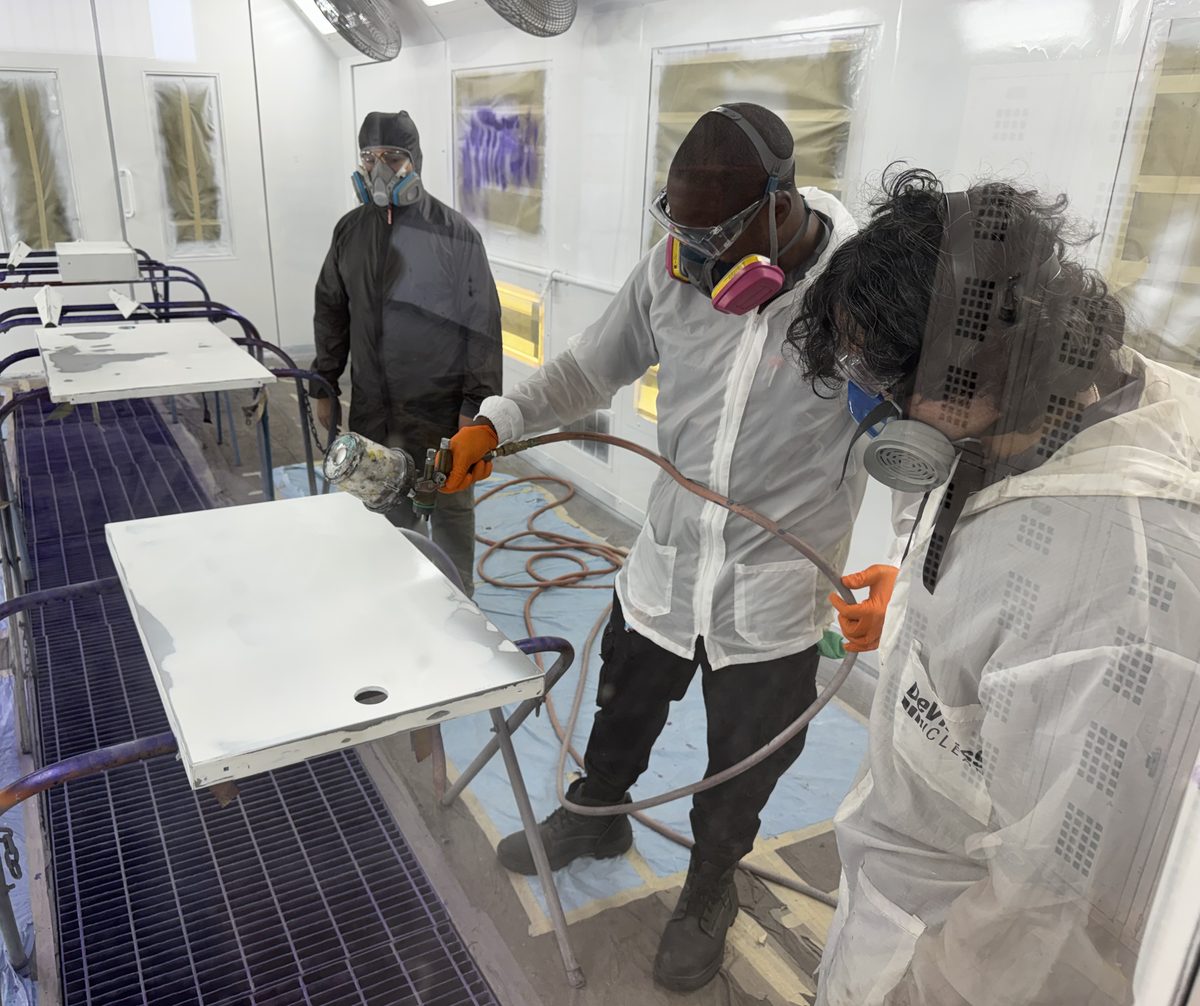
ASE B2 Painting and Refinishing is 65 questions (55 scored) in 90 minutes. Surface Preparation and Paint Mixing, Matching, and Applying carry 15 scored questions each, so 30 of the 55 come from the two jobs a refinish technician does all day. The rest covers spray gun operation and related equipment, solving paint application problems, finish defects and their causes and cures, and safety. Practice with the free ASE B2 practice test and read the ASE B2 study guide.
Body technicians: ASE B3
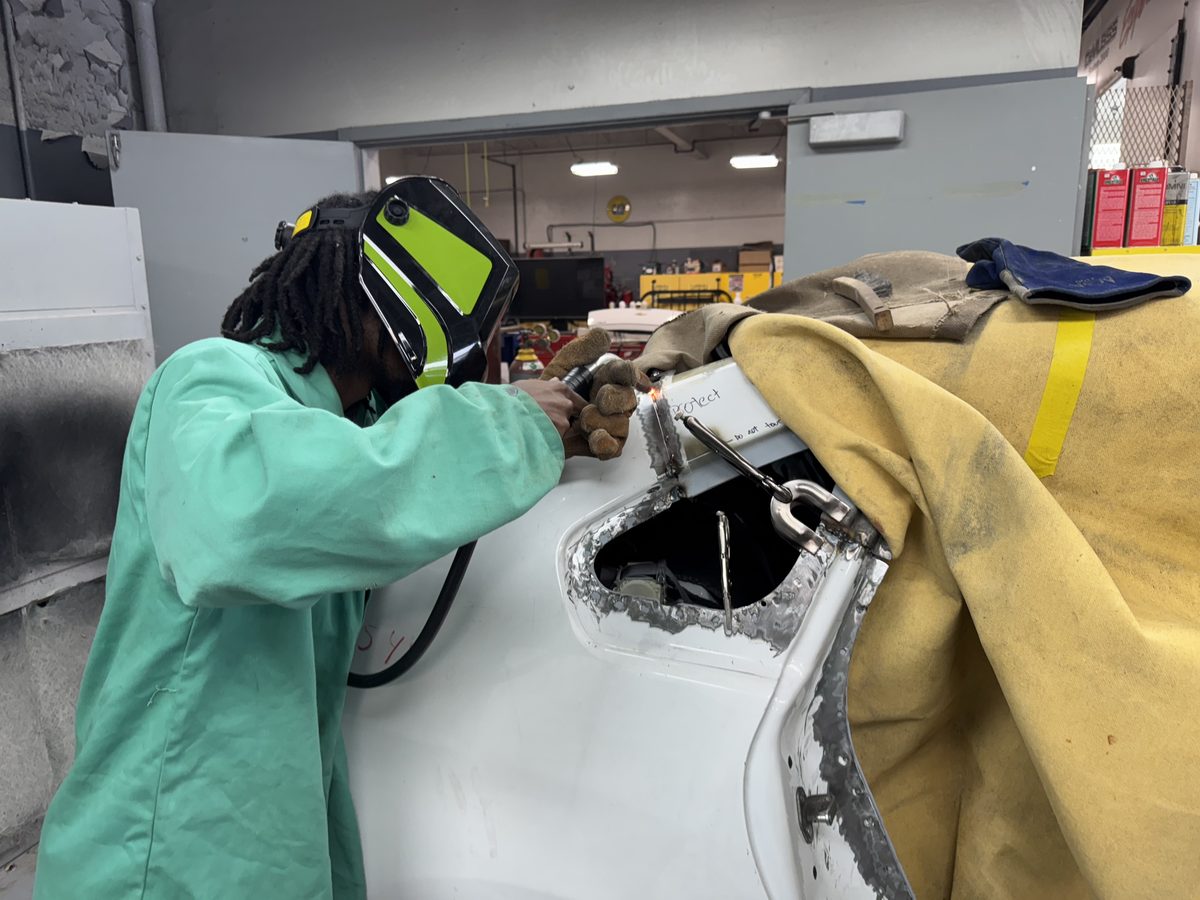
ASE B3 Non-Structural Analysis and Damage Repair is also 65 questions (55 scored) in 90 minutes, and it is the natural first test for most new body technicians. Outer Body Panel Repairs, Replacements, and Adjustments is the largest area with 17 scored questions, followed by Welding, Cutting, and Removal with 12. Metal finishing and body filling, plastic repair, glass and hardware, and preparation make up the rest. Those are the jobs a new body technician meets in the first months. Start with the free ASE B3 practice test and the ASE B3 study guide.
Structural work: ASE B4
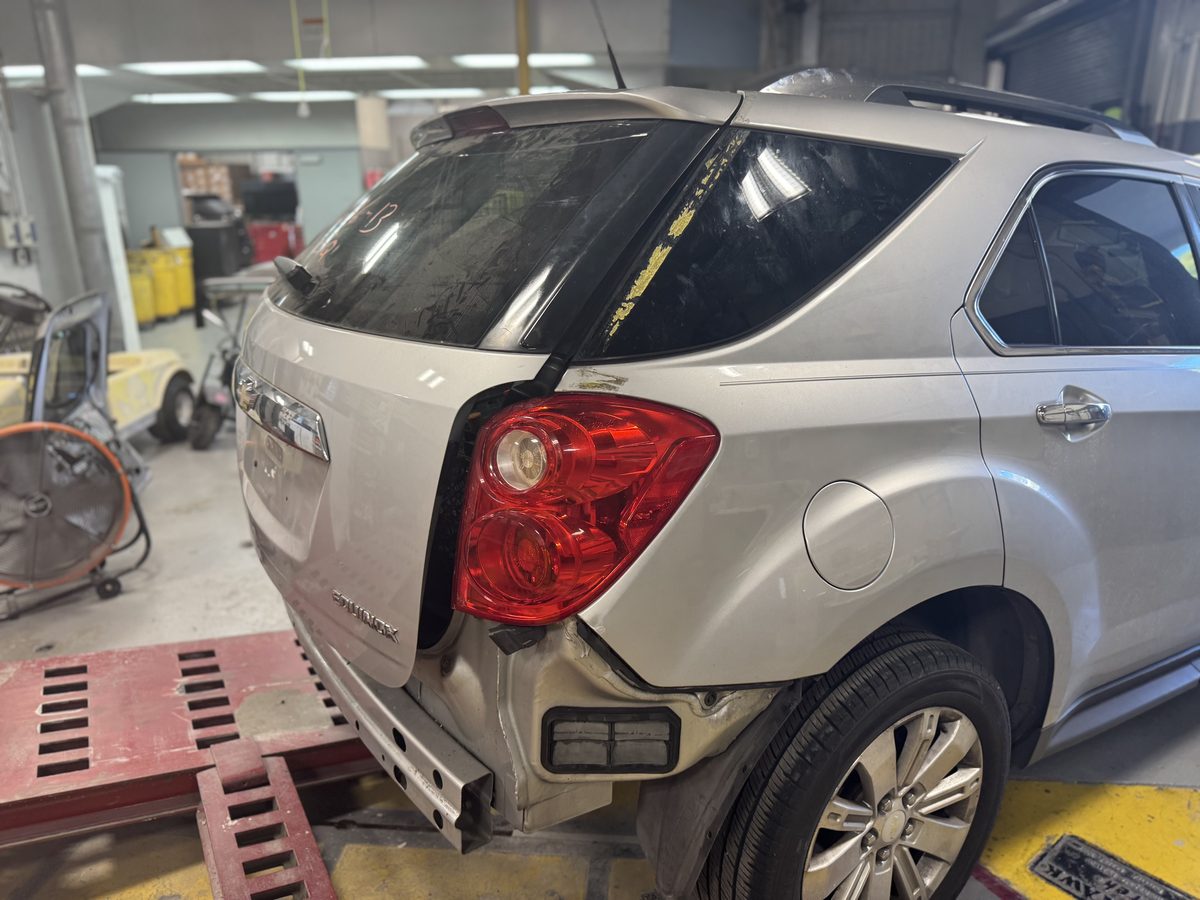
ASE B4 Structural Analysis and Damage Repair is 60 questions (50 scored) in 75 minutes. Frame Inspection and Repair (16) and Unibody and Unitized Structure Inspection, Measurement, and Repair (18) are 34 of the 50 scored questions, with welding, cutting and joining (12) and stationary glass (4) after them. Most technicians take ASE B4 after ASE B3, once they have spent time on the frame rack. If structural measuring and pulling is already your daily work, it can come first. Practice with the free ASE B4 practice test and the ASE B4 study guide.
Mechanical and electrical: ASE B5
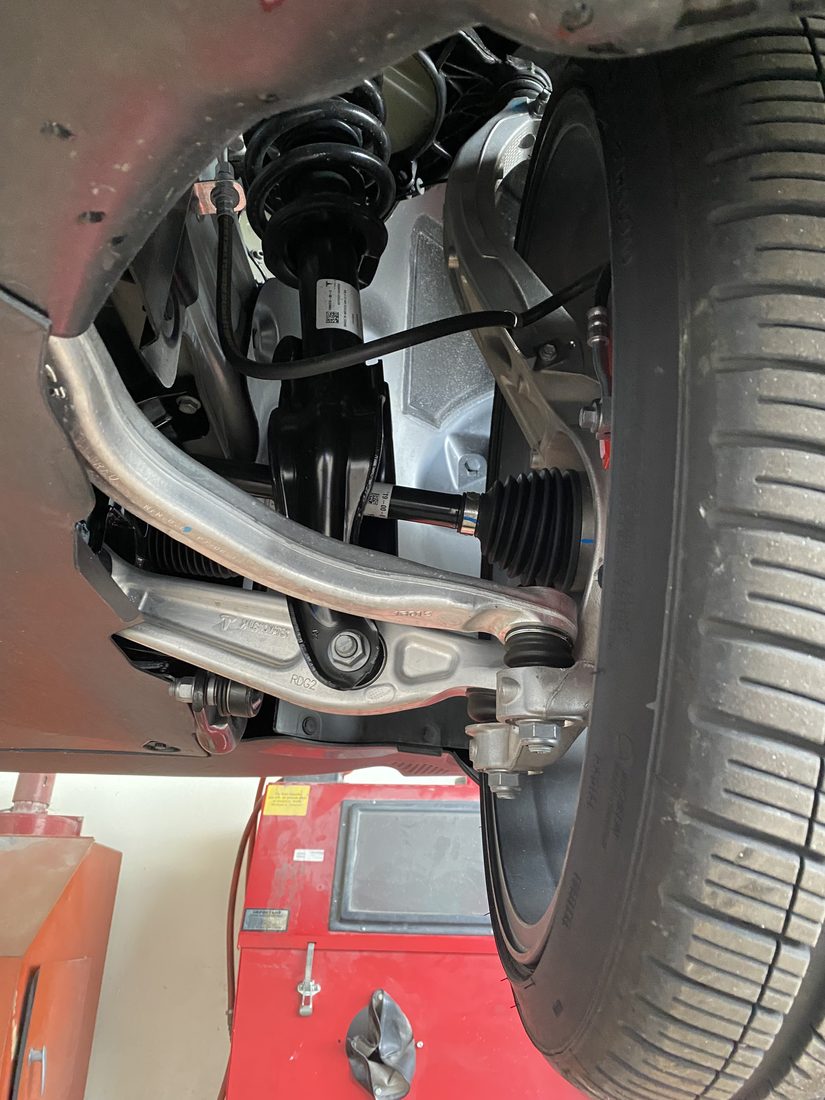
ASE B5 Mechanical and Electrical Components is 60 questions (50 scored) in 75 minutes, and it is the widest of the five: eight content areas, from suspension and steering (11) and electrical (13) to brakes, heating and air conditioning, engine cooling, drive train, fuel, intake and exhaust, and safety and restraint systems. It is rarely the first test unless the mechanical and electrical side of collision repair is your main job. For most technicians it comes after ASE B3 and ASE B4. Use the free ASE B5 practice test and the ASE B5 study guide.
Estimators: ASE B6
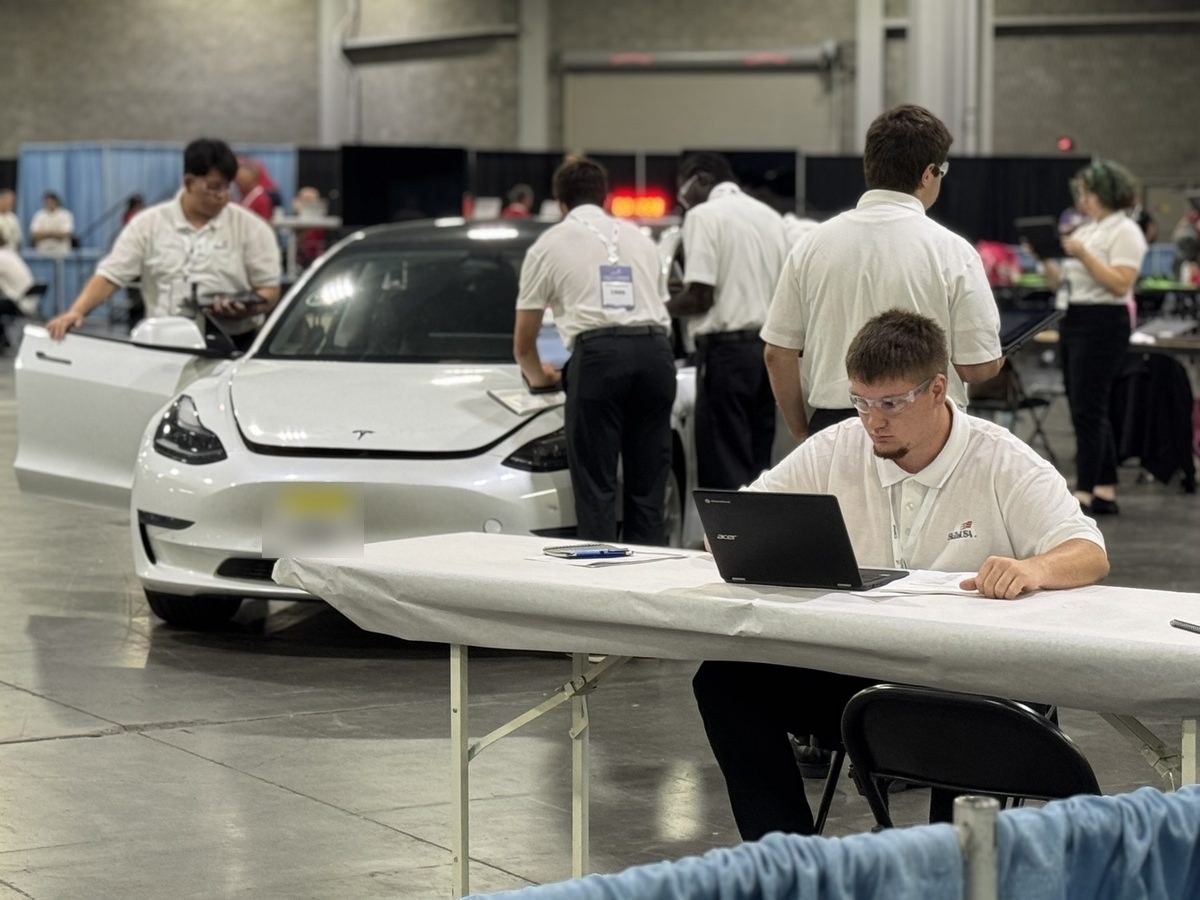
ASE B6 Damage Analysis and Estimating is 60 questions (50 scored) in 75 minutes. Estimating (13), Damage Analysis (11) and Vehicle Systems Knowledge (11) carry 35 of the 50 scored questions; vehicle construction, parts identification and sourcing, legal and environmental practices, and customer relations make up the rest. ASE lists the estimator role with its own two-year experience requirement. ASE B6 stands on its own and is not part of ASE Master Collision Repair and Refinish Technician status. Practice with the free ASE B6 practice test and the ASE B6 study guide.
If your job is a bit of everything
Plenty of new technicians sand in the morning, hang a door after lunch and help on the frame rack before close. If that is you, start with ASE B3. It covers the broadest slice of everyday body shop work, and it leads straight into ASE B4 for structural repair. Add ASE B2 when refinishing becomes a regular part of your week.
If you are aiming for ASE Master Collision Repair and Refinish Technician, you need all four of ASE B2, ASE B3, ASE B4 and ASE B5 current at the same time, plus the work experience. There is no required order. Each certification is valid for five years, so many technicians space the four tests out and then keep them on a similar renewal schedule. Our guide to becoming an ASE Master collision technician covers the full path.
Students: start with ASE Entry-Level
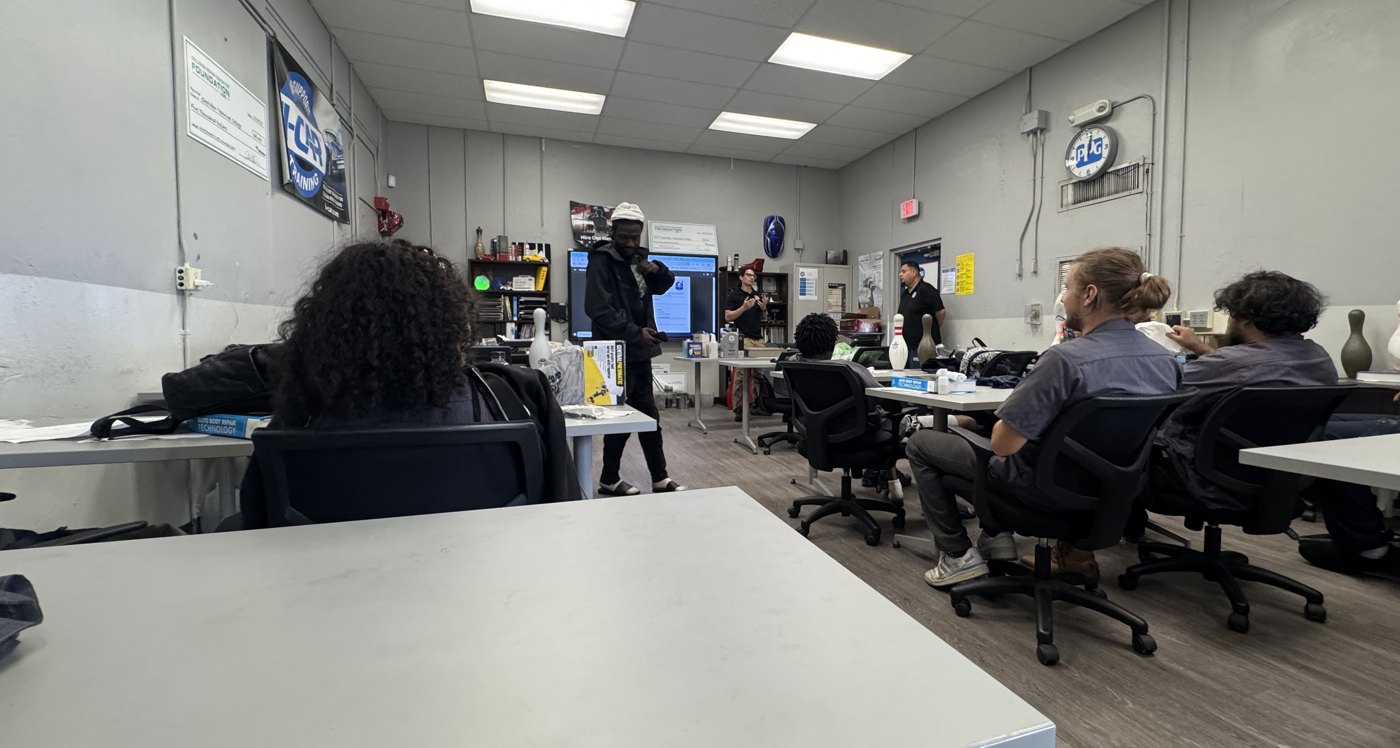
If you are in a high school or college collision program, the B-Series is not your first step yet. ASE's Entry-Level program has four collision tests on the same subjects as ASE B2 through ASE B5 (Painting and Refinishing, Non-Structural Analysis and Damage Repair, Structural Analysis and Damage Repair, Mechanical and Electrical Components), plus a Collision Repair and Refinish Fundamentals test that also covers damage analysis and estimating.
They are written for students with little or no work experience and are taken at your school with a proctor. Each of the four subject tests has 40 scored questions and Fundamentals has 60, and any of them can carry up to 20 extra questions that are not marked and do not count, so answer every one. ASE recommends that schools schedule 60 minutes for each subject test and 90 minutes for Fundamentals. The credential is valid for two years and does not renew. Your next step after it is the B-Series once you have the work experience. Pick the subject test that matches the part of your program you are strongest in, the same logic as above. Practice for all five is on our ASE Entry-Level page.
Check your choice before you register
Before you commit to a test, spend one hour finding out how close you already are:
- Read the task list for the test you picked on our ASE task lists page. Mark every task you do at work and every task you have never touched.
- Take the free 20-question practice test for that module. Every answer comes with the reason behind it.
- Look at your misses by content area. If they cluster in one area, that is where your study hours go. If they are spread across the whole test, consider whether a different test matches your work better.
A body technician who scores well on ASE B3 but struggles on the paint questions has just confirmed the order: ASE B3 now, ASE B2 later. A painter who finds the welding questions easy because they came up through body work might take ASE B3 sooner than planned. Either way, you choose your first test from evidence, not a guess.
The short version
- Painter: ASE B2. Body technician: ASE B3. Estimator: ASE B6. Student: ASE Entry-Level.
- If your work mixes everything, start with ASE B3.
- ASE B4 and ASE B5 usually follow ASE B3; all four of ASE B2 to ASE B5 make up Master status.
- You may test before your experience is complete; the certificate follows once ASE approves it.
- Check your pick with the task list and a free practice test before you register. Registration, scheduling and fees are on ase.com.
ASE and the ASE marks are trademarks of the National Institute for Automotive Service Excellence. This site offers practice tests and study material and is not affiliated with ASE. Test facts are from ASE's published test specifications and ase.com; registration and fees are set by ASE and are on ase.com.


Discussion
Join the discussion — sign in to comment.
Comments are reserved for registered students and technicians. Your name will be pulled from your profile automatically.
Log In Register