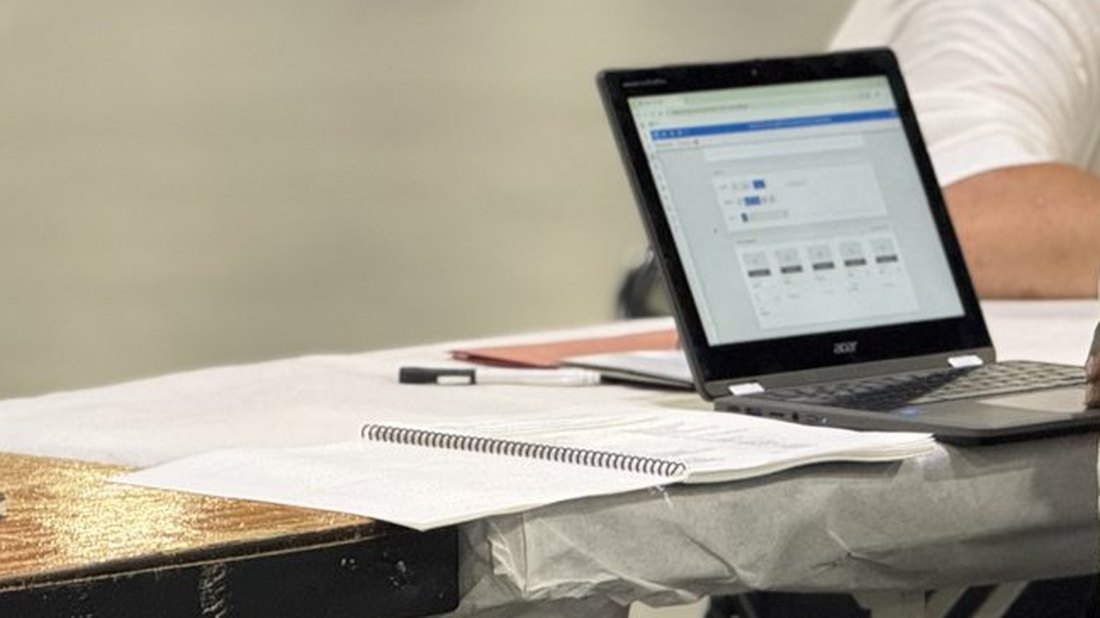
Every month a technician asks some version of the same question: can I take the ASE test from home, and if not, where is the nearest place I can take it this month? The answer is now yes, and most of the confusion comes from older rules. The ASE Flex Test lets you take a first-time certification test or a recertification test remotely, with no appointment. ProProctor, the older remote route, is still for recertification only. And if you would rather test in person, test centers come in two sizes, and the smaller one is usually the faster seat. Here is how the whole system works, from the first ASE B3 to the recertification five years later.
When you are ready to sign up, our step-by-step guide covers how to register for an ASE collision test.
The short answer
- Yes, you can take your first ASE certification test from home or work through the ASE Flex Test. It covers every ASE collision test, ASE B2 through ASE B6, the first time and at recertification, with no appointment. You need a desktop or laptop computer plus a phone or tablet as a second camera, and no breaks are allowed (ASE testing options).
- Recertification tests can also be booked remotely by appointment through Prometric's ProProctor application, with a live proctor watching over your webcam. ASE added that option in 2022, and it is for recertification only.
- Test centers still offer first-time and recertification tests by appointment, and Prometric centers come in two kinds: full centers, usually in cities, with many seats, and smaller satellite centers in suburbs, colleges and training businesses. Both deliver the same test. The satellite center is often the one with a seat next week.
Everything below is the detail behind those three lines.
How ASE testing at Prometric works
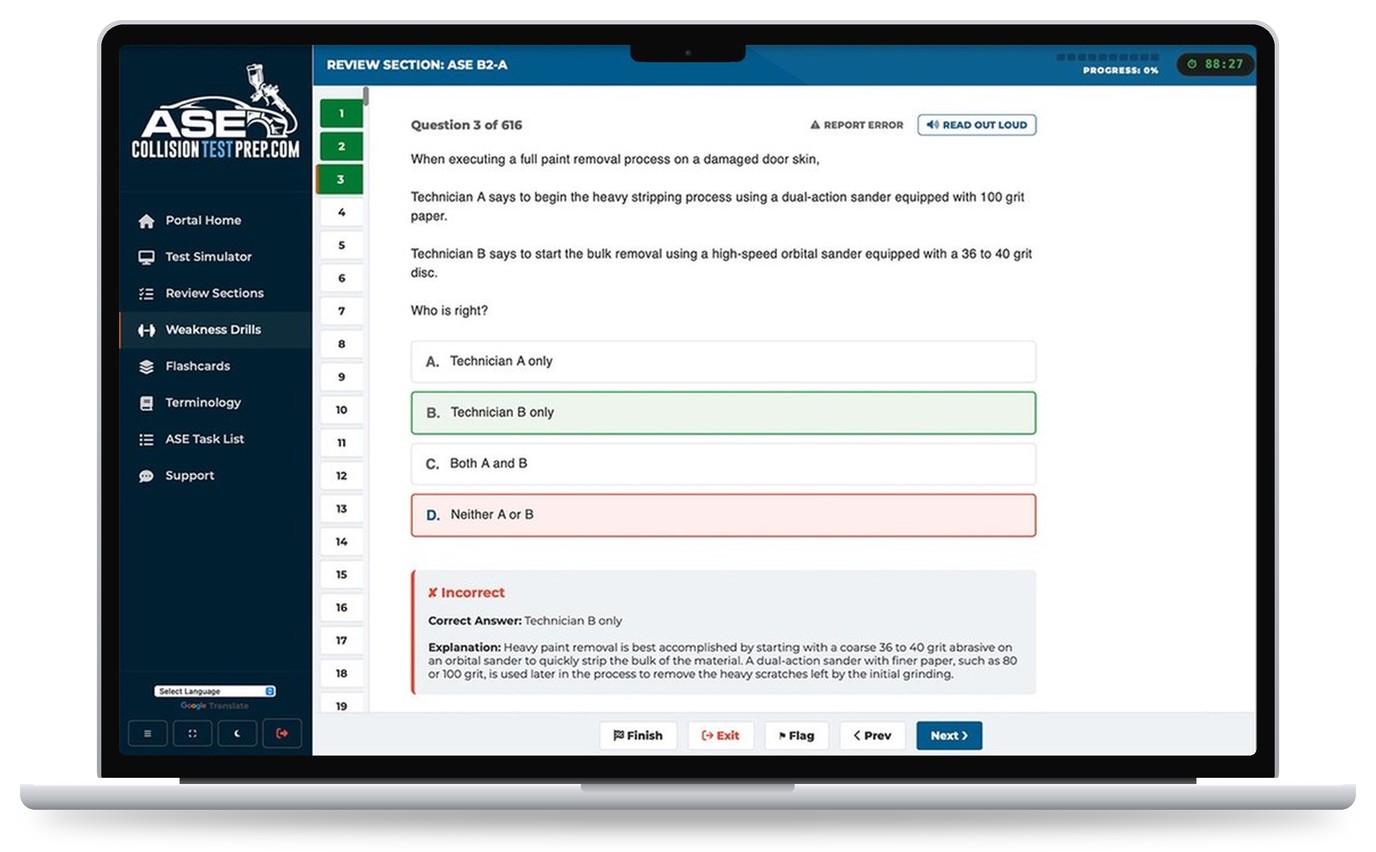
The National Institute for Automotive Service Excellence (ASE) writes the tests; Prometric delivers them. You register and pay for a test on ASE's site, and ASE hands you to Prometric to schedule the appointment. On test day you sit at a locked-down computer in a proctored room, show a current government-issued photo ID, leave your phone and bag in a locker, and take the test on screen. An ASE B2 or ASE B3 test is 65 questions in 90 minutes; the other three collision tests are 60 questions in 75 minutes. The step-by-step of registering and scheduling is in our article on how to schedule your ASE test with Prometric, and what the room, the screen and the day feel like is on our Prometric page.
Prometric's scheduling tool lets you search for a center by address and radius. That search is where the satellite centers appear, and it is where most technicians leave a week or two on the table.
Full centers and satellite centers
A full Prometric test center is a dedicated testing site with a reception desk, lockers, a proctor station with camera views of every seat, and a room of ten to thirty computers. Most large cities have one or more. Because they serve every exam Prometric delivers, from nursing licensure to financial certifications, their calendars fill first.
A satellite center is a smaller site that Prometric contracts to deliver the same tests on the same locked-down computers: a community college testing office, a training company, a shared office suite. It might have four to eight seats. The rules are identical: same check-in, same ID requirement, same lockers or secured storage, same proctoring. What is different is the calendar. With fewer candidates competing for fewer seats, a satellite center fifteen miles outside the city often has availability within a week when the downtown center is booked for a month.
The practical rule: when you search for a seat, widen the radius before you widen the date. A forty-minute drive to a satellite center that has Tuesday open beats a four-week wait for the center across town, especially when you have been studying and the material is fresh.
Three things to check when you pick a satellite center:
- Confirm the address the day before. Satellite sites sometimes share a building with other businesses, and the suite number matters.
- Arrive thirty minutes early. Smaller sites have one proctor handling check-in, and the test clock does not wait.
- Ask about storage. Full centers have lockers; a satellite site may have a secured drawer or cabinet. Either way, nothing comes into the room with you.
Remote testing: who can, and how it works
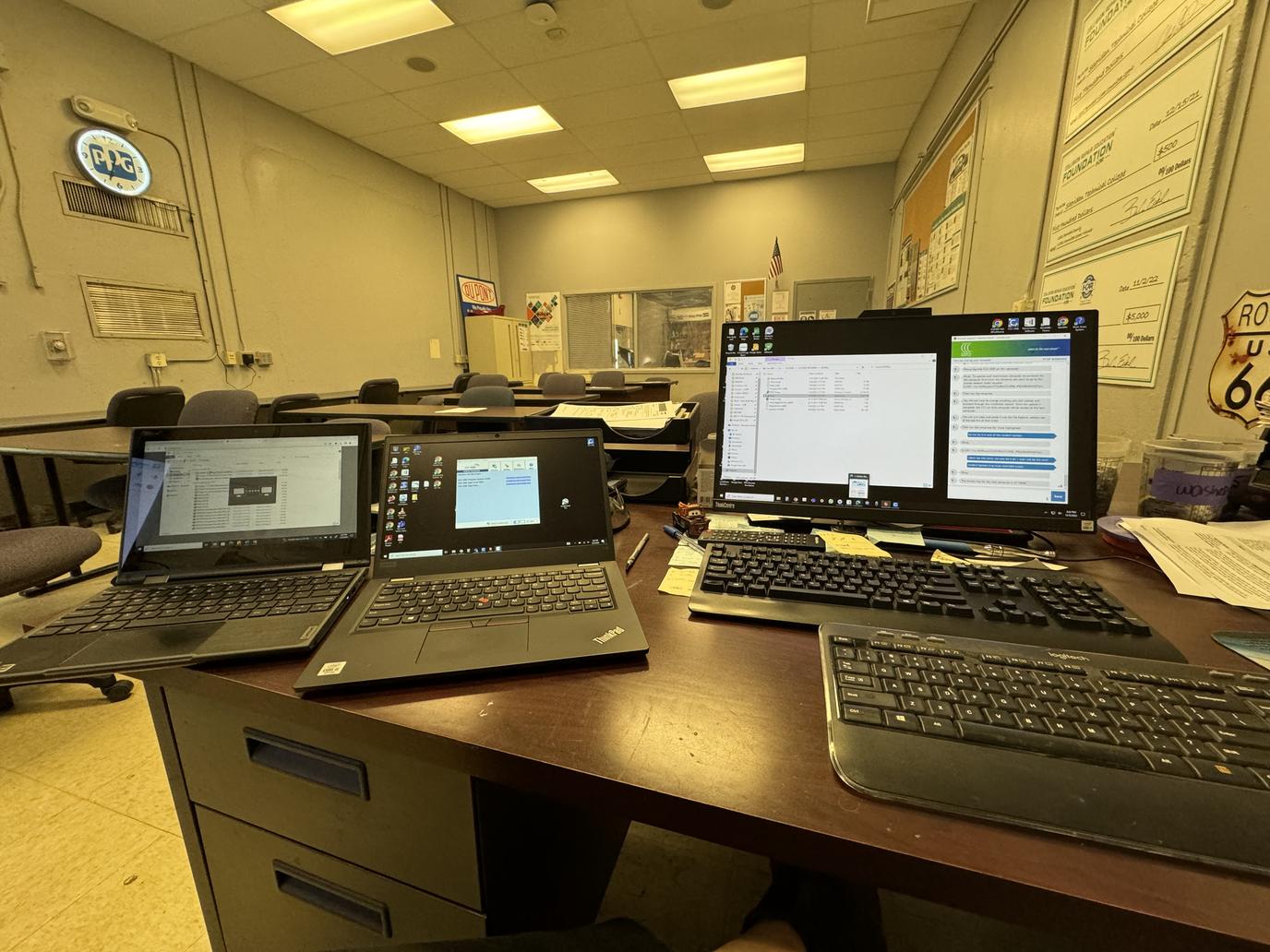
ASE has two remote routes. The ASE Flex Test needs no appointment and covers first-time certification and recertification for ASE B2 through ASE B6; it runs on a desktop or laptop with a phone or tablet as a second camera, and no breaks are allowed. ProProctor, Prometric's remote testing application, which ASE added in 2022, is booked by appointment and is for recertification tests only. The ProProctor rules, from ASE's own policies and procedures for online remote testing:
-
One exclusion. ASE's ProProctor page lists one exclusion, the G1 Auto Maintenance and Light Repair test, which ASE runs through its separate no-appointment ASE Flex Test instead. Every ASE collision recertification test, ASE B2 through ASE B6, is eligible.
-
A live proctor watches the whole test through your webcam and microphone, through Prometric's platform, and can stop the test for a rule violation.
-
The computer: an undocked laptop or desktop with a movable webcam and microphone, and a connection that meets the minimum bandwidth on ASE's fact sheet. Chromebooks, tablets and virtual machines are not supported, and neither is a second screen: a desktop with two monitors or a laptop with a separate monitor is not permitted.
-
The room: an indoor room with walls, well lit, quiet, and yours for the whole test. ASE's fact sheet rules out open-concept areas, rooms with window walls or window doors, poorly lit or cluttered rooms, and school classrooms. Nobody else comes in. The desk is clear, and water is the only drink allowed.
-
Before test day: install the ProProctor application and run its system check. Book far enough out to leave time for that.
-
Timing: an appointment cannot be cancelled within three days of the date. A missed appointment or a late sign-in is recorded as a no-show with the fees forfeited and no refund or reschedule; after any pass or fail you wait 30 full days before buying the same test again. Breaks are not allowed during a test (up to ten minutes between tests), and the session is recorded on video and audio throughout.
-
Accommodations: extended testing time is the only accommodation available for remote tests; other accommodations require a test center.
For a technician recertifying four areas to keep Master Collision Repair and Refinish status, the remote option is a real change: four shorter tests from the shop office on four evenings, no travel, no time off. With the ASE Flex Test, the first certification in each area no longer has to mean a trip to a center either, although a center is still there for anyone who would rather test in person.
Remote or center: which is faster for you
- First ASE test in an area (any ASE B2 to ASE B6): the ASE Flex Test from home with no appointment, or a Prometric center if you would rather test in person, searching a wide radius for a satellite site.
- Recertifying one or more areas, with a walled quiet room: the ASE Flex Test with no appointment, or ProProctor if you want a booked time. No travel; take it within 90 days of purchase.
- Recertifying, with no private room or only a tablet: a Prometric center. Remote needs a laptop or desktop and a room you control.
- Needing an accommodation other than extended time: a Prometric center. ProProctor supports extended time only, and ASE notes that most accommodations need a center.
- City center booked for weeks: a satellite center. Same test, fewer candidates per seat.
Test-day habits that carry over
Whether the seat is in a center or your own office, the same habits decide the day. Sleep the night before; the clock is generous if you pace it (our test-day pacing article works the minutes). Bring, or have on the desk, exactly what the confirmation email lists and nothing else. Use the flag-and-review tool rather than stalling on one question. And read every Technician A and Technician B question twice: the second statement is where the trap usually sits.
A worked example
A body technician in a mid-size city wants to take ASE B3 for the first time and recertify ASE B4, which expires in three months. The two tests take two different paths.
The ASE B3 is a first-time certification. The ASE Flex Test would let the technician take it from home, but the only quiet room in the house is shared, so this one goes to a center. The downtown Prometric center shows its next opening five weeks out. Widening the search to forty miles shows a community college satellite site with a Tuesday morning seat in nine days. That is the seat: the material is fresh now, and five weeks of waiting is five weeks of forgetting.
The ASE B4 is a recertification, so it qualifies for ProProctor. The technician buys the test, installs the application that evening, runs the system check on the shop's office laptop, and books a date six days out. On the night it is the shop office with the door shut, a clear desk and the checklist below, and the date went on the calendar the moment it was booked, because a missed remote appointment forfeits the fee.
Two tests, two months apart, one trip. That is the system working as designed.
The day-before checklist
For a center seat:
- Confirmation email open, with the center's address and suite number checked on a map.
- Current government-issued photo ID that matches the name on the registration.
- Route planned with thirty minutes of margin; the clock does not wait for traffic.
- Nothing else comes in: phone, watch, notes and bag go in the locker or the car.
For a ProProctor remote seat (the ASE Flex Test also needs a phone or tablet set up as a second camera):
- ProProctor installed and the system check passed the day before, not the morning of.
- A laptop or desktop with one monitor, webcam and microphone working, on a stable connection.
- A private room you control for the whole test, with a clear desk and the door closed.
- A valid, unexpired government photo ID with a signature ready for the camera, the room set 30 minutes before, sign-in 15 minutes before, and the start time written where the household can see it.
Where this fits in your study
The Prometric page describes the center experience and links the free Prometric-style simulator, and the scheduling article walks the registration itself. For the test you are scheduling, the free practice tests (ASE B2, ASE B3, ASE B4, ASE B5, ASE B6) are 20 questions each, written the way the test asks them, with the reason behind every answer.
Remote testing rules are ASE's and Prometric's and are described here as published at the time of writing; confirm the current policy on ase.com before you book. ASE and Prometric are trademarks of their owners; this site is not affiliated with either.


Discussion
Join the discussion — sign in to comment.
Comments are reserved for registered students and technicians. Your name will be pulled from your profile automatically.
Log In Register