
The Systems Worth Knowing
If you paint cars in California, the Northeast, or any other VOC-regulated region, you're shooting waterborne basecoat. If you're studying for the ASE B2, you should understand the dominant waterborne systems in U.S. shops even if your shop currently uses solvent. The test references waterborne content across multiple categories.
Four manufacturer systems account for the vast majority of waterborne basecoat applications in U.S. collision repair: PPG Envirobase HP, Axalta Cromax Pro, BASF Glasurit 90 Line, and Sherwin-Williams Ultra 7000. This article compares them across the parameters that matter to working painters and ASE B2 candidates.
The Comparison Criteria
When painters and shop owners evaluate a waterborne system, the decision typically hinges on these factors:
- OEM color coverage. How many vehicle models and colors the manufacturer's database supports.
- Color match accuracy. How well the formula matches the target color on the first attempt.
- Application characteristics. Flash time, recoat window, gun setup tolerance.
- Booth environment compatibility. Performance in standard vs upgraded booth airflow.
- Production speed. Total job time including flash and recoat.
- Cost per liter. Material cost economics for shop budgeting.
- Training and support. Manufacturer-provided technical resources and field support.
- Compatibility with clearcoat. Which clear systems are approved over the basecoat.
The ASE B2 doesn't test brand-specific content directly, but it does test concepts that overlap with these criteria (flash times, gun setup, VOC compliance, color match procedures).
PPG Envirobase HP
PPG is one of the largest paint manufacturers in collision repair, and Envirobase HP is their flagship waterborne basecoat. Widely adopted in California and the Northeast.
Application characteristics:
- Mix ratio typically 100 parts color to 10 parts water (per most published formulas).
- Flash time between coats roughly 10 to 15 minutes at 70°F with booth airflow assistance.
- 1.2 to 1.3 mm fluid tip on most application guns.
- HVLP or RP variants both work; many shops use RP for slightly better transfer efficiency.
Color database:
- Comprehensive OEM coverage for U.S., European, and Asian manufacturers.
- Strong color match accuracy on modern OEM colors developed in the waterborne era.
- PPG's color match camera and spectrophotometer integration is well-supported.
Clearcoat compatibility:
- PPG's own clearcoat lines (DC4000 and similar) are the recommended pairing.
- Cross-brand clearcoat compatibility is technically possible but voids PPG's color guarantee.
Best for:
Shops already in PPG paint systems for solvent who are transitioning to waterborne. Smooth transition path with established PPG distributor relationships.
Axalta Cromax Pro
Axalta (formerly DuPont automotive paints) competes directly with PPG in the U.S. collision market. Cromax Pro is their waterborne basecoat flagship.
Application characteristics:
- Mix and application similar to other premium waterborne systems.
- Flash time roughly 10 to 15 minutes at 70°F with airflow.
- Cromax Pro is known for relatively forgiving application for painters transitioning from solvent.
Color database:
- Strong OEM coverage. Axalta's color database is built from years of OEM partnerships.
- Color match accuracy is among the best in the industry.
- Phoenix and Cromax color matching software integrations are well-developed.
Clearcoat compatibility:
- Axalta clear lines (Cromax Premier, Centari) are the recommended pairing.
Best for:
Shops with established Cromax color match workflows and Axalta distributor relationships.
BASF Glasurit 90 Line
BASF Glasurit is a premium European-origin paint system widely used by OEM-certified collision centers (BMW, Mercedes, Audi, and other European luxury OEMs).
Application characteristics:
- Flash time and recoat window similar to other waterborne systems.
- Glasurit's reputation is premium quality with slightly higher material cost.
- Application technique is well-documented in BASF technical materials.
Color database:
- Strong on European OEM colors. Native formulas for many BMW, Mercedes, Porsche, Audi colors.
- Asian and U.S. OEM coverage also comprehensive.
Clearcoat compatibility:
- Glasurit clear lines are the recommended pairing.
- High compatibility with OEM-specified clearcoat for OEM-certified shop work.
Best for:
OEM-certified collision centers, especially European-brand-focused shops. Premium independent shops chasing high-end color match.
Sherwin-Williams Ultra 7000
Sherwin-Williams entered the waterborne basecoat market with Ultra 7000 (and successor lines). Their position has grown alongside their distribution network in U.S. collision repair.
Application characteristics:
- Mix and application characteristics in line with premium waterborne systems.
- Flash time and recoat window standard for the category.
- Sherwin-Williams has invested in painter training programs to support adoption.
Color database:
- Comprehensive OEM coverage with strong U.S. domestic and Asian OEM support.
- Color matching software integration through Sherwin-Williams' Formulator system.
Clearcoat compatibility:
- Sherwin-Williams clearcoat lines are the standard pairing.
Best for:
Shops with existing Sherwin-Williams distributor relationships, especially MSO chains that have negotiated volume pricing.
Side-by-Side Quick Comparison
A consolidated view of how the four systems compare.
| System | Key Strengths |
|---|---|
| PPG Envirobase HP | Strong overall, established distributor network, comprehensive color database. |
| Axalta Cromax Pro | Forgiving application for transitioning painters, premium color match accuracy. |
| BASF Glasurit 90 Line | Premium European-origin, ideal for OEM-certified luxury collision centers. |
| Sherwin-Williams Ultra 7000 | Strong U.S. domestic OEM coverage, MSO-friendly distribution. |
Which waterborne basecoat line do you trust most?
Cast your vote and see what the rest of the shop thinks.
What These Systems Have in Common
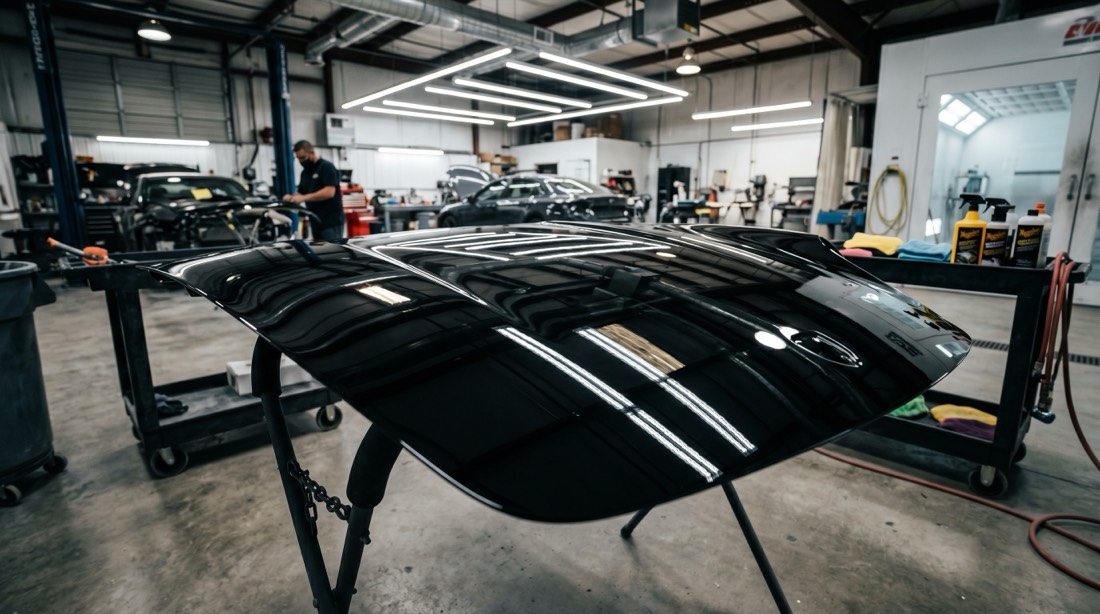
For ASE B2 study purposes, the systems share more than they differ. Common patterns:
- Carrier chemistry. Water-based with co-solvents and additives.
- VOC compliance. All meet California CARB rules and federal NESHAP 6H limits.
- Flash characteristics. Visible matte transition during flash, longer than solvent.
- Booth airflow management. All benefit from air movers during flash periods.
- Mix ratios. Per published TDS, typically ratios involving water rather than activator (some systems do use activator).
- Cleanup. Waterborne-specific cleaning products required, not solvent-based gun wash.
- Storage and handling. Different storage requirements than solvent (freeze protection in cold climates is a consideration).
- Compatible clearcoat. Most systems pair with their own brand's clear; cross-brand voids warranties.
The ASE B2 will test these common patterns rather than brand-specific differences.
How to Choose a System
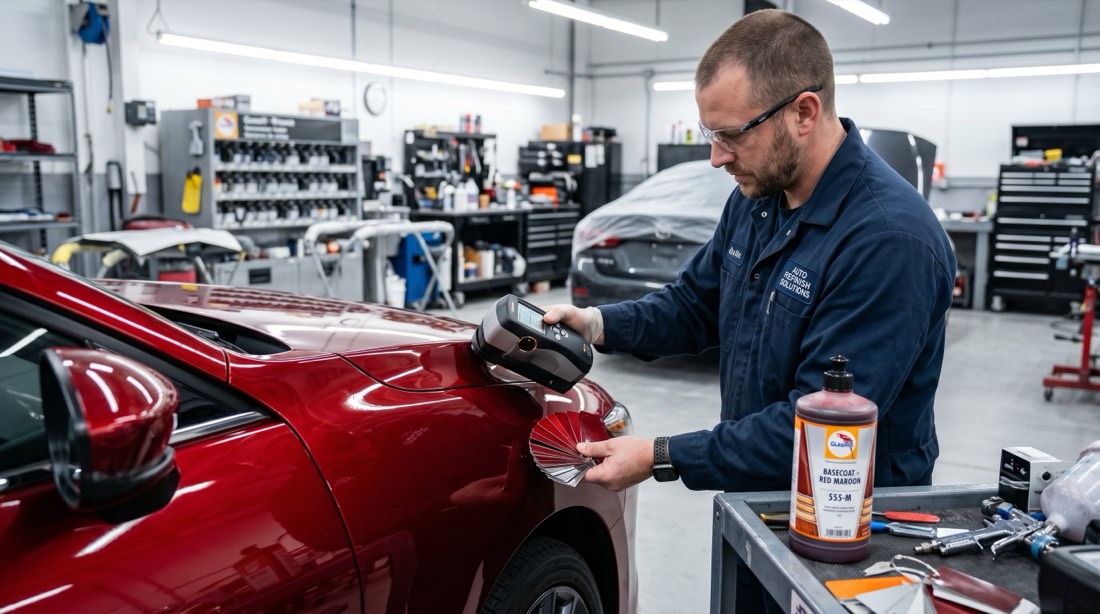
For shops evaluating a waterborne system, the decision factors usually align with:
- Existing distributor relationship. Whichever paint system has reliable local supply and field rep support is the practical starting point.
- OEM-certified shop requirements. If your shop is enrolled in OEM repair programs (BMW, Mercedes, Audi), the OEM may specify or recommend particular paint systems.
- Color match needs. Shops doing high-end custom or restoration work prioritize color match accuracy; shops doing volume collision work prioritize total job time and material cost.
- Training investment. Switching paint systems requires retraining the paint department. Larger shops are slower to switch because of the painter training investment.
- Booth environment. Shops with older booths may benefit from systems known for forgiving application; shops with modern downdraft booths can take advantage of any system.
Most shops settle into one primary waterborne system and stick with it for years. The switching cost is high relative to the marginal performance difference between premium systems.
Application Best Practices Common to All Systems
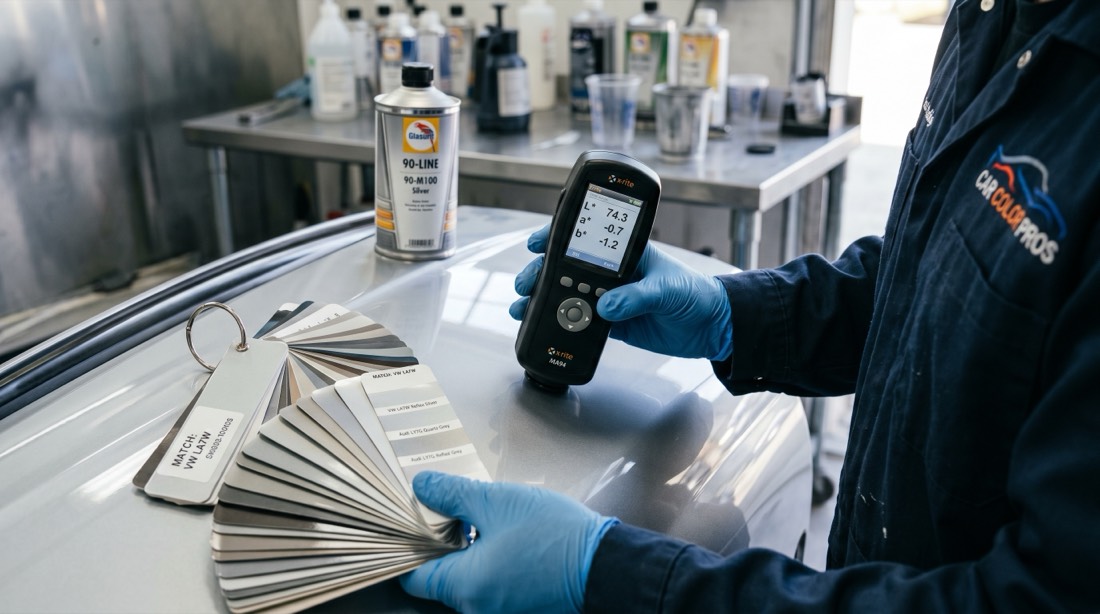
Regardless of which waterborne system your shop uses, certain best practices apply across the board.
Booth airflow management. Air movers or dedicated booth airflow during flash periods is the standard. Skipping airflow assistance makes waterborne flash unpredictable.
Mix exactly per TDS. Waterborne is more sensitive to mix ratio variations than solvent. Eyeballing the mix produces inconsistent application.
Match reducer to conditions. Most systems offer slow, medium, and fast variants of co-solvents or water-equivalent additives. Match to booth temperature and humidity.
Calibrate the color match equipment. Spectrophotometers and color match cameras need periodic calibration to maintain accuracy. Skipping calibration produces color match drift over time.
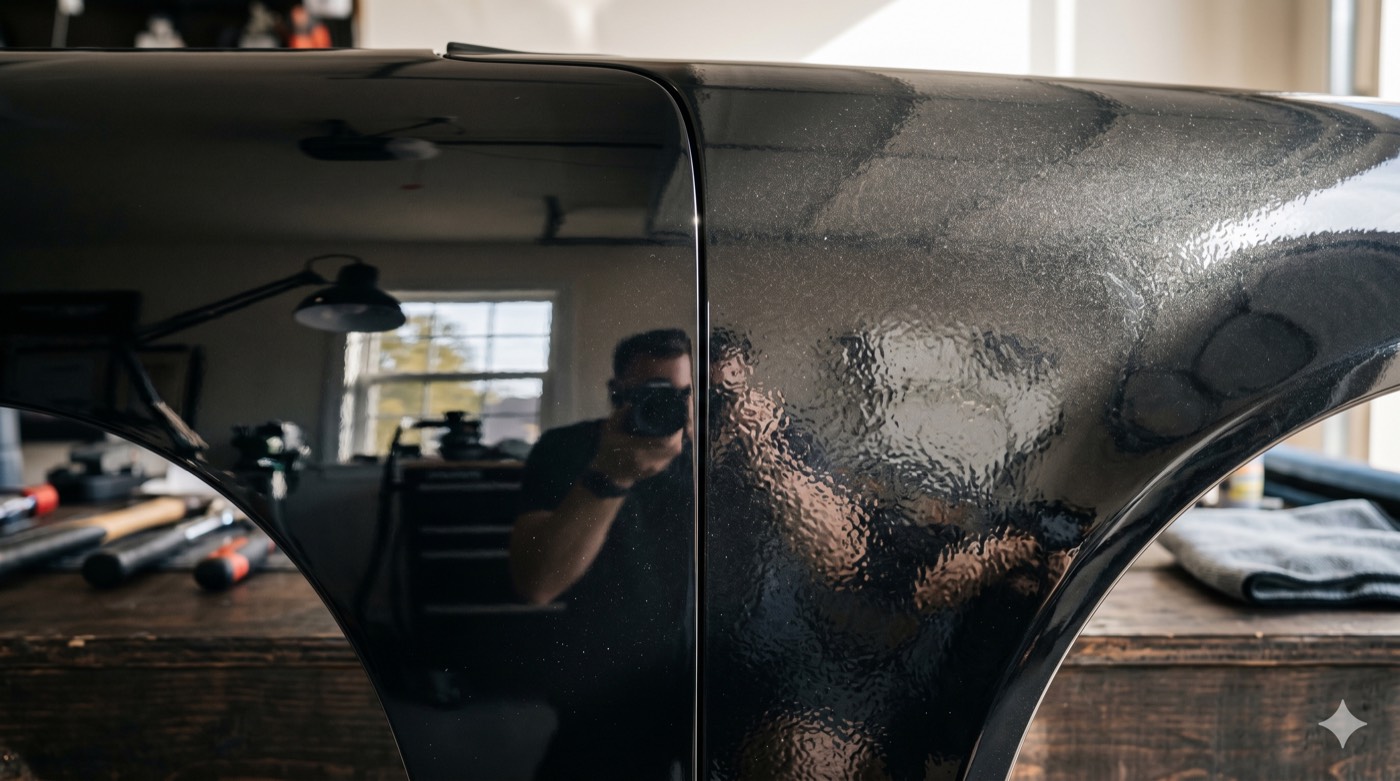
Wet test cards before commit. Before spraying the customer's car, spray a test card with the actual mix and gun settings. Verify color match in proper booth lighting.
Document every job. Note the formula, mix ratio, booth conditions, and any deviations. Build a job log that lets you replicate successful jobs and diagnose problem jobs.
How the ASE B2 Tests Waterborne Concepts
A few example test patterns that show up in waterborne content.
A technician is spraying a waterborne basecoat in a downdraft booth. The first coat appears to flash but the second coat applied 5 minutes later results in poor flow and visible texture. The MOST likely cause is:
A shop in California must comply with VOC regulations. The shop's current basecoat is solvent-borne. The recommended action is:
A technician mixes waterborne basecoat using solvent-based reducer instead of water. The likely outcome is:
A Painter Transitioning From Solvent: First 30 Days
For painters new to waterborne, here's the typical adaptation curve.
Week 1. Awkward. Visual cues feel different. Flash times feel longer. Several test cards before any customer car.
Week 2. Pattern recognition kicks in. Booth airflow management becomes habit. Color match results stabilize.
Week 3. Production pace returns to roughly the solvent baseline (with the longer flash absorbed by booth airflow management).
Week 4. Confidence on waterborne approaches confidence on solvent. Some painters report waterborne metallic orientation feels slightly more consistent than solvent.
The transition is real but manageable. Painters who put in 20 to 30 jobs of focused waterborne practice typically reach proficiency.
The Bigger Picture
The waterborne basecoat market in U.S. collision is a 4-system landscape with PPG, Axalta, BASF, and Sherwin-Williams holding the vast majority of installed base. The ASE B2 doesn't test brand-specific content but does test waterborne concepts that apply across all 4 systems.
For ASE B2 study: focus on the common waterborne concepts (carrier chemistry, flash management, booth airflow, VOC compliance, cleanup procedures) rather than memorizing brand-specific differences. The procedure-correct answers apply across systems.
For shop selection: choose based on distributor relationships, OEM-certified shop requirements, and existing training investment. The premium systems are all capable of producing excellent finishes when applied correctly.
The waterborne era is here. Choose your system, study the concepts, and pass the test.
Painter Equipment Considerations for Waterborne
Beyond the basecoat system itself, the supporting equipment in the booth affects waterborne performance significantly.
Spray gun selection. Most flagship guns (SATA, DeVilbiss, Anest Iwata) offer waterborne-optimized variants with air cap designs tuned for the slightly higher viscosity of waterborne basecoat. If your shop is committed to waterborne, the dedicated variant is worth the investment.
Booth air movers. Standalone air movers placed in the booth during flash periods speed waterborne dry time meaningfully. Some shops use ceiling-mounted fans; others use portable units. Either approach improves throughput vs no airflow assistance.
Booth heating. Waterborne basecoat flash is somewhat temperature-sensitive. A booth that holds temperature consistently produces more predictable flash times than one with significant temperature swings.
Humidity monitoring. A booth-installed hygrometer helps you adjust expectations. High humidity slows waterborne flash; low humidity speeds it. Knowing the conditions improves your application decisions.
Lighting. LED panel lighting in the booth reveals waterborne defects (mottling, dry spray, color match drift) that may be harder to spot under older fluorescent lighting. The lighting upgrade pays back across both waterborne and solvent jobs.
Mix room ventilation. Waterborne emits less VOC than solvent but still requires adequate mix room ventilation. Local exhaust at the mix station is standard.
Color Match Workflow for Waterborne
Waterborne color match relies heavily on spectrophotometer or camera-based reading of the target color, software-based formula lookup, and operator verification with letdown panels before committing to the customer's car. The workflow:
Step 1: Clean the panel. Wash the area to be color-read with the manufacturer's recommended cleaner. Wax and silicone residues throw off the reading.
Step 2: Take multiple readings. Different locations on the panel reveal aging variations. Most manufacturers recommend 3 to 5 readings averaged.
Step 3: Software lookup. The spectrophotometer or camera interfaces with the manufacturer's color database. The software returns one or more candidate formulas.
Step 4: Letdown panel test. Mix a small quantity of the candidate formula, spray a test card, compare to the target color under the same lighting conditions you'll deliver the vehicle in.
Step 5: Adjust if needed. Tint additions to shift hue or value. Spray a revised test card. Confirm match.
Step 6: Commit to the customer's car. Apply the confirmed formula to the panel.
This workflow is largely consistent across waterborne systems. The specific software interface and color database differ by manufacturer.
A Painter's Guide to Choosing for Personal Career Growth
If you're a painter early in your career and you can choose which paint system to specialize in, here's the practical guidance:
Choose the system your shop currently uses. Familiarity with that specific system is more valuable than theoretical knowledge of others.
Build adaptability. Read TDS and training materials for other major systems even if your shop doesn't use them. The OEM-certified shop you target for the next career move may use a different system.
Track manufacturer training opportunities. Each paint manufacturer runs painter training programs, sometimes free or subsidized for shops in their distributor network. Attend.
Develop spectrophotometer fluency. Color match equipment skill transfers across systems. A painter fluent on PPG color match cameras adapts to Axalta color match equipment within a few jobs.
Watch for industry shifts. As waterborne expands and as low-VOC clearcoats develop, the systems that lead today may not lead in 10 years. Stay engaged with manufacturer announcements and industry publications.
Mixing Room Setup for Waterborne Systems
The mix room is where the paint job starts. Setting it up correctly for waterborne pays off across every job.
Dedicated waterborne scales. Each manufacturer publishes mix tables based on weight ratios. A scale calibrated for waterborne (and not contaminated with solvent residue) ensures accurate measurements.
Color match equipment proximity. The spectrophotometer or camera should be near the mix station so the formula goes from reading to mix without multiple system handoffs.
Climate control. Waterborne basecoat performs best when mixed at consistent room temperature (typically 65 to 75°F). A mix room with HVAC stability produces more predictable results.
Storage racks for tints. Most manufacturers offer 30 to 60 tints in their waterborne color systems. Organized storage with clear labeling speeds the mix process.
Cleanup station. Dedicated waterborne cleanup area with the manufacturer's cleaning products. Don't co-locate with solvent cleanup to avoid cross-contamination.
Documentation system. Job log of every mix, formula deviations, and any color match notes. Builds institutional memory and helps with subsequent recoats or color match drift issues.
When Color Match Drifts (and How to Diagnose)
Even with perfect equipment and procedure, color match drift happens. Common causes:
- Source panel oxidation. Older panels have UV-degraded pigments that read differently than fresh formulas.
- Spectrophotometer calibration drift. Periodic recalibration per the manufacturer maintains accuracy.
- Tint expiration. Tints have shelf lives. Expired tints read off-formula.
- Formula database age. Manufacturer color databases get updated periodically. Older versions may not include the latest OEM colors.
- Application technique variance. Even with correct formula, gun setup or technique differences cause apparent color drift.
Diagnostic approach when match drifts:
- Verify spectrophotometer calibration is current.
- Verify all tints are within expiration.
- Verify formula database is current.
- Re-read the source panel at multiple locations.
- Compare new mix to old recipe to identify changed tints.
- Spray a letdown panel to compare visually.
- If drift remains unresolved, contact manufacturer field rep.
This diagnostic discipline keeps color match accuracy high over time and is a marker of professional paint department operations.
A Closing Note on Future Trends and System Selection
The waterborne market continues to evolve. Watch for these trends over the next 5 years that will affect both system selection and ASE B2 test content.
Continued VOC regulation expansion. More states adopt California-style rules each year. Eventually waterborne may become a national default.
Low-VOC clearcoat development. While clearcoat is still predominantly solvent, low-VOC formulations are gaining share. Future test cycles may include low-VOC clear questions.
Color database modernization. OEMs publish new color formulations as waterborne-native. Solvent matches lag. Painters working modern vehicles increasingly need waterborne.
Equipment integration. Spectrophotometer, spray gun, and shop management software increasingly integrate. The job-to-formula-to-spray-gun-to-billing flow becomes more automated.
Training pipeline shift. Trade school programs now teach waterborne as the primary system. New painters enter the workforce waterborne-native.
The ASE B2 will track all of these trends in future revisions. Painters who stay current with manufacturer training pipelines, ASE Renewal App quizzes, and industry publications maintain their credentials more easily than those who set the credential aside after passing.
A Closing Thought on System Selection
For shop owners and painters facing the system-selection decision: the differences between PPG, Axalta, BASF, and Sherwin-Williams flagship waterborne basecoats are smaller than the marketing materials suggest. All four are capable systems. The decisive factors are usually distributor relationships, OEM-certified shop requirements, and existing painter training investment, not finish quality differences between premium products.
Whatever system your shop runs, mastering it through manufacturer-provided training and disciplined application produces consistent, high-quality results. The ASE B2 doesn't favor one system over another, and neither does the customer ultimately.
Build painter discipline on your chosen system, study the universal waterborne concepts for the test, and the system selection becomes a long-term operational choice rather than a daily friction point.
Choose Your ASE B2 Access
One-time payment. No subscriptions and no recurring fees, ever.
- Prometric-style exam simulator
- 1000+ practice questions
- Digital flashcards
- Weakness drills
- Web or mobile access
- Everything in Simulator Access
- Full ASE Academy lesson course
- Step-by-step guided study path
- Hands-on labs and key-term training
The Simulator and the Simulator + ASE Academy bundle are both available now. All sales are final.


Discussion
Join the discussion — sign in to comment.
Comments are reserved for registered students and technicians. Your name will be pulled from your profile automatically.
Log In Register