
The Three Guns Every Serious Painter Considers
If you're shopping for a flagship clear coat gun in 2026, three names keep coming up: the SATAjet X 5500, the DeVilbiss DV1, and the Anest Iwata Supernova V2. Each one is the current top-tier offering from a manufacturer that has been making spray guns longer than most of us have been painting.
Picking between them isn't easy. Each is excellent. Each costs roughly the same. Each has a loyal following. And each performs slightly differently depending on the material you're shooting, the booth you're working in, and the painter holding it.
I've shot all three. I've watched my students at Sheridan Technical College shoot all three. Here's the honest comparison: spec sheets, real-world finish quality, ergonomics, transfer efficiency, and the ASE B2 spray gun concepts that overlap with the buying decision.
Why Clear Coat Demands a Flagship Gun
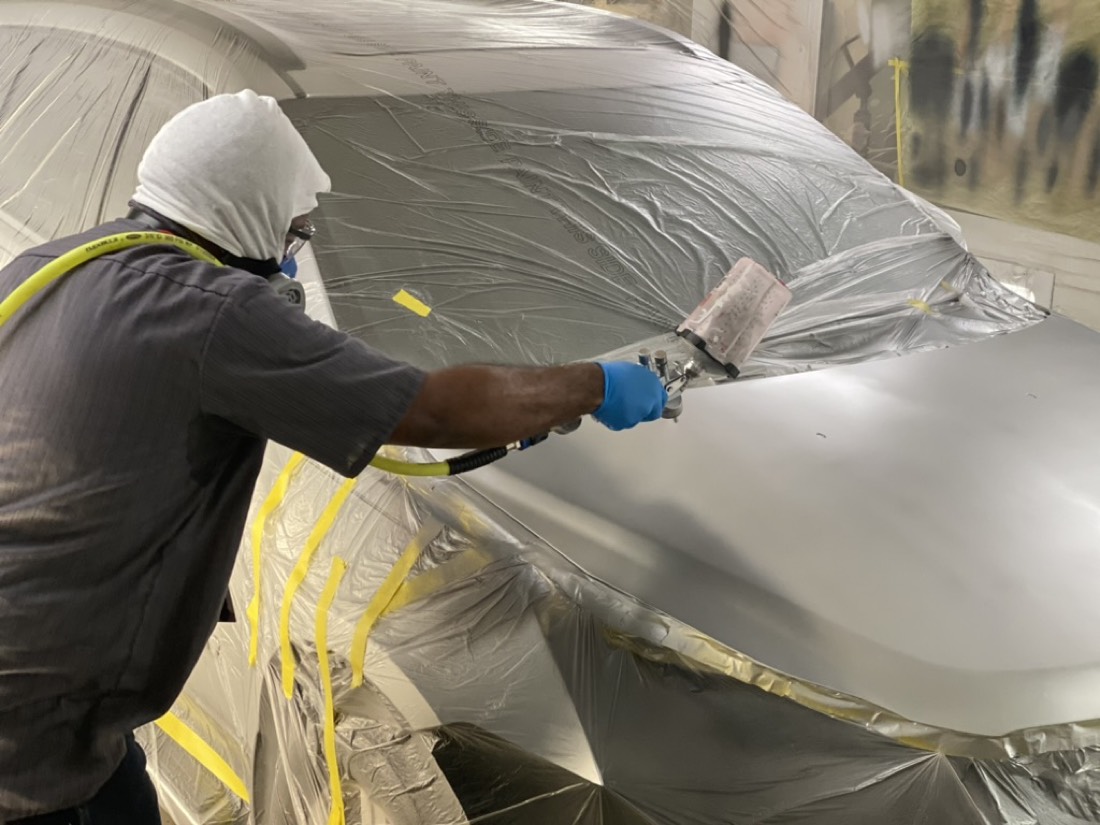
Before we get into the specific guns, a quick reminder of why clear coat specifically rewards a flagship.
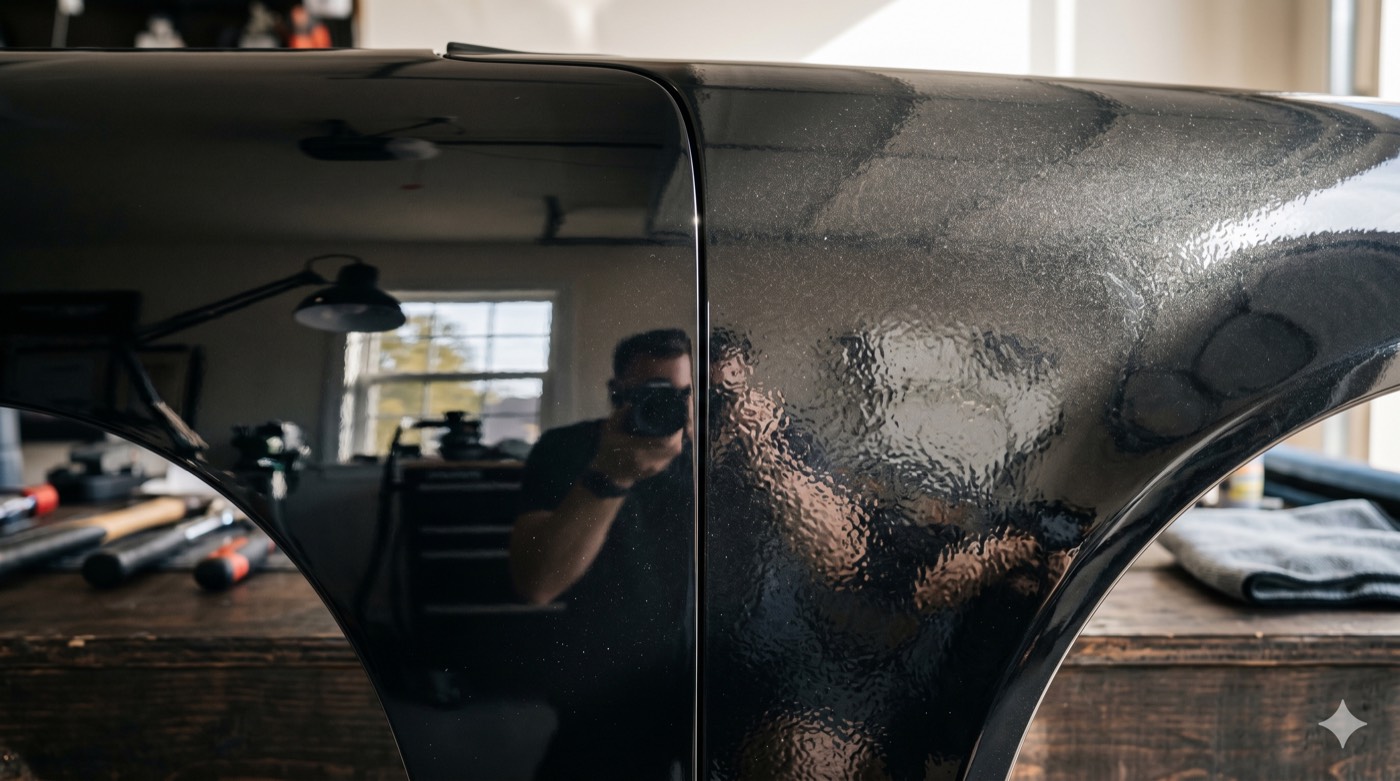
Clear is your last layer. Everything you painted underneath, every hour of prep, every dollar of basecoat, all of it is judged through the clear. A weak gun lays orange peel, flat metallics, dirt nibs from poor atomization, or runs from inconsistent flow. A great gun lays glass. The difference shows up the moment the panel comes out of the booth.
Clear is also one of the most expensive materials per liter in your shop. A flagship gun pays for itself in transfer efficiency alone over its first 12 to 18 months of professional use. If you're spraying 2K urethane or premium ceramic clears, you're not saving money by running a generic gun.
The ASE B2 Painting & Refinishing exam tests your understanding of the variables that drive a great clear coat: atomization, fluid tip selection, air pressure at the cap, fan width, overlap, and distance. The flagship guns automate or simplify several of those variables in ways the cheaper guns don't.
SATAjet X 5500: The Established Standard
SATA introduced the X 5500 as the successor to the legendary 5000 B series, and most pro painters consider it the current king of the booth. Its design refinements around the air cap and nozzle geometry give it a distinctive soft, broad spray pattern that's particularly forgiving on clear.
Headline specs:
- Air cap: I (industrial) or O (round) pattern available. Different nozzle sets for different materials.
- Standard fluid tip range: 1.2 mm and 1.3 mm for clearcoat work (also available in larger sizes for primers).
- HVLP and RP (Reduced Pressure) variants available. Most modern painters choose RP for clear.
- Body: forged aluminum, anodized.
- Weight: roughly 500 grams empty (varies slightly by nozzle setup).
- Optional digital pressure gauges (X 5500 DIGITAL).
Real-world experience:
The SATAjet X 5500 lays clear with a smooth, soft edge that blends naturally with adjacent panels. The pattern is broader than the older 4000 series, which means slightly faster panel coverage and slightly more forgiveness on overlap. Painters coming off a SATA 4000 B or HVLP RP usually pick it up within a session.
Where the X 5500 shines: high-solids 2K clears, ceramic clears, and any material with a wide spray pattern requirement. The atomization is genuinely the best in the class. The pattern uniformity edge-to-edge is the best in the class.
Where it doesn't shine: it's not the lightest gun. Painters who spray for long shifts may feel the weight by hour eight. The optional digital readouts add cost without changing how the gun lays material.
Best for: professional painters in production shops who shoot a lot of clearcoat and want maximum atomization quality. Also a strong choice for ASE B2 prep because the nozzle and air cap conventions match the textbook-correct HVLP / RP discussion.
Browse SATA spray guns on our affiliate gear page →
DeVilbiss DV1: The Lightweight Specialist
DeVilbiss took a different approach with the DV1. Instead of incrementally refining the previous flagship, they designed the DV1 around a single goal: deliver world-class finish quality in the lightest possible package.
Headline specs:
- Patented "T100" air cap designed specifically for clear coat applications.
- Standard fluid tip: 1.3 mm (the DV1 Clear Coat variant). Other tips for base and primer variants.
- HVLP variant called DV1 Compliant. RP variant called DV1 Basecoat.
- Body: aluminum, designed for lightness.
- Weight: roughly 380 to 410 grams empty. Among the lightest pro guns on the market.
- DigitalSpray HD pressure gauge available as an option.
Real-world experience:
The DV1 feels noticeably lighter in the hand than the SATA or Iwata. Painters who have wrist or shoulder fatigue from long shifts notice it immediately. The lightness isn't a gimmick; it's a real productivity advantage for high-volume shops.
Finish quality on clear is excellent. The T100 air cap delivers a slightly tighter spray pattern than the SATA, which can be an advantage on smaller panels and a disadvantage on long quarter panels or full hood spray-outs where the broader pattern of the SATA covers more area per pass.
Where the DV1 shines: ergonomics, wrist relief, and finish quality on small to mid-size panels. The lightness compounds over a full shift. Painters who shoot all day notice the difference by lunch.
Where it doesn't shine: the spray pattern is narrower than the SATA X 5500. On full body panels or hoods, the painter needs more passes to cover the same area. If you're a production painter racing the clock on a full repaint, that adds up over a job.
Best for: painters who prioritize wrist and shoulder relief, and shops doing a lot of smaller blend and panel work. Also strong for ASE B2 prep because DeVilbiss publishes excellent technical literature on the gun's air cap and pattern behavior.
Browse DeVilbiss spray guns on our affiliate gear page →
Anest Iwata Supernova V2: The Atomization King
Anest Iwata has been building precision spray equipment for over 90 years. The Supernova V2 is their flagship clear coat gun, and the engineering pedigree shows up in how the gun atomizes high-viscosity clear.
Headline specs:
- Patented W series air cap. Larger orifice geometry than the previous Supernova generation.
- Standard fluid tip: 1.3 mm for clear. Other sizes available for primer and base.
- HVLP and LV (Low Volume) variants. Most pros choose LV for the lower air consumption.
- Body: forged aluminum, traditional Iwata styling.
- Weight: roughly 480 grams empty.
- Available with DigitalGauge.
Real-world experience:
The Supernova V2 atomizes clear into a finer mist than the SATA or DeVilbiss. The flow-out on the panel is genuinely the smoothest of the three. If you're chasing maximum gloss and minimum orange peel, the Iwata is hard to beat.
The gun has a longer learning curve than the SATA or DeVilbiss. The fine atomization rewards a painter who controls distance, speed, and overlap precisely. A painter coming off a lesser gun may overspray initially because the Iwata's atomization is so efficient that less material is needed for full coverage.
Where the Supernova V2 shines: finish gloss, atomization quality, and air efficiency. Shops on metered compressed air or running smaller compressors benefit from the LV variant's lower CFM draw.
Where it doesn't shine: the trigger pull is slightly stiffer than the SATA or DeVilbiss, and painters with smaller hands sometimes find the grip thicker than ideal. The fine atomization is also less forgiving of inconsistent technique.
Best for: painters who prioritize maximum gloss and atomization quality, especially on high-end repaints and custom work. Also a great choice for shops with limited compressed air capacity.
Browse Anest Iwata spray guns on our affiliate gear page →
Side-by-Side Comparison
The three guns at a glance.
| SATAjet X 5500 | DeVilbiss DV1 / Anest Iwata Supernova V2 |
|---|---|
| Broadest spray pattern. Fastest panel coverage. | DV1 has narrower pattern; Supernova has finer atomization mist. |
| Heavier at about 500 g empty. Felt by hour 8. | DV1 at 380-410 g is the lightest. Supernova around 480 g. |
| Best on full body panels, hoods, quarter panels. | DV1 best on smaller panels and blends. Supernova best for max gloss. |
| Soft, forgiving spray pattern. | DV1 tighter pattern. Supernova fine, demanding atomization. |
| Highest atomization quality on broad surfaces. | DV1 excellent finish. Supernova arguably best atomization in class. |
| Standard CFM draw. | Supernova LV uses less air. DV1 standard. |
Which Should You Buy?
The honest answer depends on what you spray most and how long your shifts are.
Buy the SATAjet X 5500 if:
- You shoot a lot of clear on full panels, hoods, roofs, full repaints.
- You want the broadest soft pattern for maximum forgiveness.
- You're upgrading from an older SATA gun and the muscle memory will transfer.
- You don't mind a slightly heavier gun in exchange for the best broad-pattern atomization.
Buy the DeVilbiss DV1 if:
- You're on your feet spraying for 8 to 10 hours a day and wrist or shoulder fatigue matters.
- You do a lot of blend work, small panel repairs, and detail spraying.
- You prefer a tighter spray pattern.
- Ergonomics is your top priority alongside finish quality.
Buy the Anest Iwata Supernova V2 if:
- You're a perfectionist chasing maximum gloss and the smoothest possible flow-out.
- You work on high-end custom or restoration projects.
- Your shop has limited compressed air capacity and the LV variant's lower CFM draw is a real benefit.
- You're willing to invest learning time to get the most out of the finer atomization.
Don't Skip the Air Supply
A flagship gun is only as good as the air supply feeding it. Common mistakes that waste the gun's potential:
- Hose too long or too narrow. 3/8 inch ID minimum, 25 feet or less ideal. Longer or narrower hose loses pressure that the gun was tuned to receive.
- Bad regulator at the gun. Read pressure at the cap, not at the wall. A gauge at the gun is the only reliable reading.
- No coalescing filter. Water in the line causes fisheyes that the painter blames on contamination when it's actually compressed air dryness.
- No desiccant dryer. In humid environments, even a coalescing filter isn't enough. Add a desiccant dryer at the booth inlet.
- Compressor undersized. All three of these guns need at least 11 to 15 CFM at the regulator under continuous load. Smaller compressors short-cycle and pulse the pressure.
The ASE B2 will quiz you on air supply concepts. The flagship gun makes the concepts easier to test because the gun is sensitive enough that bad air supply shows up immediately.
How These Guns Match Up With ASE B2 Concepts
Most of the technical detail about flagship spray guns maps directly onto ASE B2 study material. If you're preparing for the exam, look for these patterns in the gun spec sheets and you'll recognize them as test questions later.
- HVLP vs RP (Reduced Pressure). All three manufacturers offer both. The exam expects you to know HVLP caps at 10 PSI at the cap; RP runs slightly higher with better transfer efficiency on clear.
- Fluid tip sizing. 1.2 to 1.3 mm for basecoat, 1.3 to 1.4 mm for clear, 1.6 to 1.8 mm for primer. The flagship guns publish their tip ranges explicitly, which makes it easy to memorize.
- Air cap geometry. The W (Iwata), T100 (DeVilbiss), and I/O (SATA) air caps each have specific pattern behavior. The exam asks about how air cap geometry affects atomization.
- Spray pattern shape. The flagship guns adjust pattern from oval to round via fan air control. The ASE B2 tests this directly.
- Distance from panel. 6 to 8 inches for all three guns. The exam will tempt you with 4 inches or 12 inches answer choices. Wrong every time.
- Overlap. 50% for solid colors, 75% for metallics. The flagship guns make the metallic overlap easy because the pattern uniformity is so high.
Buying a flagship gun and studying the spec sheet is one of the cheapest ways to learn the ASE B2 spray gun content.
Maintenance That Makes a Flagship Gun Last
A flagship gun should last 10 years or more in professional use if you maintain it properly. The killer of pro guns is shortcuts during cleaning.
- Solvent through the gun every clean. Don't reuse dirty reducer. Use a dedicated gun wash solvent.
- Brush the air cap and tip every clean. Soft-bristle brushes only. No wire brushes on the air cap or nozzle.
- Never soak the gaskets overnight in lacquer thinner. Even modern solvent-resistant seals degrade with extended exposure.
- Lubricate the trigger and air valve per the manufacturer's schedule. Each manufacturer publishes a specific lubricant recommendation.
- Inspect the nozzle and air cap monthly. Look for damage, deposits, or wear. Replace nozzle sets when atomization quality drops.
- Store the gun upside down or hanging. Avoid resting the gun on its side with the cup attached.
The ASE B2 tests gun maintenance concepts. The shop habit answer ("soak overnight in lacquer thinner") is wrong on the test and wrong in the real world. The textbook-correct answer matches what the gun manufacturer publishes.
Where to Buy
All three guns are available from authorized distributors in the U.S. Prices vary by configuration, included accessories, and seasonal promotions. Check our affiliate gear page for current pricing and direct links to trusted distributors.
See SATA, DeVilbiss, and Anest Iwata listings on our gear page →
(Disclosure: links on the gear page may earn us a small affiliate commission at no extra cost to you. This supports the free portion of asecollisiontestprep.com.)
The Other Tools Every Painter Needs
A flagship gun is only half the booth setup. The other half is the supporting equipment.
- Quality digital pressure gauge at the gun. Mechanical gauges drift. Digital is more reliable.
- Inline filter and water trap at the gun. Cheap insurance against ruined jobs.
- High-quality nitrile gloves. Reduces hand contamination of panels.
- Tack cloths. Final wipe before paint. Cheap and essential.
- Booth lighting upgrade. LED panel lighting reveals defects during application that you'd miss under old fluorescent lighting.
- Spectrophotometer or camera color match tool. For shops doing custom or specialty color match.
Every one of these supports the gun's potential and shows up on the ASE B2 in some form. Building the booth around the flagship gun multiplies the gun's return on investment.
The Final Word
There's no single "best" gun among the three. SATA, DeVilbiss, and Iwata have all earned their reputations by making excellent equipment. The right choice depends on what you spray, how long your shifts are, and which trade-offs you prefer.
What matters more than the brand is consistency in technique, regular maintenance, and treating your gun like the precision instrument it is.
If you're preparing for the ASE B2 alongside your gear shopping, the spray gun concepts overlap directly with the exam content. Study the spec sheet of whichever gun you buy, learn the air cap and fluid tip conventions, and you'll cover meaningful exam ground while you're at it.
What About the Cheaper Guns?
Some painters ask whether a $200 to $400 gun can deliver flagship-tier results. The honest answer: for production work on clear, no. The flagship guns are flagship for a reason. Atomization quality, pattern uniformity, and consistency over thousands of hours of service are genuinely different at the top tier.
That said, cheaper guns have their place:
- Primer-surfacer. A mid-range HVLP primer gun at $250 is fine for most primer-surfacer work because the visual standard is lower (you'll sand it).
- Single-stage industrial finishes on non-cosmetic surfaces.
- Backup or training guns for students and apprentices learning technique.
But for the final clear on a customer's car, the flagship gun pays for itself in finish quality and customer satisfaction. Don't compromise on clear.
Air Cap Cleaning: The 5-Minute Habit That Doubles Gun Life
The single biggest factor in long-term gun performance is air cap cleanliness. A clogged or partially blocked air cap delivers a deformed spray pattern even when everything else is right.
The 5-minute habit:
- After each clear coat session, remove the air cap.
- Soak it in dedicated gun wash for 2 to 3 minutes (not lacquer thinner, not gas).
- Use a soft brass-bristle brush to gently clean each orifice.
- Inspect the air cap surface for any clear deposits in the corners.
- Reinstall the air cap finger-tight, then snug with the wrench. Don't over-torque.
Do this every clean. The gun will reward you with consistent atomization for years.
The Compressor Question
A flagship gun deserves a flagship compressor. The general rule:
- Single painter shop. 5 HP, 60-gallon two-stage compressor minimum. 80-gallon better.
- Multi-painter production shop. 10 HP rotary screw with at least 60 gallons of receiver tank, OR multiple two-stage piston compressors running in parallel.
- CFM rating. The compressor must deliver at least 11 to 15 CFM at 90 PSI under continuous load. Verify the rating at the actual operating pressure, not just at theoretical maximum.
An undersized compressor short-cycles, pulses the pressure at the gun, and compromises the atomization the gun was designed to deliver. The compressor is one of those purchases where saving money costs you finish quality every job.
Pair Your Gun With ASE B2 Practice
Spray gun knowledge is testable. Drill the ASE B2 question bank and reinforce your gear knowledge at the same time.


Discussion
Join the discussion — sign in to comment.
Comments are reserved for registered students and technicians. Your name will be pulled from your profile automatically.
Log In Register