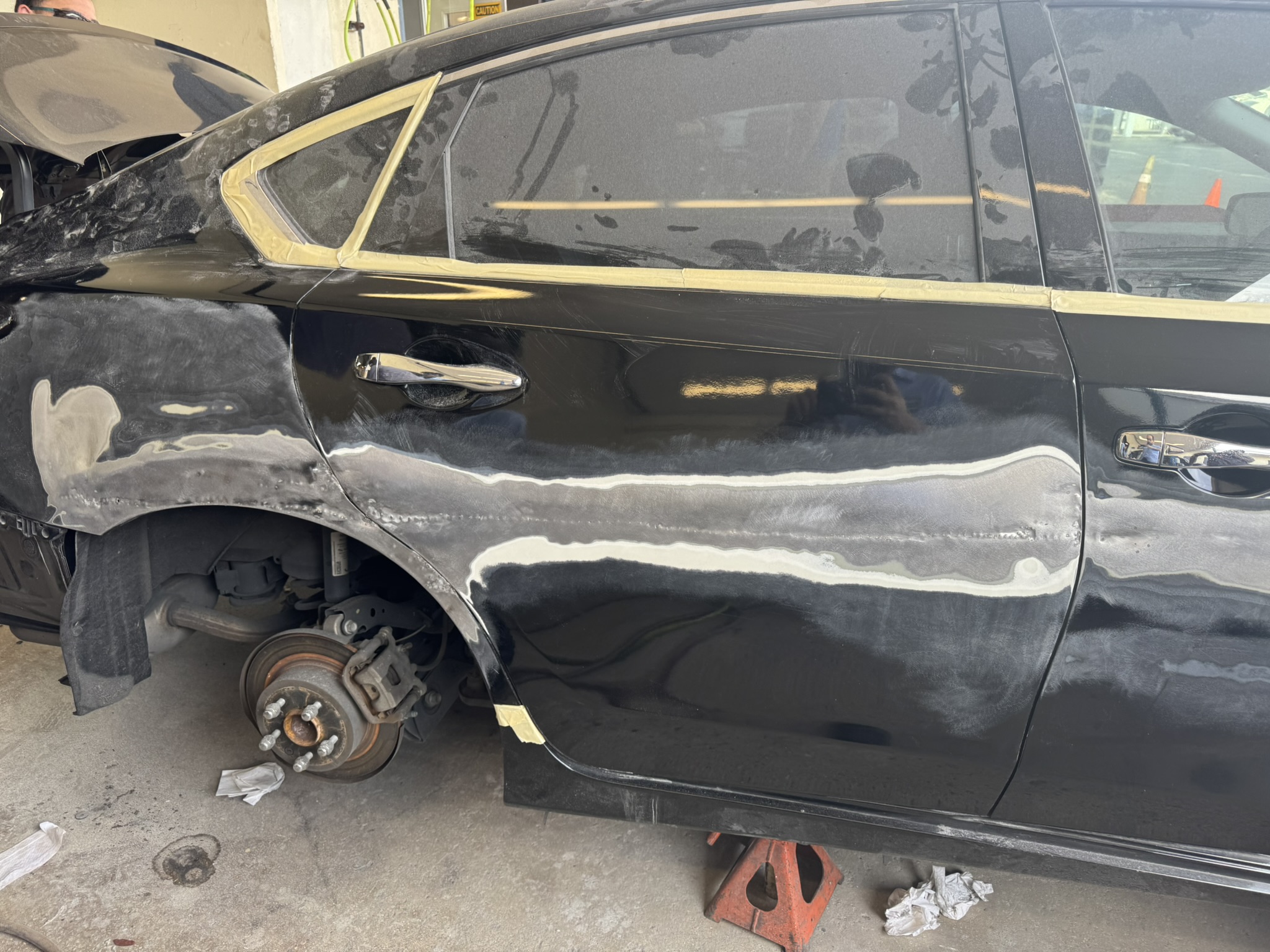
What This Guide Covers
This is the complete study guide for the ASE B3 Non-Structural Analysis & Damage Repair certification in 2026. If you're a body tech preparing to sit for the test in the next 60 to 90 days, work through this guide systematically.
The guide covers:
- What the ASE B3 actually tests in 2026.
- All six content areas with the specific topics that drop most test takers.
- A 9-week study schedule that respects how the test is structured.
- The 100 terms and procedures you must own before sitting for the exam.
- Trap-question patterns that cost techs the most points.
- A pre-test 48-hour routine.
Use this as your roadmap. Print the section list, work it methodically, and you'll show up at Prometric ready instead of hoping.
What the 2026 ASE B3 Tests
The ASE B3 exam in 2026:
- 65 scored questions plus approximately 10 unscored research questions.
- 90 minutes of test time. About 83 seconds per question.
- Passing score around 70%. ASE doesn't publish the exact cutoff; it floats based on question difficulty.
- Five question formats: standard direct, Technician A / Technician B, EXCEPT, MOST likely, LEAST likely.
- Delivered at Prometric testing centers on a locked-down computer.
- Results on screen at completion. Detailed category breakdown emails within 2 weeks.
Pricing has been climbing every year. Check ase.com for current registration, per-test, and Prometric sitting fees before you budget.
The Six Content Areas (2026 Weighting)
ASE breaks the ASE B3 into six content areas with roughly this weighting:
| Content Area | Approx. % | ~ Questions |
|---|---|---|
| Preparation (damage analysis, setup, documentation) | 11% | 7 |
| Outer Body Panel Repairs, Replacements, & Adjustments | 28% | 18 |
| Metal Finishing & Body Filling | 14% | 9 |
| Movable Glass & Hardware | 8% | 5 |
| Welding, Cutting, & Joining | 18% | 12 |
| Plastics & Adhesives | 21% | 14 |
Outer Body Panels, Plastics & Adhesives, and Welding combined are 67% of the test. That's where your heaviest study hours belong.
Content Area 1: Preparation (7 questions)
Pre-repair documentation, scanning, and analysis.
Must-own topics
- Pre-repair diagnostic scan. Required on every collision repair with airbags, ADAS, or any electronic module. Captures pre-existing codes and collision-related codes.
- Post-repair diagnostic scan. Required to confirm no remaining codes after repair work.
- Damage analysis sequence. Direct, secondary, induced damage. Identify each by impact direction.
- OEM repair procedure access. ALLDATA, OEM1Stop, manufacturer service portals. The textbook answer to "where do you find the repair procedure" is always the OEM service manual.
- Vehicle setup. Battery disconnection (negative first when removing, reverse when installing), key fob storage for some makes, fuel system depressurization.
- Documentation. Photos and written damage report before any disassembly.
Trap patterns
The ASE B3 trap here: a question describes a tech who scanned the vehicle "last week" or "before the customer left." Wrong. Scan immediately before and after the repair to capture any new codes that surfaced during the work.
Content Area 2: Outer Body Panel Repairs, Replacements, and Adjustments (18 questions)
The largest section. The trick: questions are rarely "how do you pull this dent." They're "should you pull this dent or replace the panel, and why?"
Must-own topics
- Section vs. replace decision-making. Many late-model unibody vehicles have specific factory sectioning locations. The OEM procedure is the authority, not shop preference.
- High-strength steel limitations. UHSS (ultra-high-strength steel), DP (dual-phase), and boron steel cannot be heat-straightened above OEM-specified thresholds (typically 1100°F for boron, 700°F for most UHSS).
- Aluminum repair isolation. Aluminum dust contaminates steel work. Dedicated bay, separate tools, separate dust collection.
- Bolt-on panel adjustment sequence. Fender: inside to outside. Door: hinges first, then striker. Reverse orders are wrong.
- Corrosion protection. Epoxy or self-etch primer on bare metal. Seam sealer. Cavity wax in enclosed sections. Weld-through primer in joints.
- R&I vs. R&R. Remove and Install (same part back) vs. Remove and Replace (new part). Billing depends on which.
Trap patterns
A scenario describes a tech sectioning a B-pillar "at a convenient spot." Wrong. Most B-pillars cannot be sectioned at all; replace at the factory joint. Or a scenario describes a tech heating a boron pillar to remove a kink. Wrong every time. Heat above the OEM threshold destroys the steel's strength.
Content Area 3: Metal Finishing & Body Filling (9 questions)
Must-own topics
- Maximum filler thickness. Most polyester filler manufacturers cap at 1/8 inch before reinforcement is required.
- Catalyzation ratio. Typically 2% cream hardener by volume for polyester filler.
- Sanding grit progression. Initial filler shaping: 36 to 80 grit. Refining: 80 to 180. Final scratch before primer-surfacer: 180 to 320.
- Metal finishing depth. High-spots no more than 1/16 inch above contour before filler.
- Heat history. Repeated heating changes the metal's oxide layer and affects filler bonding.
Trap patterns
The exam will describe a tech applying 1/4 inch of filler. Wrong (exceeds limit). Or a tech over-catalyzing with 5% hardener. Wrong (causes pinholes and brittleness).
Content Area 4: Movable Glass & Hardware (5 questions)
Five easy points if you take them seriously.
Must-own topics
- Window regulator types. Cable, scissor, sash.
- Door hinge adjustment sequence. Hinges first (for panel alignment), then striker (for latch engagement).
- Glass urethane installation. Minimum bead height (3/8 to 1/2 inch triangular). Clean with isopropyl alcohol or manufacturer-recommended cleaner. Black urethane primer on bare metal pinch welds.
- Safe drive-away time (SDAT). Manufacturer-specified, typically 1 hour to several hours depending on adhesive and conditions.
- Glass cutout method. Full-cut to bare metal when corrosion is present. Short-cut leaves 1 to 2 mm of old urethane as substrate.
Content Area 5: Welding, Cutting, & Joining (12 questions)
Must-own topics
- MIG wire diameter. .023 inch for HSS sheet, .030 to .035 inch for thicker structural panels.
- Shielding gas mixes. 75/25 Argon/CO2 standard for body steel. 100% Argon for aluminum. Pure CO2 for thicker plates.
- Plug welds vs. continuous welds. Plug welds at factory spot weld locations on exterior panels. Continuous welds where specified by OEM (typically inner structure).
- Plug weld hole size. Typically 5/16 inch (8 mm) for body steel.
- STRSW (squeeze-type resistance spot welding). Increasingly required by OEMs on HSS, UHSS, and DP panels.
- Weld-bonding. Structural adhesive plus STRSW or MIG plug welds. Standard on many inner-structure joints.
- Destructive testing. A practice plug weld should pull a slug of metal when chiseled, not break clean at the joint.
Trap patterns
A scenario describes MIG-plug-welding a DP panel the OEM specifies STRSW. Wrong every time. The test answer is always "follow the OEM-specified joining method."
Content Area 6: Plastics & Adhesives (14 questions)
The most-missed section for shop-trained techs. Own this cold.
Must-own topics
- Plastic identification by ISO code. TPO, PP/EPDM, PUR, PC, ABS. The exam gives you the ISO code on the part and asks which repair method applies.
- Repair vs. replacement decision-making. TPO bumper cover with small puncture: repair. Cracked PC headlamp housing: replace.
- Adhesive cure times and temperatures. Two-part urethane adhesives have specific cure windows. Cold equals longer cure. High heat equals shorter pot life and compromised bond if overdone.
- Surface preparation. Wax-and-grease remover before adhesion promoter. Adhesion promoter or flame treatment on polyolefins (PP, TPO) before primer.
- Polyolefin specifics. PP and TPO repel paint without adhesion promoter. Always test the surface with the ISO marking or by flame test before priming.
Trap patterns
A scenario describes "speeding up" a urethane adhesive with high heat lamps. Shop answer: saves time. Test answer: compromises bond strength and creates premature failure.
The 9-Week Study Plan
A 9-week schedule that respects how the ASE B3 is structured and weighted.
Week 1: Diagnostic
- Take a full 65-question simulator test cold.
- Document your category-by-category scores.
- Identify your bottom 3 categories. That's where your study hours go.
Weeks 2-3: Outer Body Panels (28%)
- 50-question drills every other day on Outer Body Panels.
- Build a flashcard deck of section vs. replace decisions for the top 20 OEM-restricted areas.
- Memorize the boron and UHSS heat thresholds.
Weeks 4-5: Plastics & Adhesives (21%)
- 50-question drills every other day on Plastics & Adhesives.
- Build a flashcard deck pairing ISO code to repair method.
- Memorize adhesive cure time and temperature windows.
Weeks 6-7: Welding (18%)
- 50-question drills every other day on Welding.
- Build a flashcard deck pairing material type to joining method (MIG, STRSW, silicon bronze MIG braze).
- Memorize wire diameters and shielding gas mixes.
Week 8: Mixed-mode mastery
- Three full 65-question timed simulations across the week.
- Review every miss the next day.
- Write down the OEM-procedure or product-TDS rule each missed question was testing.
Week 9: Final review and test
- Light flashcard review.
- One more full simulation 5 days before test day.
- Sleep, eat, and show up rested.
The 100 Terms and Procedures You Must Own
If you can recall these 100 items cold, you've covered the dominant test territory. Use them as a self-quiz checklist.
Damage analysis (10): primary damage, secondary damage, induced damage, direct impact, indirect impact, pre-repair scan, post-repair scan, OEM repair procedure, supplement, total loss threshold.
Outer body panels (20): R&R, R&I, factory sectioning location, OEM procedure, boron threshold, UHSS threshold, DP steel, aluminum isolation, dedicated bay, fender adjustment sequence, door hinge first, striker second, epoxy primer, self-etch primer, weld-through primer, seam sealer, cavity wax, corrosion protection layers, panel adhesive, hem flange.
Metal finishing (10): 1/8 inch filler maximum, 2% catalyzation, 36 grit initial, 80 grit refining, 180 grit refining, 320 grit pre-primer, heat history, polyester filler, reinforced filler, metalworking before filler.
Movable glass (10): cable regulator, scissor regulator, sash regulator, urethane bead height, SDAT, full-cut, short-cut, urethane primer, glass cleaner restriction, hinge before striker.
Welding (20): .023 wire, .030 wire, .035 wire, 75/25 shielding gas, 100% argon, pure CO2, plug weld, continuous weld, 5/16 inch hole, STRSW, MIG plug weld, silicon bronze MIG braze, weld-bonding, ER70S-6 wire, destructive test, slug pull, cold lap, burn-through, voltage drop, wire speed.
Plastics & adhesives (20): TPO, PP/EPDM, PUR, PC, ABS, ISO code, adhesion promoter, flame treatment, polyolefin, polyurethane, polycarbonate, two-part urethane adhesive, pot life, cure window, two-sided weld, plastic welding, repair vs replacement, fascia, headlamp housing, flexible substrate.
Plastics extras (10): wax/grease remover, plastic-specific cleaner, sand 80-180, sand 320, panel marker pen, sealer over adhesive, paint primer over plastic, flex additive in clearcoat, bumper cover R&R, polypropylene melt point.
Shop Habits vs Test Answers
The consolidated comparison table for the ASE B3.
| ❌ Shop Habit | ✅ Test-Correct Answer |
|---|---|
| "Skip the pre-repair scan, no warning lights are on." | Scan before AND after every repair. |
| "Section the rocker wherever it's clean." | Section only at the OEM-specified location. |
| "Heat the boron pillar until it moves." | Boron and UHSS cannot be heat-straightened above OEM threshold. |
| "MIG-plug-weld the DP rail. It's fine." | STRSW or silicon bronze MIG braze per OEM procedure. |
| "Tell the customer it's ready in 10 minutes." | Safe drive-away time per the urethane manufacturer. |
| "Heat lamp the adhesive to cure faster." | Cure per the published TDS or the bond fails. |
| "Use 0.030 wire for everything." | Match wire diameter to material thickness per spec. |
| "Just feather with 220 and prime." | Refine to 320 before sealer. |
| "Skip the adhesion promoter on TPO." | Polyolefins require adhesion promoter or flame treatment. |
The 48-Hour Pre-Test Routine
Day before:
- Verify Prometric appointment time and location.
- Pack two IDs (government photo plus second ID).
- Plan route with 30-minute buffer.
- Eat a normal dinner. Don't try new food.
- Light flashcard review only. No new material.
- Bed at normal time.
Morning of:
- Wake 2 hours before test.
- Normal breakfast. Caffeine if you normally drink it.
- Arrive 30 minutes early.
- Phone in the locker. No exceptions.
- Take a breath before question 1.
Where to Start This Week
If you have 9 weeks to test day, the schedule above is your roadmap. If you have less, compress proportionally but don't skip any content area entirely.
The simulator on this site is built to mirror the ASE B3 format and category weighting. Take a full diagnostic today, identify your weak categories, and start working the plan.
Sample Worked Questions (One Per Content Area)
To make the study territory concrete, here's one sample question per content area, with the worked-out reasoning.
Preparation:
A vehicle arrives with front-end damage. The customer says the warning lights came on last week, before the collision. The tech should:
Outer body panels:
A 2023 unibody sedan has a damaged quarter panel. The OEM repair procedure shows two approved sectioning locations. The tech should:
Metal finishing:
A panel has been straightened but a small area still has 1/16 inch of residual depression. The tech should:
Movable glass:
A windshield replacement uses urethane with a 1-hour SDAT specified by the adhesive manufacturer. The customer wants to drive away in 15 minutes. The tech should:
Welding:
A 2024 vehicle's OEM procedure specifies STRSW with weld-bonded adhesive for a DP rail repair. The shop only has MIG welding equipment. The tech should:
Plastics & adhesives:
A bumper cover marked PP/EPDM has a 3-inch puncture. The tech should:
Final Pre-Test Tips That Move the Needle
A handful of last-mile tips that pay off on test day.
Sleep more than you think you need the week before. Cognitive performance under timed conditions drops significantly with even mild sleep deficit. Bank sleep all week, especially Sunday night before a Monday test.
Eat protein at breakfast on test day. Not because of any specific magic; because protein keeps blood sugar more stable through 90 minutes of concentration than carbs alone.
Arrive 30 minutes early. Use the extra time to settle nerves, not to cram. Walk around the parking lot. Breathe. The cramming-at-the-door tech is the test-anxiety tech.
Trust your first instinct on most questions. Change an answer only when a later question reminded you of a fact you'd forgotten. Second-guessing without new information usually loses points.
Use the flag-and-review feature. It exists because the test makers want you to use it. Mark hard questions, move on, come back at the end. Don't burn 5 minutes on one question.
These small habits separate first-time pass from first-time fail more often than any specific content knowledge does.
Choose Your ASE B3 Access
One-time payment. No subscriptions and no recurring fees, ever.
- Prometric-style exam simulator
- 1000+ practice questions
- Digital flashcards
- Weakness drills
- Web or mobile access
- Everything in Simulator Access
- Full ASE Academy lesson course
- Step-by-step guided study path
- Hands-on labs and key-term training
The Simulator and the Simulator + ASE Academy bundle are both available now. All sales are final.


Discussion
Join the discussion — sign in to comment.
Comments are reserved for registered students and technicians. Your name will be pulled from your profile automatically.
Log In Register